


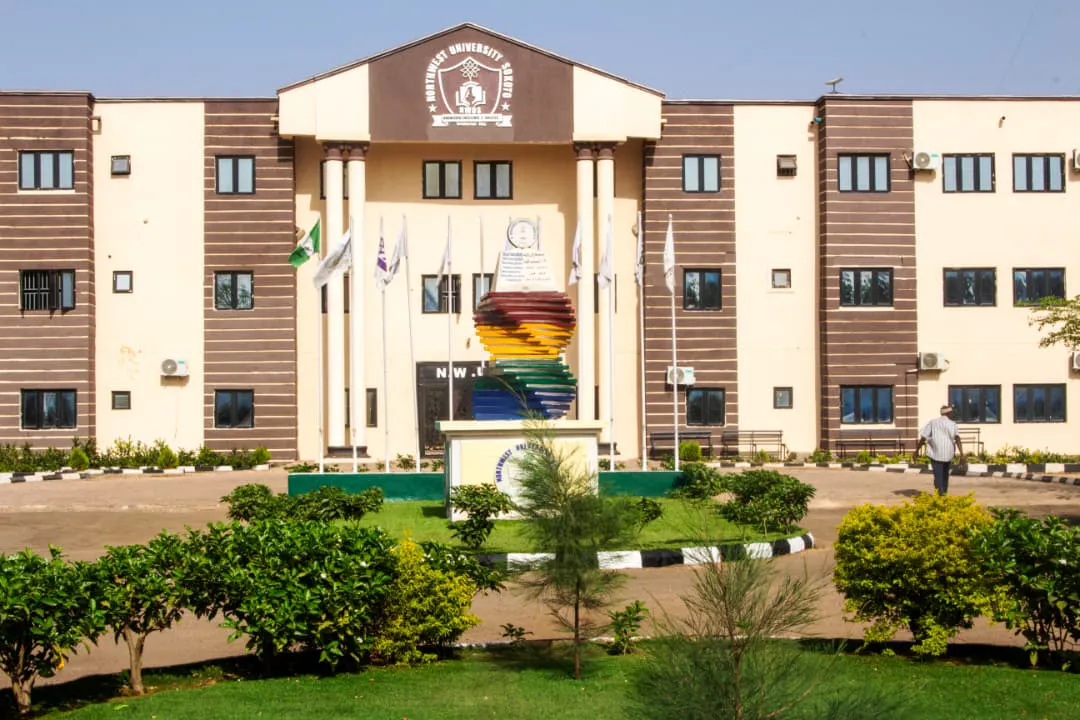
Students of Northwest University Sokoto (NWUS) have developed a mini-web-based application using WordPress and other related applications following their industrial attachment at the Management Information Systems (MIS) unit.
A statement by the University’s Director of Communications, Public Affairs and Protocol, Abdullahi el-Kurebe, said the application, https://siwes-portfolio-m6yc.onrender.com/, which was created with computer codes by the members of the institution’s SIWES team, serves as a digital documentation platform.
“The application captures their Student Industrial Work Experience Scheme (SIWES) journey. The project showcases the knowledge, technical skills and professional experiences acquired during their period of industrial training.”
According to one of the students, AbdulRahman Abdullahi Lawal, the idea was inspired by their real-world exposure during the attachment, where practical assignments, observation and mentorship contributed significantly to their technical and professional growth.
He explained that the portfolio is a web-based content management application designed to manage and organise content for an individual or organisation.
“Unlike many applications built from third-party templates, we conceptualised and developed the system from scratch using programming codes, demonstrating originality and practical competence.”
Reacting to the development, the Vice Chancellor of Northwest University Sokoto, Prof. Mukhtar Umar Bunza, commended the students for their innovation and practical application of knowledge.
He described the project as a reflection of the university’s commitment to producing graduates equipped with relevant digital and problem-solving skills.
Prof. Bunza encouraged the students to sustain the culture of creativity and research-driven solutions that address institutional and societal needs.
Similarly, the Director of MIS, Ibrahim Aminu, said the initiative validates the importance of structured mentorship and hands-on learning. He noted that the students were selected through the SIWES Office and provided with workspace, supervision and technical guidance throughout their attachment.
According to him, the beauty of the project lies in the fact that the students were taught how to conceptualise and build the application directly from codes, rather than relying on third-party solutions.
The students expressed appreciation to the university management and the MIS Directorate for the opportunity, pledging to continue building on the knowledge gained to make the institution proud.
The project underscores the impact of structured industrial training and institutional support in equipping students with industry-relevant digital competencies.
