


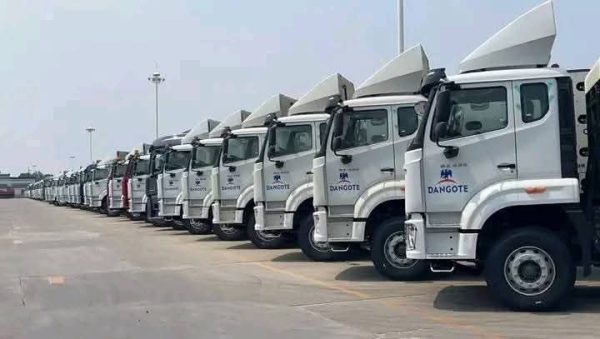
The Dangote Petroleum Refinery and Petrochemicals has expanded its free petroleum products delivery initiative to Kano, Imo, Anambra and Nasarawa states, in a move aimed at reducing distribution costs for independent petroleum marketers and creating room for lower petrol prices.
The initiative, which initially covered Lagos, Ogun, Rivers, Kaduna, Abuja and Delta, is designed to bring petroleum products closer to marketers and retailers by eliminating the cost of transporting products over long distances from the refinery to different parts of the country.
By absorbing delivery costs, the refinery is seeking to remove a significant expense from the downstream distribution chain and enable marketers to operate more efficiently.
Group Executive Director, Commercial Operations, Oil & Gas, WAEP and Fertiliser, Fatima Aliko Dangote, said the initiative was intended to ensure that the benefits of domestic refining translated into tangible savings for businesses and consumers.
“The value of domestic refining must ultimately be felt beyond the refinery gate,” Dangote said.
She added that absorbing delivery costs would remove a significant component of the distribution burden and create room for savings to flow through the value chain to consumers.
According to her, the objective is to make fuel distribution more efficient, reduce avoidable costs and support more competitive pump prices across Nigeria.
The expansion has been welcomed by the Independent Petroleum Marketers Association of Nigeria (IPMAN), which said the initiative would ease some of the financial and logistical pressures facing independent marketers.
IPMAN National Publicity Secretary and Public Relations Officer, Chinedu Ukadike, said the arrangement addressed a longstanding challenge in the petroleum products distribution chain, where marketers commit substantial funds to product purchases but sometimes wait for days or weeks before their orders are loaded and transported.
“This gesture, if sustained, will be able to alleviate the sufferings of independent marketers,” Ukadike said.
He said the new delivery arrangement would reduce the period marketers’ funds remained tied up, improve cash flow and allow businesses to deploy their capital more efficiently.
“This time around, Dangote has made it very, very easy for marketers. Marketers are jubilating, and you will see the return on investment as an independent marketer. Your money will not be tied down,” he said.
Ukadike also said the initiative could help reduce petrol prices, noting that transportation costs constitute part of the expenses ultimately passed on to consumers.
“You also have less risk, and you have petroleum products at your doorstep. Other consumers will also see that our pump price will not continue to go up,” he said.
He urged Dangote Refinery to extend the programme to more locations, particularly in northern Nigeria, to improve access to competitively priced petroleum products.
The initiative is particularly significant for marketers supplying areas far from the refinery, as long-distance transportation typically involves haulage, vehicle operations, driver expenses, insurance, road risks and other logistics costs.
Reducing those expenses could improve the economics of supplying distant markets and give marketers greater room to compete on retail prices.
The arrangement could also reduce operational risks associated with transporting large volumes of petroleum products over long distances by shortening the supply chain and bringing products closer to their destination markets.
Ukadike described the development as a practical demonstration of the benefits of competition and deregulation in Nigeria’s downstream petroleum sector.
“This is the beauty of deregulation and competition,” he said.
The expansion comes as Nigeria’s downstream petroleum industry continues to adjust to increased domestic refining capacity and a more competitive market environment.
The Dangote Petroleum Refinery, with a stated capacity of 700,000 barrels per day, has increasingly supplied refined petroleum products to the domestic market while also expanding its international market presence.
The free delivery initiative adds another dimension to the refinery’s role in the downstream sector by seeking not only to increase the availability of locally refined products but also to reduce the cost of distributing them across the country.
For motorists and households, lower distribution costs could provide greater room for marketers to reduce pump prices, depending on prevailing product prices and other downstream operating costs.
