

• Home
  • Agric
  • Sci & Tech
  • Health
  • Environment
  • Hausa News
  • More
    • Business/Banking & Finance
    • Politics/Elections
    • Entertainments & Sports
    • International
    • Investigation
    • Law & Human Rights
    • Africa
    • ACCOUNTABILITY/CORRUPTION
    • Hassan Gimba
    • Column
    • Prof. Jibrin Ibrahim
    • Prof. M.K. Othman
    • Defense/Security
    • Education
    • Energy/Electricity
    • Entertainment/Arts & Sports
    • Society and Lifestyle
    • Food & Agriculture
    • Health & Healthy Living
    • International News
    • Interviews
    • Investigation/Fact-Check
    • Judiciary/Legislature/Law & Human Rights
    • Oil & Gas/Mineral Resources
    • Press Freedom/Media/PR/Journalism
    • General News
    • Presidency
  • About Us
    • Contact Us
    • Board Of Advisory
    • Privacy Policy
    • Ethics Policy
    • Teamwork And Collaboration Policy
    • Fact-Checking Policy
    • Advertising
  • Media OutReach Newswire
    • Wire News
  • The Stories
Facebook Twitter Instagram
Trending
  • Singer Nanyah dies of snake bite at her home
  • Indonesia lifts ban on Elon Musk’s Grok  
  • Wema Bank launches ‘Evolution of Love’ campaign for Valentine’s Day
  • Army renovates 91-year-old primary school in Sokoto 
  • SERAP sues NNPCL over missing oil funds
  • Lagos govt airlifts 200 pilgrims to Israel, Jordan
  • Lawmaker plans free healthcare for 10,000 constituents
  • Iran, beware the fangs of January, the scourge of February, the ides of March [II], by Hassan Gimba
Facebook Twitter Instagram YouTube
AsheNewsAsheNews
  • Home
  • Agric

    How Corteva Agriscience is boosting South Africa’s farming system

    January 31, 2026

    AI-driven project targets climate resilient crops for farmers in Africa

    January 31, 2026

    FG empowers 40 cooperatives with farm inputs in Yobe

    January 30, 2026

    Katsina to host 3,750 housing units, aquaculture project financed by COSMOS

    January 30, 2026

    ActionAid empowers 12,000 FCT farmers with agroecology skills

    January 30, 2026
  • Sci & Tech

    Indonesia lifts ban on Elon Musk’s Grok  

    February 1, 2026

    Expert urges federal govt to tackle multiple taxation in telecoms sector

    January 31, 2026

    Airtel Africa mobile money transactions top $210bn as subscribers hit 52m

    January 31, 2026

    Nigeria, KOICA partner to drive digital transformation in public service

    January 30, 2026

    NDPC leads Abuja roadshow to promote data protection awareness

    January 30, 2026
  • Health

    Lawmaker plans free healthcare for 10,000 constituents

    February 1, 2026

    Anambra seeks LG chairmen’s support for measles–rubella vaccination campaign

    January 31, 2026

    Kaduna eliminates Trachoma as public health threat

    January 31, 2026

    Kogi records milestone in fight against NTDs, halts treatment for Lymphatic filariasis

    January 31, 2026

    Bauchi introduces nutrition supplement to tackle child undernutrition

    January 31, 2026
  • Environment

    Abia govt approves new climate change policy, prioritises disability inclusion

    January 31, 2026

    LAWMA arrests cart pushers for illegal dumping on Lagos–Badagry expressway

    January 31, 2026

    YASIF, IBM train 15,000 Nigerian youths for green, digital economy

    January 31, 2026

    Kukah urges religious leaders to speak out against environmental exploitation

    January 31, 2026

    LASEMA holds retreat to honor responders, boost emergency preparedness

    January 31, 2026
  • Hausa News

    Anti-quackery task force seals 4 fake hospitals in Rivers

    August 29, 2025

    [BIDIYO] Yadda na lashe gasa ta duniya a fannin Ingilishi – Rukayya ‘yar shekara 17

    August 6, 2025

    A Saka Baki, A Sasanta Saɓani Tsakanin ‘Yanjarida Da Liman, Daga Muhammad Sajo

    May 21, 2025

    Dan majalisa ya raba kayan miliyoyi a Funtuwa da Dandume

    March 18, 2025

    [VIDIYO] Fassarar mafalki akan aikin Hajji

    January 6, 2025
  • More
    1. Business/Banking & Finance
    2. Politics/Elections
    3. Entertainments & Sports
    4. International
    5. Investigation
    6. Law & Human Rights
    7. Africa
    8. ACCOUNTABILITY/CORRUPTION
    9. Hassan Gimba
    10. Column
    11. Prof. Jibrin Ibrahim
    12. Prof. M.K. Othman
    13. Defense/Security
    14. Education
    15. Energy/Electricity
    16. Entertainment/Arts & Sports
    17. Society and Lifestyle
    18. Food & Agriculture
    19. Health & Healthy Living
    20. International News
    21. Interviews
    22. Investigation/Fact-Check
    23. Judiciary/Legislature/Law & Human Rights
    24. Oil & Gas/Mineral Resources
    25. Press Freedom/Media/PR/Journalism
    26. General News
    27. Presidency
    Featured
    Recent

    Singer Nanyah dies of snake bite at her home

    February 1, 2026

    Indonesia lifts ban on Elon Musk’s Grok  

    February 1, 2026

    Wema Bank launches ‘Evolution of Love’ campaign for Valentine’s Day

    February 1, 2026
  • About Us
    1. Contact Us
    2. Board Of Advisory
    3. Privacy Policy
    4. Ethics Policy
    5. Teamwork And Collaboration Policy
    6. Fact-Checking Policy
    7. Advertising
    Featured
    Recent

    Singer Nanyah dies of snake bite at her home

    February 1, 2026

    Indonesia lifts ban on Elon Musk’s Grok  

    February 1, 2026

    Wema Bank launches ‘Evolution of Love’ campaign for Valentine’s Day

    February 1, 2026
  • Media OutReach Newswire
    • Wire News
  • The Stories
AsheNewsAsheNews
Home»Oil & Gas/Mineral Resources»Dangote laments: “Africa losing $90bn annually to imported substandard fuel”
Oil & Gas/Mineral Resources

Dangote laments: “Africa losing $90bn annually to imported substandard fuel”

…Says Dangote Refinery imports 9-10m barrels of crude monthly from US, others
Abdoulaye KayBy Abdoulaye KayJuly 23, 2025Updated:July 23, 2025No Comments5 Mins Read
Dangote
Share
Facebook Twitter LinkedIn Pinterest Email

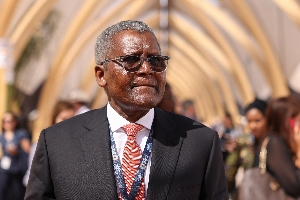
Africa is fast becoming a dumping ground for cheap, often toxic petroleum products — many of which are blended to substandard levels that would never be permitted in Europe or North America. This alarming concern was raised by the President/Chief Executive of Dangote Industries Limited, Aliko Dangote, at the ongoing West African Refined Fuel Conference in Abuja. The event is organised by the Nigerian Midstream and Downstream Petroleum Regulatory Authority (NMDPRA) in collaboration with S&P Global Commodity Insights.

Dangote revealed that due to Africa’s limited domestic refining capacity, the continent imports over 120 million tonnes of refined petroleum products annually, costing around $90 billion.

“Despite producing about seven million barrels of crude oil daily, Africa only refines around 40% of the 4.3 million barrels of refined products it consumes each day. In contrast, Europe and Asia refine over 95% of what they consume,” he said.

According to him, this over-dependence on imports leads to a significant economic loss and job exportation.

“So, while we produce plenty of crude, we still import over 120 million tonnes of refined petroleum products each year — effectively exporting jobs and importing poverty into our continent. That’s a $90 billion market opportunity being captured by regions with surplus refining capacity. Only about 15% of African countries have a GDP greater than $90 billion. We are effectively handing over an entire continent’s economic potential to others—year after year,” he lamented.

Dangote acknowledged the Nigerian National Petroleum Company Limited (NNPC) for supplying some cargoes of Nigerian crude to the Dangote Refinery since production began. Still, he noted that the company buys 9–10 million barrels of crude monthly from the United States and other countries.

While affirming his belief in free markets and global trade, Dangote insisted that such trade must be based on economic efficiency and quality standards.

“It defies logic and economic sense for Africa to be exporting raw crude only to re-import refined products — products we are more than capable of producing ourselves, closer to both source and consumption,” he said.

Building Africa’s largest refinery: A herculean task

Reflecting on the scale and complexity of constructing the world’s largest single-train refinery, Dangote said the project was one of the most capital-intensive and logistically challenging undertakings in Africa.

The refinery project involved:

  • Clearing 2,735 hectares of land — seven times the size of Victoria Island, 70% of which was swamp.
  • Pumping 65 million cubic metres of sand to stabilise the site.
  • Installing over 250,000 foundation piles and millions of metres of piping, cabling, and wiring.

“At peak, we had over 67,000 people on-site — 50,000 of them Nigerians — coordinating around the clock across hundreds of disciplines and nationalities,” he noted.

He said the COVID-19 pandemic delayed the project by two years, increasing its complexity and risk.

The refinery also necessitated the construction of a dedicated seaport, as Nigerian ports couldn’t handle the volume and size of equipment. The project involved:

  • Over 2,500 pieces of heavy equipment.
  • 330 cranes.
  • A dedicated granite quarry with a 10-million-tonne annual capacity.

“In short, we didn’t just build a refinery—we built an entire industrial ecosystem from scratch,” Dangote said.

Commercial headwinds and policy bottlenecks

Despite the technical feat, Dangote noted significant commercial challenges — especially the exchange rate volatility, which moved from ₦156/$ at inception to ₦1,600/$ at the project’s completion.

He decried difficulties in sourcing crude oil at competitive terms within Nigeria.

“Rather than buying crude oil directly from Nigerian producers, we had to negotiate with international traders who had already bought Nigerian crude and were reselling it to us—at hefty premiums,” he said.

He also described how port and regulatory charges contribute significantly to freight costs, sometimes as high as 40% of the total, making it cheaper to import from distant regions like India than ship domestically.

“Refiners in India enjoy lower freight costs than we do in West Africa, even though they buy crude from farther away,” he added.

For instance, customers lifting petroleum products from the Dangote Refinery are required to pay charges at both the loading and discharge points, whereas in Lomé, charges are paid only at discharge — giving foreign ports a competitive edge.

Lack of harmonised standards and dumping of toxic fuel

Dangote further criticised the lack of harmonised fuel standards across African countries, calling it a barrier to regional trade and a boon for international traders.

“The fuel we produce for Nigeria cannot be sold in Cameroon, Ghana, or Togo — even though we all drive the same vehicles. This market fragmentation imposes unnecessary inefficiencies,” he said.

He gave an example of diesel cloud point standards, noting that Nigeria mandates a cloud point of 4°C, while other countries permit 7–12°C — unnecessarily increasing production costs and limiting crude options.

On external threats, Dangote raised concern over increasing fuel dumping in Africa, particularly low-quality products from Russia, often blended under price caps and banned in Europe, but sold cheaply on the continent.

“We are now facing increasing dumping of cheap, often toxic, petroleum products—some of which are blended to substandard levels that would never be allowed in Europe or North America,” he warned.

Call for protection of local refiners

He urged African governments to emulate regions like the United States, Canada, and the European Union, which have adopted protective measures to support domestic refiners.

“We must act fast. Otherwise, our local refining industry will be unable to compete, and we’ll continue surrendering our economic sovereignty,” Dangote concluded.

Aliko Dangote NMDPRA S&P Global Commodity Insights West African Refined Fuel Conference
Share. Facebook Twitter Pinterest LinkedIn WhatsApp Reddit Tumblr Email
Abdoulaye Kay
  • Website

Related Posts

National gold refinery and the question of equity: Why the North has a legitimate case

January 26, 2026

EFCC, NEITI partner to tackle extractive fraud

January 24, 2026

NMDPRA to advance gas distribution, lower production costs nationwide

January 23, 2026

Leave A Reply Cancel Reply

Singer Nanyah dies of snake bite at her home

February 1, 2026

Indonesia lifts ban on Elon Musk’s Grok  

February 1, 2026

Wema Bank launches ‘Evolution of Love’ campaign for Valentine’s Day

February 1, 2026

Army renovates 91-year-old primary school in Sokoto 

February 1, 2026
About Us
About Us

ASHENEWS (AsheNewsDaily.com), published by PenPlus Online Media Publishers, is an independent online newspaper. We report development news, especially on Agriculture, Science, Health and Environment as they affect the under-reported rural and urban poor.

We also conduct investigations, especially in the areas of ASHE, as well as other general interests, including corruption, human rights, illicit financial flows, and politics.

Contact Info:
  • 1st floor, Dogon Daji House, No. 5, Maiduguri Road, Sokoto
  • +234(0)7031140009
  • ashenewsdaily@gmail.com
Facebook Twitter Instagram Pinterest
© 2026 All Rights Reserved. ASHENEWS Daily Designed & Managed By DeedsTech

Type above and press Enter to search. Press Esc to cancel.