

• Home
  • Agric
  • Sci & Tech
  • Health
  • Environment
  • Hausa News
  • More
    • Business/Banking & Finance
    • Politics/Elections
    • Entertainments & Sports
    • International
    • Investigation
    • Law & Human Rights
    • Africa
    • ACCOUNTABILITY/CORRUPTION
    • Hassan Gimba
    • Column
    • Prof. Jibrin Ibrahim
    • Prof. M.K. Othman
    • Defense/Security
    • Education
    • Energy/Electricity
    • Entertainment/Arts & Sports
    • Society and Lifestyle
    • Food & Agriculture
    • Health & Healthy Living
    • International News
    • Interviews
    • Investigation/Fact-Check
    • Judiciary/Legislature/Law & Human Rights
    • Oil & Gas/Mineral Resources
    • Press Freedom/Media/PR/Journalism
    • General News
    • Presidency
  • About Us
    • Contact Us
    • Board Of Advisory
    • Privacy Policy
    • Ethics Policy
    • Teamwork And Collaboration Policy
    • Fact-Checking Policy
    • Advertising
  • Media OutReach Newswire
    • Wire News
  • The Stories
Facebook Twitter Instagram
Trending
  • Nigerian freelancers face rising financial pressure
  • Airtime borrowing myths debunked by FCCPC
  • CBN introduces Nigeria’s new overnight rate
  • NALPGAM, LASTMA team up for safer LPG transport in Lagos
  • NSIB introduces new conditions of service
  • NDPC probes alleged CAC data breach
  • Customs seize N93m goods in Adamawa
  • Nasarawa speaker awards N60m scholarships
Facebook Twitter Instagram YouTube
AsheNewsAsheNews
  • Home
  • Agric

    Association urges members to boost catfish value

    April 17, 2026

    WFP spends $5M on shock response in Nigeria

    April 17, 2026

    Stakeholders push investment in Nigeria’s agribusiness

    April 16, 2026

    Nigeria faces 1m tonne palm oil deficit

    April 16, 2026

    WFP spends $5m on social protection in Nigeria

    April 16, 2026
  • Sci & Tech

    Nigerian freelancers face rising financial pressure

    April 17, 2026

    NDPC probes alleged CAC data breach

    April 17, 2026

    Airtel temporarily suspends credit services

    April 17, 2026

    First lady to launch ECoN initiative in Kano

    April 17, 2026

    NBTE declares AI core to technical education

    April 17, 2026
  • Health

    Family planning lowers maternal mortality by 30%

    April 17, 2026

    PCN seals 598 drug outlets in Kaduna

    April 17, 2026

    Foundation deploys health officers in Abia

    April 17, 2026

    UNILAG medicine faculty targets clinical innovation

    April 16, 2026

    Parasite free world unrealistic – FUTA professor

    April 16, 2026
  • Environment

    NSIB introduces new conditions of service

    April 17, 2026

    LAWMA cracks down on environmental violations in Alimosho

    April 17, 2026

    FG hands over 132 housing units to Kwara

    April 17, 2026

    SON hosts workshop on motor energy standards

    April 16, 2026

    Nigeria pushes for better water, sanitation

    April 15, 2026
  • Hausa News

    Otti plans 250-room 5-star hotel in Umuahia

    April 11, 2026

    Anti-quackery task force seals 4 fake hospitals in Rivers

    August 29, 2025

    [BIDIYO] Yadda na lashe gasa ta duniya a fannin Ingilishi – Rukayya ‘yar shekara 17

    August 6, 2025

    A Saka Baki, A Sasanta Saɓani Tsakanin ‘Yanjarida Da Liman, Daga Muhammad Sajo

    May 21, 2025

    Dan majalisa ya raba kayan miliyoyi a Funtuwa da Dandume

    March 18, 2025
  • More
    1. Business/Banking & Finance
    2. Politics/Elections
    3. Entertainments & Sports
    4. International
    5. Investigation
    6. Law & Human Rights
    7. Africa
    8. ACCOUNTABILITY/CORRUPTION
    9. Hassan Gimba
    10. Column
    11. Prof. Jibrin Ibrahim
    12. Prof. M.K. Othman
    13. Defense/Security
    14. Education
    15. Energy/Electricity
    16. Entertainment/Arts & Sports
    17. Society and Lifestyle
    18. Food & Agriculture
    19. Health & Healthy Living
    20. International News
    21. Interviews
    22. Investigation/Fact-Check
    23. Judiciary/Legislature/Law & Human Rights
    24. Oil & Gas/Mineral Resources
    25. Press Freedom/Media/PR/Journalism
    26. General News
    27. Presidency
    Featured
    Recent

    Nigerian freelancers face rising financial pressure

    April 17, 2026

    Airtime borrowing myths debunked by FCCPC

    April 17, 2026

    CBN introduces Nigeria’s new overnight rate

    April 17, 2026
  • About Us
    1. Contact Us
    2. Board Of Advisory
    3. Privacy Policy
    4. Ethics Policy
    5. Teamwork And Collaboration Policy
    6. Fact-Checking Policy
    7. Advertising
    Featured
    Recent

    Nigerian freelancers face rising financial pressure

    April 17, 2026

    Airtime borrowing myths debunked by FCCPC

    April 17, 2026

    CBN introduces Nigeria’s new overnight rate

    April 17, 2026
  • Media OutReach Newswire
    • Wire News
  • The Stories
AsheNewsAsheNews
Home»Food & Agriculture»Readers’ comments on GMOs, seed system, and food security, By Prof. MK Othman
Food & Agriculture

Readers’ comments on GMOs, seed system, and food security, By Prof. MK Othman

EditorBy EditorSeptember 29, 2025Updated:September 29, 2025No Comments5 Mins Read
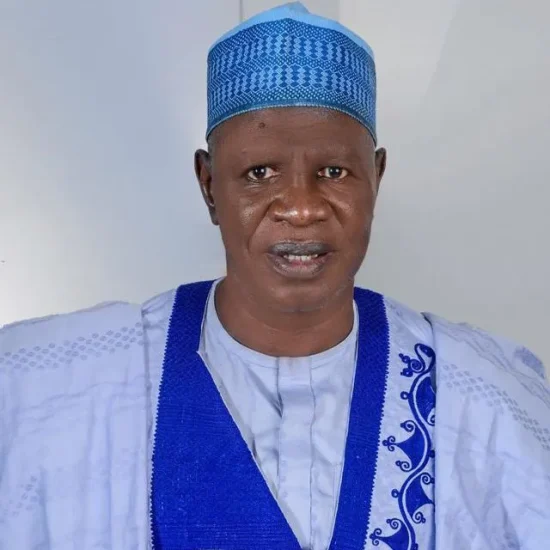
Nigeria - Prof. MK Othman
Prof. MK Othman
Share
Facebook Twitter LinkedIn Pinterest Email

The controversy over GMOs persists; extensive written and oral comments reflect the sensitivity and concern about the food system, as it can promote healthy living or cause unexpected harm or even death. Food should matter to everyone regardless of class, culture, or religion. 

The government should remain vigilant in protecting people from contaminated food, whether it is genetically modified or not. Meanwhile, scientists should work to increase public awareness about the safety of their innovations, thereby reducing doubts and hesitations about their breakthroughs. Ideally, society should celebrate inventions that address societal challenges; however, when such innovations face criticism, it suggests that something is lacking. Scientists should collaborate with the media to educate the public, promoting a deeper understanding of their efforts and achieving a greater impact.  

I cannot share all the comments, but a few selected ones may be enough to motivate the GMO inventors to take the necessary action for better enlightenment and encourage the government to prioritize biosafety, regulations, and standards, as well as identify and prosecute corrupt officials who undermine regulatory procedures. I am sharing a few comments to offer a broader perspective. These reactions are the opinions of my readers and do not necessarily reflect my own views on the matter. You can access my article on the subject at ASHENEWS. Happy reading.

Hmmm??? “Why is it that scientists in Nigeria feel that those countries that ban GMOs are not wise?. In a hopelessly corrupt environment, why do we think that our quality control strategies will be able to contain the sophisticated manipulations of the evil GMO agents? Anonymous

May I add that it’s not just the “evil GMO agents,” but also the corrupt Nigerian government leaders who sign the deal. We should remember that the Father of GMO and advocate for the destruction of African agricultural independence, Bill Gates, was reportedly one of the first to visit President Tinubu, allegedly before the court cases challenging the election’s validity were over; along with reports that Tinubu has become a ‘Colonial Middleman’ in Africa… Great observational analyses, especially in relation to those arguing against GMOs in Nigeria, and Africa’s in general… Prof Ahmadu Baba

Assalamu’alaikum Sir,

I went through your article, but it didn’t address the key issue we are concerned about. What is making us scared about GMOs, and as a result, whenever farmers ask me to go for GMO or not, I sincerely tell them to stay away from it based on the following facts:

Terminator gene technology, also known as Genetic Use Restriction Technology (GURT), involves a genetic modification that makes seeds sterile after the first harvest. This prevents farmers from saving and replanting seeds, forcing them to purchase new seeds each season. The technology uses three genes: the Repressor Gene, which controls the expression of other genes; the Recombinase Gene, which activates the toxin gene; and the Toxin Gene, which produces a toxin that kills the embryo in the seed, rendering it sterile. Terminator seeds pose significant economic risks to farmers, especially smallholder farmers in developing countries like Nigeria. It can lead to the loss of Seed Sovereignty because farmers become dependent on corporations for seeds, reducing their ability to save and reuse seeds. Similarly, terminator seeds could lead to a loss of traditional seed varieties and reduced crop diversity. Again, the widespread adoption of Terminator seeds could lead to a reduction in genetic diversity in crops, making them more susceptible to disease and pests. Overall, Terminator gene technology has sparked intense debate and concern among farmers, environmentalists, and policymakers due to its potential impact on food security, biodiversity, and the livelihoods of small-scale farmers.

On the Health Risks: While there’s no direct evidence of health risks from Terminator seeds themselves, concerns surround the potential impact of genetic modifications on human health and the environment. Some potential dangers include allergic reactions, as GM foods may introduce allergens that can cause reactions in sensitive individuals, and Antibiotic Resistance. GMOs could transfer antibiotic-resistant genes to bacteria in humans

The reasons behind banning or restricting genetically modified organisms (GMOs) in some countries are varied and complex. Here are some of the main concerns:

Food Safety Concerns, Environmental Impact, Lack of Scientific Consensus, Economic Concerns, and Cultural and Ethical Concerns, among others.

These concerns have led some countries to implement bans, moratoriums, or strict regulations on GMOs, while others have adopted more permissive approaches. Countries that have banned or restricted genetically modified organisms (GMOs) can be grouped by region. Europe comprises approximately 20 countries, including France, Germany, the Netherlands, Russia, and the United Kingdom, among others, that are either entirely or partially banned. Other Countries with GMO bans include Turkey, Kyrgyzstan, and Bhutan. In Saudi Arabia, cultivation is forbidden, but imports are permitted.

In Africa, countries with GMO bans are Algeria and Madagascar (both cultivation and importation are banned). In South America, Countries with GMO Bans are Belize (cultivation banned, imports allowed), Ecuador (cultivation banned, imports allowed), Peru (cultivation banned, imports of soy and corn allowed), and Venezuela (both cultivation and importation banned). Other countries with GMO restrictions include India, which allows Bt cotton but bans other GM crops; Kenya permits cultivation of white maize but bans other GM crops; China allows the cultivation of genetically modified cotton and papaya but has strict regulations on other GMO crops; and Japan enforces strict rules on imported GMOs with minimal domestic production. My contribution will further enlighten the public on the decision to consume GMO foods or not. Alhaji Sani Inusa

Food security Food system GMOs seed system
Share. Facebook Twitter Pinterest LinkedIn WhatsApp Reddit Tumblr Email
Editor
  • Website

Related Posts

Association urges members to boost catfish value

April 17, 2026

WFP spends $5M on shock response in Nigeria

April 17, 2026

Stakeholders push investment in Nigeria’s agribusiness

April 16, 2026

Leave A Reply Cancel Reply

Nigerian freelancers face rising financial pressure

April 17, 2026

Airtime borrowing myths debunked by FCCPC

April 17, 2026

CBN introduces Nigeria’s new overnight rate

April 17, 2026

NALPGAM, LASTMA team up for safer LPG transport in Lagos

April 17, 2026
About Us
About Us

ASHENEWS (AsheNewsDaily.com), published by PenPlus Online Media Publishers, is an independent online newspaper. We report development news, especially on Agriculture, Science, Health and Environment as they affect the under-reported rural and urban poor.

We also conduct investigations, especially in the areas of ASHE, as well as other general interests, including corruption, human rights, illicit financial flows, and politics.

Contact Info:
  • 1st floor, Dogon Daji House, No. 5, Maiduguri Road, Sokoto
  • +234(0)7031140009
  • ashenewsdaily@gmail.com
Facebook Twitter Instagram Pinterest
© 2026 All Rights Reserved. ASHENEWS Daily Designed & Managed By DeedsTech

Type above and press Enter to search. Press Esc to cancel.