


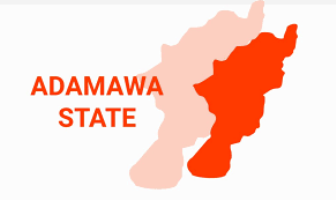
Traditional leaders in Ganye Local Government Area of Adamawa State have pledged to sanction residents who engage in open defecation to improve sanitation and healthcare outcomes.
The District Head of Gurumpawo, Hammantukur Gisilanbe, gave the assurance in an interview with newsmen during a field visit on access to safe water under the Accelerated Sanitation and Water for All (ASWA III) project on Friday in Ganye.
The project is funded by the Government of the Netherlands and implemented by the United Nations Children’s Fund (UNICEF) through its Water, Sanitation and Hygiene (WASH) units.
Hammantukur said the intervention had helped residents appreciate the importance of household latrines in curbing open defecation.
“Initially, our people had the practice of defecating outside, polluting the environment and causing diseases among children and households. But with the introduction of latrines, the situation has greatly improved.
“We are making bylaws on this issue. This is important because our people have long defecated outside, so we are gradually enforcing sanctions against offenders.
“Different punishments are meted out to offenders based on their status, whether civil servants, business owners, or residents, while persistent violators may be reported to the police,” he said.
He commended the WASH programme, noting that improved access to potable water had reduced the disease burden and hospital expenses in the community.
Similarly, Kabiru Jailani, District Head of Sankom, said the project had improved child well-being, health outcomes, and school attendance.
Jailani said most households now had latrines, adding that monitoring teams had been established to ensure compliance.
He said the community now benefits from a solar-powered borehole, assuring that measures are in place to ensure proper maintenance.
Jailani added that residents who defecate openly or vandalize water facilities would be reported to the relevant authorities and fined.
Jared Gangkuba, Executive Secretary of the Primary Healthcare Authority in Ganye, said the government and its partners had intensified WASH sensitization across communities.
“WASH has been a blessing for us. In the last two years, we applied for the ASWA II project, which was granted, and staff sensitize people in 150 communities.
“Currently, we are working in an additional 150 communities, bringing the total to 300 benefiting communities, including schools through clubs and societies,” he said.
Gangkuba added that the local government area was gradually becoming open-defecation-free in practice.
Dr Nuzhat Rafique, Chief of UNICEF’s Bauchi Field Office, said collaboration with the Adamawa Government had improved sanitation and water supply in benefiting communities.
Rafique said the interventions would improve the health status of residents, particularly women and children.
“We are happy to see traditional leaders and other stakeholders working together to achieve this success,” she said.
Rafique added that the interventions would enhance outcomes within the first 1,000 days of a child’s life, including antenatal care, exclusive breastfeeding, nutrition, and immunization.
