


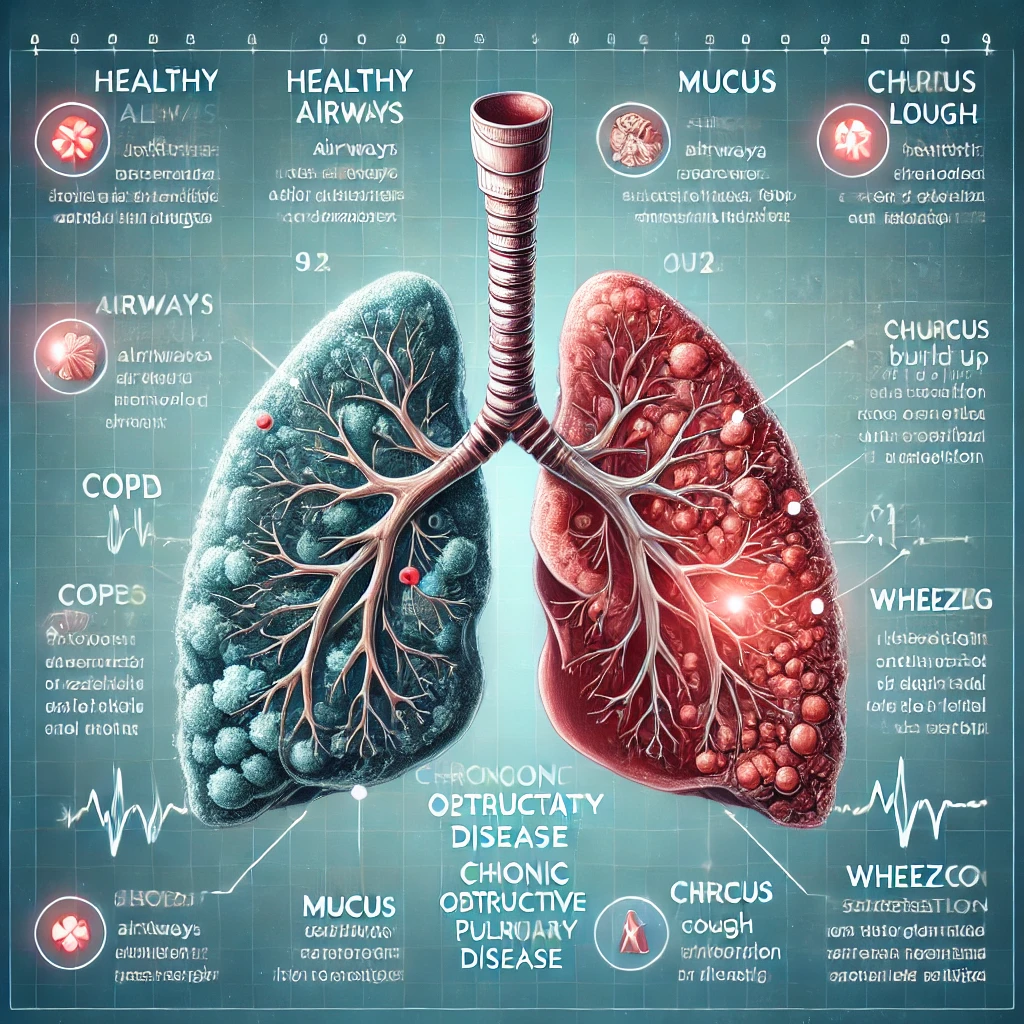
Chronic Obstructive Pulmonary Disease (COPD) is a serious lung condition that makes it harder to breathe over time.
It is slow, progressive, and often goes unnoticed until significant lung damage has already occurred.
Millions of people worldwide have it, yet many don’t realize it until the symptoms become severe.
What is COPD?
It is a long-term disease that affects the lungs, making it difficult to push air in and out. It includes two main conditions:
- Chronic bronchitis: The airways become swollen and produce too much mucus, making breathing difficult.
- Emphysema: The tiny air sacs in the lungs (alveoli) get damaged, making it harder for oxygen to reach the blood.
What causes COPD?
The biggest cause of COPD is smoking, it is responsible for most cases. But that’s not the only cause. Other risk factors include:
- Secondhand smoke or being around smokers regularly.
- Air pollution: long-term exposure to polluted air.
- Workplace dust & fumes, chemicals, dust, or fumes from industries like mining or construction.
- Indoor smoke caused by cooking with wood, coal, or dung in poorly ventilated spaces.
- Genetics
Early signs of COPD
Many people ignore early symptoms, thinking it’s just a smoker’s cough or aging. But early detection matters.
Watch out for:
- A persistent cough that does not go away.
- Mucus that keeps coming up.
- Shortness of breath, especially with physical activity.
- Wheezing or noisy breathing.
- Feeling tired all the time.
How COPD progresses
As COPD worsens, symptoms become more severe:
- Severe breathlessness, even while resting.
- Frequent lung infections (like pneumonia).
- Unintended weight loss due to difficulty eating or breathing.
- Swelling in the legs due to heart strain.
Can COPD be cured?
No, COPD cannot be reversed. But it can be managed to slow down progression and improve quality of life.
How to manage COPD
- Quit smoking: The most important step. Stopping smoking slows lung damage.
- Medications: Inhalers help open the airways and reduce symptoms.
- Pulmonary rehab: Special breathing exercises to improve lung function.
- Oxygen therapy: For severe cases when oxygen levels drop.
- Avoid triggers: Stay away from smoke, dust, and strong fumes.
- Stay active: Light exercise helps maintain lung strength.
Prevention is key
The best way to prevent COPD is never to smoke or to quit as soon as possible.
Avoid polluted environments, wear protective masks if exposed to dust or chemicals at work, and keep your lungs healthy with regular exercise and a good diet.
COPD is a serious disease, but early detection and lifestyle changes can make a huge difference
By Pharm.Great @OGreat6
