

• Home
  • Agric
  • Sci & Tech
  • Health
  • Environment
  • Hausa News
  • More
    • Business/Banking & Finance
    • POLITICS
    • Entertainments & Sports
    • International
    • Investigation
    • Law & Human Rights
    • Africa
    • ACCOUNTABILITY/CORRUPTION
    • Hassan Gimba
    • Column
    • Prof. Jibrin Ibrahim
    • Prof. M.K. Othman
    • Defense/Security
    • Education
    • Energy/Electricity
    • Entertainment/Arts & Sports
    • Society and Lifestyle
    • Food & Agriculture
    • Health & Healthy Living
    • International News
    • Interviews
    • Investigation/Fact-Check
    • LAW & HUMAN RIGHTS
    • Oil & Gas/Mineral Resources
    • PRESS FREEDOM/JOURNALISM/PR
    • General News
    • Presidency
  • About Us
    • Contact Us
    • Board Of Advisory
    • Privacy Policy
    • Ethics Policy
    • Teamwork And Collaboration Policy
    • Fact-Checking Policy
    • Advertising
  • Media OutReach Newswire
    • Wire News
  • The Stories
Facebook Twitter Instagram
Trending
  • FG recruits 37,000 health workers since 2023 to strengthen sector
  • NEMA holds mid-year route walk to boost staff fitness, emergency readiness
  • CBN should push banks to cut loan rates, MPC member says
  • FG inaugurates BOA board to boost agricultural financing, food security
  • NSCDC agro rangers reduce farmers-herders clashes by 90% in Adamawa
  • ASUU FUT Minna honours 5 retiring professors
  • Bauchi launches outreach to curb waterborne diseases
  • Why we’re shifting from free to subsidized fertilizer sales to farmers – Aliyu
Facebook Twitter Instagram YouTube
AsheNewsAsheNews
  • Home
  • Agric

    FG inaugurates BOA board to boost agricultural financing, food security

    July 3, 2026

    NSCDC agro rangers reduce farmers-herders clashes by 90% in Adamawa

    July 3, 2026

    Why we’re shifting from free to subsidized fertilizer sales to farmers – Aliyu

    July 3, 2026

    NEPC urges soybean farmers to embrace value chain

    July 3, 2026

    Nigeria’s inflation projected to rise marginally to 15.95% in June

    July 3, 2026
  • Sci & Tech

    Nigeria’s weak industrial policy stalling development, Expert warns

    July 3, 2026

    NSUK seeks stronger UNDP partnership to expand mine-tech innovation hub

    July 3, 2026

    FG reaffirms commitment to national digital postcode system

    July 2, 2026

    Google cloud: Johannesburg region to generate $90.6bn, 315,000 jobs by 2030

    July 2, 2026

    Nigerian marketplace 2Clicks hits 100k milestone

    July 2, 2026
  • Health

    FG recruits 37,000 health workers since 2023 to strengthen sector

    July 4, 2026

    Bauchi launches outreach to curb waterborne diseases

    July 3, 2026

    Tobacco control alliance calls for smoke-free cities in Nigeria

    July 3, 2026

    CCSI promotes child spacing among rural women in Kaduna

    July 3, 2026

    KSCHMA confers ambassadorial title on Madobi district head

    July 3, 2026
  • Environment

    NEMA holds mid-year route walk to boost staff fitness, emergency readiness

    July 4, 2026

    Zeberced to train 2,000 youths, create 40,000 jobs in West Africa

    July 3, 2026

    Record heat, massive fireworks displays to worsen air quality across US on Independence Day

    July 3, 2026

    Sokoto strengthens flood preparedness for 2026 season

    July 2, 2026

    LASEPA seals 10 establishments in Lagos for environmental violations

    July 2, 2026
  • Hausa News

    UNA signs MoU to launch air Bissau in Guinea-Bissau

    June 15, 2026

    Otti plans 250-room 5-star hotel in Umuahia

    April 11, 2026

    Anti-quackery task force seals 4 fake hospitals in Rivers

    August 29, 2025

    [BIDIYO] Yadda na lashe gasa ta duniya a fannin Ingilishi – Rukayya ‘yar shekara 17

    August 6, 2025

    A Saka Baki, A Sasanta Saɓani Tsakanin ‘Yanjarida Da Liman, Daga Muhammad Sajo

    May 21, 2025
  • More
    1. Business/Banking & Finance
    2. POLITICS
    3. Entertainments & Sports
    4. International
    5. Investigation
    6. Law & Human Rights
    7. Africa
    8. ACCOUNTABILITY/CORRUPTION
    9. Hassan Gimba
    10. Column
    11. Prof. Jibrin Ibrahim
    12. Prof. M.K. Othman
    13. Defense/Security
    14. Education
    15. Energy/Electricity
    16. Entertainment/Arts & Sports
    17. Society and Lifestyle
    18. Food & Agriculture
    19. Health & Healthy Living
    20. International News
    21. Interviews
    22. Investigation/Fact-Check
    23. LAW & HUMAN RIGHTS
    24. Oil & Gas/Mineral Resources
    25. PRESS FREEDOM/JOURNALISM/PR
    26. General News
    27. Presidency
    Featured
    Recent

    FG recruits 37,000 health workers since 2023 to strengthen sector

    July 4, 2026

    NEMA holds mid-year route walk to boost staff fitness, emergency readiness

    July 4, 2026

    CBN should push banks to cut loan rates, MPC member says

    July 4, 2026
  • About Us
    1. Contact Us
    2. Board Of Advisory
    3. Privacy Policy
    4. Ethics Policy
    5. Teamwork And Collaboration Policy
    6. Fact-Checking Policy
    7. Advertising
    Featured
    Recent

    FG recruits 37,000 health workers since 2023 to strengthen sector

    July 4, 2026

    NEMA holds mid-year route walk to boost staff fitness, emergency readiness

    July 4, 2026

    CBN should push banks to cut loan rates, MPC member says

    July 4, 2026
  • Media OutReach Newswire
    • Wire News
  • The Stories
AsheNewsAsheNews
Home»Health & Healthy Living»Climate change forcing Africa to rethink disease control, says Ansumana
Health & Healthy Living

Climate change forcing Africa to rethink disease control, says Ansumana

EditorBy EditorOctober 19, 2025Updated:October 19, 2025No Comments4 Mins Read
Share
Facebook Twitter LinkedIn Pinterest Email

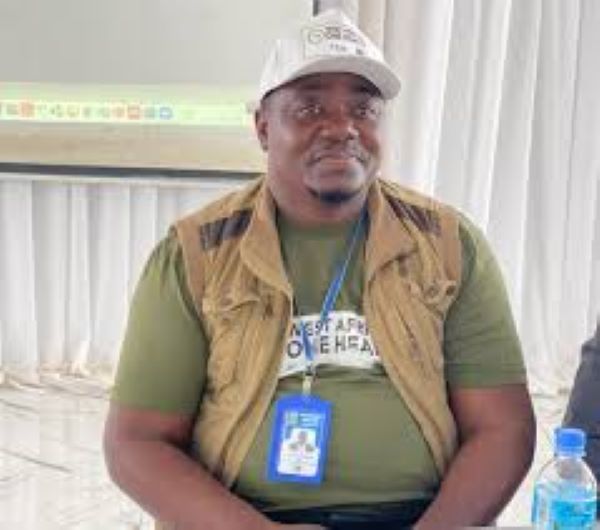
Prof. Rashid Ansumana, Dean of the College of Medical Sciences at Njala University, Sierra Leone, says Africa is gradually making a paradigm shift in climate-driven disease control — from reacting to outbreaks to predicting them through integrated, climate-informed health surveillance systems.

Ansumana stated this in an interview with reporters on Sunday in Abuja ahead of the 4th International Conference on Public Health in Africa (CPHIA 2025), scheduled to hold from Oct. 22 to Oct. 25 in Durban, South Africa.

The conference will focus on “Moving Towards Self-Reliance to Achieve Universal Health Coverage and Health Security in Africa.”

According to him, climate change is rapidly transforming the ecology of diseases across the continent, influencing when and where outbreaks occur.

“Changes in rainfall, temperature, and humidity are altering the habitats of vectors such as mosquitoes, ticks, and rodents, leading to new and resurging disease patterns across Africa,” he said.

Ansumana cited the Sixth Assessment Report of the Intergovernmental Panel on Climate Change (IPCC), which shows that sub-Saharan Africa is now experiencing more heat waves, floods, and droughts — all of which favor disease-carrying mosquitoes like Aedes and Anopheles.

“Malaria and dengue transmission zones are expanding into highland and semi-arid regions because of rising temperatures.

Flooding and poor sanitation also increase outbreaks of cholera and other waterborne diseases.

Deforestation and agricultural expansion bring humans and animals into closer contact, raising the risk of zoonotic infections such as Lassa fever,” he explained.

He noted that Africa’s health systems, already constrained by limited resources, now face climate-driven disease challenges that demand collaboration across human, animal, and environmental sectors.

Ansumana said African institutions are increasingly investing in early warning and response systems that integrate climate data into disease surveillance.

“The Africa CDC’s One Health Programme promotes surveillance across people, animals, and the environment, helping to detect and respond to health threats faster.

At the regional level, ECOWAS’ One Health Action Plan supports member states to share data, strengthen preparedness, and build capacity to tackle health emergencies before they escalate,” he said.

He added that some African countries now link meteorological and epidemiological data to predict outbreaks using models that monitor rainfall, vegetation, and rodent population density.

“This shift from reactive to predictive public health means officials can intervene before an outbreak gets out of control,” he said.

The professor emphasized that the One Health approach remains Africa’s best strategy to strengthen health security amid climate change.

“Over 60 per cent of new infectious diseases in humans originate from animals. Yet, surveillance systems have historically been fragmented, with human health ministries working separately from veterinary and environmental agencies,” he said.

He praised the Africa CDC’s Framework for One Health Practice, which helps countries coordinate national mechanisms, standardize laboratory systems, and train multidisciplinary teams.

“Through programmes such as the Field Epidemiology and Laboratory Training Programme (FELTP), Africa is producing experts who can interpret disease trends across social, environmental, and veterinary dimensions,” he added.
Ansumana also stressed that effective communication bridges the gap between early warning and community action.

“Science alone cannot stop outbreaks; communication connects data to behavior. During the 2014–2016 Ebola outbreak, trusted local radio stations and community messengers helped save lives by spreading accurate information,” he said.

He highlighted that Community Action Networks (CANs) across West Africa are now linking traditional leaders, women’s groups, and youth associations with district surveillance officers.

“In Sierra Leone, Guinea, Liberia, and Nigeria, community members use WhatsApp to report unusual human or animal illnesses or even environmental stress such as flooding. These systems build trust and enable quicker responses,” he said.

He, however, called for more investment in media literacy and journalist training to sustain such networks.

“When journalists, scientists, and communities work together, early warnings become clearer, more inclusive, and more actionable. The media amplifies early warnings, simplifies forecasts, and helps people take preventive measures,” he said.

Ansumana concluded that Africa’s resilience to climate-sensitive diseases depends on linking predictive data, local trust, and multisectoral collaboration.

“The best way for Africa to protect itself from the health impacts of climate change is to invest in integrated One Health surveillance systems and strengthen community communication networks.

Climate change is a global challenge, but preparedness starts at the community level,” he said.

He urged governments, regional bodies, and development partners to prioritize One Health investments as part of national climate adaptation and health security strategies.

“Resilience is not just about technology; it’s about people. If ministries of health, environment, and agriculture work together with communities, Africa will no longer be chasing outbreaks — it will be anticipating them,” he said.

As Africa prepares for CPHIA 2025 in Durban, discussions on One Health and climate adaptation are expected to take centre stage, with experts calling for sustainable, home-grown solutions that reinforce self-reliance and health security across the continent.

Africa CDC CANs climate change disease control ECOWAS IPCC
Share. Facebook Twitter Pinterest LinkedIn WhatsApp Reddit Tumblr Email
Editor
  • Website

Related Posts

FG recruits 37,000 health workers since 2023 to strengthen sector

July 4, 2026

Bauchi launches outreach to curb waterborne diseases

July 3, 2026

Tobacco control alliance calls for smoke-free cities in Nigeria

July 3, 2026

Leave A Reply Cancel Reply

FG recruits 37,000 health workers since 2023 to strengthen sector

July 4, 2026

NEMA holds mid-year route walk to boost staff fitness, emergency readiness

July 4, 2026

CBN should push banks to cut loan rates, MPC member says

July 4, 2026

FG inaugurates BOA board to boost agricultural financing, food security

July 3, 2026
About Us
About Us

ASHENEWS (AsheNewsDaily.com), published by PenPlus Online Media Publishers, is an independent online newspaper. We report development news, especially on Agriculture, Science, Health and Environment as they affect the under-reported rural and urban poor.

We also conduct investigations, especially in the areas of ASHE, as well as other general interests, including corruption, human rights, illicit financial flows, and politics.

Contact Info:
  • 1st floor, Dogon Daji House, No. 5, Maiduguri Road, Sokoto
  • +234(0)7031140009
  • ashenewsdaily@gmail.com
Facebook Twitter Instagram Pinterest
© 2026 All Rights Reserved. ASHENEWS Daily Designed & Managed By DeedsTech

Type above and press Enter to search. Press Esc to cancel.