

• Home
  • Agric
  • Sci & Tech
  • Health
  • Environment
  • Hausa News
  • More
    • Business/Banking & Finance
    • POLITICS
    • Entertainments & Sports
    • International
    • Investigation
    • Law & Human Rights
    • Africa
    • ACCOUNTABILITY/CORRUPTION
    • Hassan Gimba
    • Column
    • Prof. Jibrin Ibrahim
    • Prof. M.K. Othman
    • Defense/Security
    • Education
    • Energy/Electricity
    • Entertainment/Arts & Sports
    • Society and Lifestyle
    • Food & Agriculture
    • Health & Healthy Living
    • International News
    • Interviews
    • Investigation/Fact-Check
    • LAW & HUMAN RIGHTS
    • Oil & Gas/Mineral Resources
    • PRESS FREEDOM/JOURNALISM/PR
    • General News
    • Presidency
  • About Us
    • Contact Us
    • Board Of Advisory
    • Privacy Policy
    • Ethics Policy
    • Teamwork And Collaboration Policy
    • Fact-Checking Policy
    • Advertising
  • Media OutReach Newswire
    • Wire News
  • The Stories
Facebook Twitter Instagram
Trending
  • NSPHCDA hands over rehabilitated Yidna PHC, charges community on ownership
  • [VIEWPOINT] Extreme weather demands a new standard of preparedness, by Kobus van Zyl
  • [VIEWPOINT] Africa’s green transition must not become a new colonial project, by Dr Melania Chiponda
  • Naira strengthens to N1,400/$ in parallel market as official rate hits N1,365
  • Nigeria’s consumer credit drops 19.9% to N3.8trn, first decline in 6 years – CBN
  • Nigeria’s FX inflows hit $109.9bn as autonomous sources drive growth – CBN
  • West African CSOs demand immediate release of detained Nigerien activist Tchangari
  • CBN fines banks N430m over customer complaints as refunds hit N19.1bn
Facebook Twitter Instagram YouTube
AsheNewsAsheNews
  • Home
  • Agric

    [VIEWPOINT] Extreme weather demands a new standard of preparedness, by Kobus van Zyl

    July 29, 2026

    Ministry backs AUFCDN-IMP partnership to strengthen meat value chain

    July 28, 2026

    ACF introduces vetiver to combat soil erosion in Adamawa

    July 28, 2026

    Fintiri wins AAIS award for food security leadership

    July 28, 2026

    ACF trains Gella residents on climate-smart agriculture

    July 27, 2026
  • Sci & Tech

    ALTON links rising data use to smartphones, digital tech

    July 29, 2026

    Nigeria launches unified govt service portal

    July 28, 2026

    Meta upgrades AI assistant with task planning, app tools

    July 28, 2026

    AMCON seeks strategic investors for NTEL

    July 28, 2026

    Urhoghide calls for collaboration to protect Nigeria’s fibre infrastructure

    July 27, 2026
  • Health

    NSPHCDA hands over rehabilitated Yidna PHC, charges community on ownership

    July 29, 2026

    Doctor urges journalists to prioritise regular check-ups

    July 29, 2026

    Niger records worrying hepatitis cases, intensifies awareness drive

    July 28, 2026

    Kaduna reviews 2026 health sector performance, sets priorities for 2027

    July 28, 2026

    NGO leads drive to improve childhood immunization in Sokoto

    July 28, 2026
  • Environment

    [VIEWPOINT] Africa’s green transition must not become a new colonial project, by Dr Melania Chiponda

    July 29, 2026

    LAMATA to fine cash-paying commuters from Aug. 1

    July 29, 2026

    FUBK, UNICEF launch green rising campaign with 1,000 trees

    July 29, 2026

    Oando blames third party sabotage for June oil spill

    July 28, 2026

    NGO founder urges stronger ban on illegal sand mining in Rivers

    July 28, 2026
  • Hausa News

    UNA signs MoU to launch air Bissau in Guinea-Bissau

    June 15, 2026

    Otti plans 250-room 5-star hotel in Umuahia

    April 11, 2026

    Anti-quackery task force seals 4 fake hospitals in Rivers

    August 29, 2025

    [BIDIYO] Yadda na lashe gasa ta duniya a fannin Ingilishi – Rukayya ‘yar shekara 17

    August 6, 2025

    A Saka Baki, A Sasanta Saɓani Tsakanin ‘Yanjarida Da Liman, Daga Muhammad Sajo

    May 21, 2025
  • More
    1. Business/Banking & Finance
    2. POLITICS
    3. Entertainments & Sports
    4. International
    5. Investigation
    6. Law & Human Rights
    7. Africa
    8. ACCOUNTABILITY/CORRUPTION
    9. Hassan Gimba
    10. Column
    11. Prof. Jibrin Ibrahim
    12. Prof. M.K. Othman
    13. Defense/Security
    14. Education
    15. Energy/Electricity
    16. Entertainment/Arts & Sports
    17. Society and Lifestyle
    18. Food & Agriculture
    19. Health & Healthy Living
    20. International News
    21. Interviews
    22. Investigation/Fact-Check
    23. LAW & HUMAN RIGHTS
    24. Oil & Gas/Mineral Resources
    25. PRESS FREEDOM/JOURNALISM/PR
    26. General News
    27. Presidency
    Featured
    Recent

    NSPHCDA hands over rehabilitated Yidna PHC, charges community on ownership

    July 29, 2026

    [VIEWPOINT] Extreme weather demands a new standard of preparedness, by Kobus van Zyl

    July 29, 2026

    [VIEWPOINT] Africa’s green transition must not become a new colonial project, by Dr Melania Chiponda

    July 29, 2026
  • About Us
    1. Contact Us
    2. Board Of Advisory
    3. Privacy Policy
    4. Ethics Policy
    5. Teamwork And Collaboration Policy
    6. Fact-Checking Policy
    7. Advertising
    Featured
    Recent

    NSPHCDA hands over rehabilitated Yidna PHC, charges community on ownership

    July 29, 2026

    [VIEWPOINT] Extreme weather demands a new standard of preparedness, by Kobus van Zyl

    July 29, 2026

    [VIEWPOINT] Africa’s green transition must not become a new colonial project, by Dr Melania Chiponda

    July 29, 2026
  • Media OutReach Newswire
    • Wire News
  • The Stories
AsheNewsAsheNews
Home»Food & Agriculture»[VIEWPOINT] Extreme weather demands a new standard of preparedness, by Kobus van Zyl
Food & Agriculture

[VIEWPOINT] Extreme weather demands a new standard of preparedness, by Kobus van Zyl

EditorBy EditorJuly 29, 2026Updated:July 29, 2026No Comments5 Mins Read
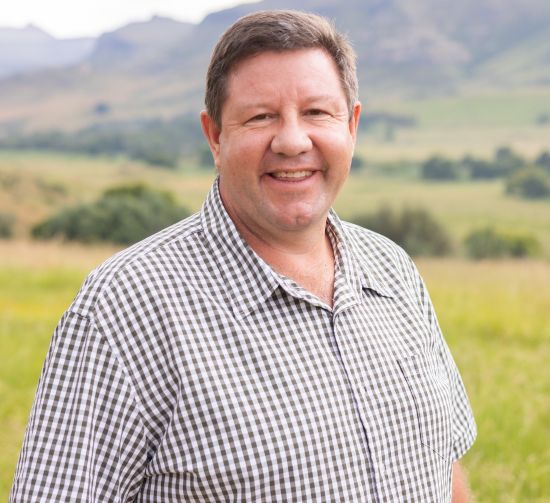
Kobus van Zyl, Omina Nutrition
Share
Facebook Twitter LinkedIn Pinterest Email

Every season begins with optimism. Every seed planted represents an investment in a future that can never be guaranteed. That has always been the nature of agriculture.

What has changed is the scale and complexity of the uncertainty producers must now navigate.

Extreme heat, prolonged dry periods and intense rainfall are reshaping the production environment, often within a single season.

The challenge is no longer simply producing higher yields. It is building farming systems capable of performing consistently in increasingly unpredictable conditions.

This requires a fundamental shift in thinking. For decades, agricultural success was largely measured by a farm’s ability to optimise yield under favourable conditions. Today, the defining characteristic of successful farming businesses is increasingly their ability to remain productive when conditions are less than favourable.

In other words, resilience is becoming one of agriculture’s most important competitive advantages. The weather cannot be managed. Preparation can.

ALSO READ FUBK, UNICEF launch green rising campaign with 1,000 trees

Preparing for weather fluctuation begins with understanding that every event sets off a chain reaction beneath the surface. Heat places greater pressure on plant physiology, drought limits biological activity and nutrient availability, while saturated soils restrict oxygen, weaken root function and reduce nutrient uptake. At the same time, shifting environmental conditions influence the behaviour of pests, weeds and diseases, creating additional challenges throughout the growing season.

Protecting yield potential, therefore, requires far more than responding to individual events. It requires building resilience into the farming system long before stress occurs.

The foundation of that resilience is soil quality. A functioning soil does far more than anchor roots. It regulates water movement, supports biological activity, cycles nutrients and creates the environment in which roots can explore, develop and perform.

When soil functions efficiently, crops are better equipped to absorb shocks, withstand environmental pressure and recover when favourable conditions return.

Yet soil remains one of the most underutilised risk-management tools available to producers. Too often, resilience is viewed through the lens of inputs and interventions rather than the farming system as a whole.

One of the greatest misconceptions in agriculture is the belief that resilience can be built in a single season. It cannot. Resilience is cumulative. It is the result of decisions made consistently over many years that gradually improve the productive capacity of the soil and the farming system.

At its core, soil quality is built on three pillars:

  • Chemical
  • Biological
  • Physical

Each pillar plays a critical role in determining how effectively a soil can store water, cycle nutrients, support root development and withstand environmental stress. When one pillar is neglected, the resilience of the entire system is compromised.

This is why resilience should not be viewed as a seasonal objective, but as a generational investment in the long-term productivity of the land.

From that foundation, every agronomic decision contributes to the outcome. Selecting crop varieties suited to local conditions, implementing balanced nutrition programmes, maintaining active root systems and incorporating scientifically validated biostimulants all play a role in strengthening the crop’s natural ability to cope with stresses.

Equally important is remaining responsive throughout the season. In a volatile production environment, static programmes often struggle to keep pace with changing realities. Producers increasingly need decision-making frameworks that enable them to adapt as conditions evolve.

Resilience is not created by a single product or practice. Resilience is built through an integrated approach where stewardship, genetics, nutrition, biology, technology and practical agronomy work together to reduce risk and support sustainable productivity over time.

This is where the conversation around resilience often falls short. There is a tendency to look for quick solutions to what are fundamentally long-term challenges. 

The farms that consistently perform over decades are seldom those that rely on isolated interventions. They are those that continually invest in the chemical, biological and physical quality of their soils while adapting management practices as conditions evolve.

This is where partnership matters. Working alongside experienced agronomists provides producers with the insight to interpret seasonal challenges, evaluate field-specific risks and make informed decisions which are based on science, local knowledge and ongoing field observations. 

Every proposal should strengthen the next, creating a connected system that continuously improves a farm’s capacity to manage uncertainty.

This systems-based thinking is what underpins the Omnia Nutriology® Model. Rather than viewing soil, nutrition, biology, environmental conditions and management decisions in isolation, the model recognises that each element influences the next.

By integrating scientific analysis, agronomic expertise, data-driven insights and practical on-farm experience, the model enables producers to move beyond reactive decision-making, moving towards a more resilient and sustainable approach to production.

Agriculture has never rewarded certainty. It has rewarded sound judgement, adaptability and a willingness to prepare before challenges arise. The producers who consistently succeed in the future will not necessarily be those who receive the best rainfall or avoid every weather event. It will be those who invest in resilient soils, apply integrated agronomic thinking and continue making informed decisions from planting through to harvest.

Resilience is not built when stress arrives. Resilience is built in every decision and strengthened through a long-term commitment to improving the chemical, biological and physical foundations of the soil.

In a world where uncertainty is becoming the norm, preparedness may prove to be agriculture’s most valuable input.

The strongest crops are therefore not defined by the absence of stress, but by the strength of the system that supports them long before stress occurs.

Because resilience is not a seasonal objective. It is a generational commitment.

Kobus van Zyl is an Agronomist at Omnia Nutriology®

environment extreme weather Omnia Nutriology®
Share. Facebook Twitter Pinterest LinkedIn WhatsApp Reddit Tumblr Email
Editor
  • Website

Related Posts

Ministry backs AUFCDN-IMP partnership to strengthen meat value chain

July 28, 2026

ACF introduces vetiver to combat soil erosion in Adamawa

July 28, 2026

Fintiri wins AAIS award for food security leadership

July 28, 2026

Leave A Reply Cancel Reply

NSPHCDA hands over rehabilitated Yidna PHC, charges community on ownership

July 29, 2026

[VIEWPOINT] Extreme weather demands a new standard of preparedness, by Kobus van Zyl

July 29, 2026

[VIEWPOINT] Africa’s green transition must not become a new colonial project, by Dr Melania Chiponda

July 29, 2026

Naira strengthens to N1,400/$ in parallel market as official rate hits N1,365

July 29, 2026
About Us
About Us

ASHENEWS (AsheNewsDaily.com), published by PenPlus Online Media Publishers, is an independent online newspaper. We report development news, especially on Agriculture, Science, Health and Environment as they affect the under-reported rural and urban poor.

We also conduct investigations, especially in the areas of ASHE, as well as other general interests, including corruption, human rights, illicit financial flows, and politics.

Contact Info:
  • 1st floor, Dogon Daji House, No. 5, Maiduguri Road, Sokoto
  • +234(0)7031140009
  • ashenewsdaily@gmail.com
Facebook Twitter Instagram Pinterest
© 2026 All Rights Reserved. ASHENEWS Daily Designed & Managed By DeedsTech

Type above and press Enter to search. Press Esc to cancel.