

• Home
  • Agric
  • Sci & Tech
  • Health
  • Environment
  • Hausa News
  • More
    • Business/Banking & Finance
    • POLITICS
    • Entertainments & Sports
    • International
    • Investigation
    • Law & Human Rights
    • Africa
    • ACCOUNTABILITY/CORRUPTION
    • Hassan Gimba
    • Column
    • Prof. Jibrin Ibrahim
    • Prof. M.K. Othman
    • Defense/Security
    • Education
    • Energy/Electricity
    • Entertainment/Arts & Sports
    • Society and Lifestyle
    • Food & Agriculture
    • Health & Healthy Living
    • International News
    • Interviews
    • Investigation/Fact-Check
    • LAW & HUMAN RIGHTS
    • Oil & Gas/Mineral Resources
    • PRESS FREEDOM/JOURNALISM/PR
    • General News
    • Presidency
  • About Us
    • Contact Us
    • Board Of Advisory
    • Privacy Policy
    • Ethics Policy
    • Teamwork And Collaboration Policy
    • Fact-Checking Policy
    • Advertising
  • Media OutReach Newswire
    • Wire News
  • The Stories
Facebook Twitter Instagram
Trending
  • [VIEWPOINT] Extreme weather demands a new standard of preparedness, by Kobus van Zyl
  • [VIEWPOINT] Africa’s green transition must not become a new colonial project, by Dr Melania Chiponda
  • Naira strengthens to N1,400/$ in parallel market as official rate hits N1,365
  • Nigeria’s consumer credit drops 19.9% to N3.8trn, first decline in 6 years – CBN
  • Nigeria’s FX inflows hit $109.9bn as autonomous sources drive growth – CBN
  • West African CSOs demand immediate release of detained Nigerien activist Tchangari
  • CBN fines banks N430m over customer complaints as refunds hit N19.1bn
  • LAMATA to fine cash-paying commuters from Aug. 1
Facebook Twitter Instagram YouTube
AsheNewsAsheNews
  • Home
  • Agric

    [VIEWPOINT] Extreme weather demands a new standard of preparedness, by Kobus van Zyl

    July 29, 2026

    Ministry backs AUFCDN-IMP partnership to strengthen meat value chain

    July 28, 2026

    ACF introduces vetiver to combat soil erosion in Adamawa

    July 28, 2026

    Fintiri wins AAIS award for food security leadership

    July 28, 2026

    ACF trains Gella residents on climate-smart agriculture

    July 27, 2026
  • Sci & Tech

    ALTON links rising data use to smartphones, digital tech

    July 29, 2026

    Nigeria launches unified govt service portal

    July 28, 2026

    Meta upgrades AI assistant with task planning, app tools

    July 28, 2026

    AMCON seeks strategic investors for NTEL

    July 28, 2026

    Urhoghide calls for collaboration to protect Nigeria’s fibre infrastructure

    July 27, 2026
  • Health

    Doctor urges journalists to prioritise regular check-ups

    July 29, 2026

    Niger records worrying hepatitis cases, intensifies awareness drive

    July 28, 2026

    Kaduna reviews 2026 health sector performance, sets priorities for 2027

    July 28, 2026

    NGO leads drive to improve childhood immunization in Sokoto

    July 28, 2026

    Young Nigerians at risk of hypertension due to lifestyle

    July 28, 2026
  • Environment

    [VIEWPOINT] Africa’s green transition must not become a new colonial project, by Dr Melania Chiponda

    July 29, 2026

    LAMATA to fine cash-paying commuters from Aug. 1

    July 29, 2026

    FUBK, UNICEF launch green rising campaign with 1,000 trees

    July 29, 2026

    Oando blames third party sabotage for June oil spill

    July 28, 2026

    NGO founder urges stronger ban on illegal sand mining in Rivers

    July 28, 2026
  • Hausa News

    UNA signs MoU to launch air Bissau in Guinea-Bissau

    June 15, 2026

    Otti plans 250-room 5-star hotel in Umuahia

    April 11, 2026

    Anti-quackery task force seals 4 fake hospitals in Rivers

    August 29, 2025

    [BIDIYO] Yadda na lashe gasa ta duniya a fannin Ingilishi – Rukayya ‘yar shekara 17

    August 6, 2025

    A Saka Baki, A Sasanta Saɓani Tsakanin ‘Yanjarida Da Liman, Daga Muhammad Sajo

    May 21, 2025
  • More
    1. Business/Banking & Finance
    2. POLITICS
    3. Entertainments & Sports
    4. International
    5. Investigation
    6. Law & Human Rights
    7. Africa
    8. ACCOUNTABILITY/CORRUPTION
    9. Hassan Gimba
    10. Column
    11. Prof. Jibrin Ibrahim
    12. Prof. M.K. Othman
    13. Defense/Security
    14. Education
    15. Energy/Electricity
    16. Entertainment/Arts & Sports
    17. Society and Lifestyle
    18. Food & Agriculture
    19. Health & Healthy Living
    20. International News
    21. Interviews
    22. Investigation/Fact-Check
    23. LAW & HUMAN RIGHTS
    24. Oil & Gas/Mineral Resources
    25. PRESS FREEDOM/JOURNALISM/PR
    26. General News
    27. Presidency
    Featured
    Recent

    [VIEWPOINT] Extreme weather demands a new standard of preparedness, by Kobus van Zyl

    July 29, 2026

    [VIEWPOINT] Africa’s green transition must not become a new colonial project, by Dr Melania Chiponda

    July 29, 2026

    Naira strengthens to N1,400/$ in parallel market as official rate hits N1,365

    July 29, 2026
  • About Us
    1. Contact Us
    2. Board Of Advisory
    3. Privacy Policy
    4. Ethics Policy
    5. Teamwork And Collaboration Policy
    6. Fact-Checking Policy
    7. Advertising
    Featured
    Recent

    [VIEWPOINT] Extreme weather demands a new standard of preparedness, by Kobus van Zyl

    July 29, 2026

    [VIEWPOINT] Africa’s green transition must not become a new colonial project, by Dr Melania Chiponda

    July 29, 2026

    Naira strengthens to N1,400/$ in parallel market as official rate hits N1,365

    July 29, 2026
  • Media OutReach Newswire
    • Wire News
  • The Stories
AsheNewsAsheNews
Home»Environment/Climate Change»[VIEWPOINT] Africa’s green transition must not become a new colonial project, by Dr Melania Chiponda
Environment/Climate Change

[VIEWPOINT] Africa’s green transition must not become a new colonial project, by Dr Melania Chiponda

EditorBy EditorJuly 29, 2026Updated:July 29, 2026No Comments5 Mins Read
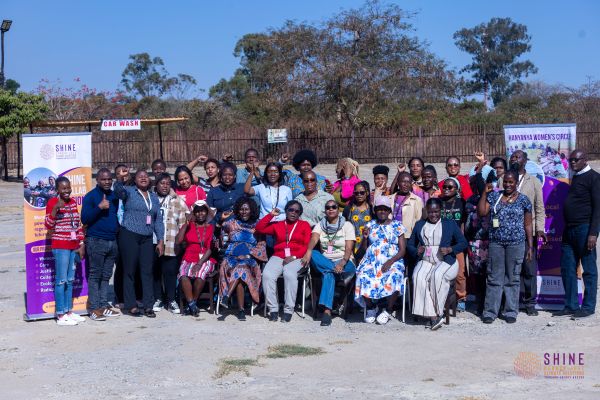
Participants at the just concluded Ecofeminism 2026 Convening that took place in Harare, Zimbabwe
Share
Facebook Twitter LinkedIn Pinterest Email

Africa stands at the centre of the world’s energy transition. Beneath its soils lie the lithium, cobalt, graphite, manganese, nickel and rare earth minerals that will power electric vehicles, batteries and renewable energy systems across the globe. At the same time, the continent is being celebrated for expanding renewable energy generation and positioning itself as a leader in climate action.

Yet beneath this optimistic narrative lies a far more troubling reality.

Across Africa, communities are increasingly paying the price for a transition that promises to save the planet while sacrificing the very people who have contributed least to the climate crisis.

The global shift away from fossil fuels is rapidly becoming another chapter in Africa’s long history of resource extraction—one where the language has changed from colonialism and development to sustainability and net zero, but the lived experiences of many communities in numerous villages in Africa remain painfully familiar.

This uncomfortable truth emerged repeatedly during the Regional Ecofeminist Convening held in Harare, Zimbabwe, where activists, community leaders, researchers and legal experts from across the continent examined what they described as “energy transition extractivism.”

The phrase may sound new, but the experience is not.

In the Kivu region of the Democratic Republic of the Congo and Hanyanya in Bikita in Zimbabwe, communities living near critical mineral deposits continue to face displacement, environmental destruction, labour exploitation, and violence as demand for minerals used in batteries and renewable technologies accelerates. Similar concerns are emerging in Mozambique, Uganda, Madagascar and other mineral-rich countries.

What is marketed globally as clean energy often begins with dirty extraction.

The contradiction extends beyond mining.

Kenya is frequently showcased as one of Africa’s renewable energy success stories. More than 90 percent of its electricity comes from renewable sources, making it a model for the continent. But statistics alone tell only part of the story.

Behind many geothermal plants, wind farms and other large renewable energy projects are the Masai and Turkana pastoralists and indigenous communities who have lost grazing land, ancestral territories and cultural heritage. While multinational companies and investors celebrate megawatts generated, many host communities continue to struggle with expensive electricity, limited access to energy and inadequate compensation.

Renewable energy cannot simply replace fossil fuels if it reproduces the same patterns of exclusion, land dispossession and inequality.

The transition cannot be called “just” when those expected to bear its greatest costs have little influence over its design.

South Africa’s Just Energy Transition Partnership (JET-P), for example, illustrates another important lesson. Backed by an $8.5 billion international financing package, the initiative was expected to help the country move away from coal while protecting workers and affected communities.

However, it is clear there is an uncomfortable reality: many promises around reskilling, local economic transformation and fair compensation remain unmet because they were political commitments rather than legally enforceable obligations.

Communities were left with expectations but few guarantees.

This should serve as a warning to governments across Africa negotiating similar climate finance and transition partnerships.

Justice cannot be built on goodwill alone. It requires enforceable agreements, transparent governance and meaningful participation by those whose futures are at stake.

Perhaps the most striking conversations at the recent 2026 regional ecofeminist convening in Harare, Zimbabwe, centred not on mining or energy projects themselves but on power—who holds it and who is excluded from it.

Communities repeatedly described feeling locked out of decisions affecting their land. Environmental Impact Assessments are often conducted without genuine consultation. Access to critical information is restricted. Contracts are negotiated behind closed doors, excluding communities on whose land these critical minerals are buried. By the time communities become aware of projects, decisions have largely been made.

This imbalance extends into the legal system.

Too often, communities encounter lawyers only after conflict has erupted. Litigation becomes expensive, slow and uncertain, while governments and corporations possess vastly greater legal and financial resources.

The 2026 regional ecofeminist convening participants called for expanding what has become known as movement lawyering—an approach where lawyers work alongside communities instead of merely representing them in court. Such lawyers understand that land rights, indigenous identity and environmental justice are not simply legal questions but social, cultural and historical ones.

Equally important is investing in community paralegals, strengthening cross-border legal collaboration and recognising indigenous systems of knowledge and justice.

The future of Africa’s energy transition should not be determined solely in boardrooms, ministries or international climate negotiations.

It must also be shaped in villages, pastoral lands, mining communities and indigenous territories.

Women have a particularly important role to play.

Across the continent, women are often the first to experience the impacts of land dispossession, water pollution and environmental degradation. Yet they remain underrepresented in negotiations that determine the future of their communities.

An ecofeminist approach reminds us that environmental justice and gender justice are inseparable. Protecting ecosystems while ignoring the rights and voices of women cannot produce lasting sustainability.

If the world genuinely seeks a just transition, it must move beyond measuring success in megawatts installed, electric vehicles produced or tonnes of carbon emissions reduced.

Success should also be measured by whether communities remain on their land, whether indigenous peoples retain their rights, whether women participate equally in decision-making, and whether local economies become more resilient rather than more dependent.

Africa does not reject the energy transition.

It rejects a transition that repeats the mistakes of the past.

The continent should not once again become merely a supplier of raw materials while others capture the benefits of industrialisation and green growth.

A truly just transition is democratic, community-led, gender-responsive and grounded in human rights. Anything less risks replacing one form of extractivism with another—this time painted green.

The green economy must not become the latest justification for old injustices. Africa deserves an energy future that is not only renewable but also fair.

Melania Chiponda is a climate change activist and executive director, Shine Collab, a global feminist network advancing women-led energy access, climate justice, and community power across Africa and the Global South

Green transition Shine Collab
Share. Facebook Twitter Pinterest LinkedIn WhatsApp Reddit Tumblr Email
Editor
  • Website

Related Posts

LAMATA to fine cash-paying commuters from Aug. 1

July 29, 2026

FUBK, UNICEF launch green rising campaign with 1,000 trees

July 29, 2026

Oando blames third party sabotage for June oil spill

July 28, 2026

Leave A Reply Cancel Reply

[VIEWPOINT] Extreme weather demands a new standard of preparedness, by Kobus van Zyl

July 29, 2026

[VIEWPOINT] Africa’s green transition must not become a new colonial project, by Dr Melania Chiponda

July 29, 2026

Naira strengthens to N1,400/$ in parallel market as official rate hits N1,365

July 29, 2026

Nigeria’s consumer credit drops 19.9% to N3.8trn, first decline in 6 years – CBN

July 29, 2026
About Us
About Us

ASHENEWS (AsheNewsDaily.com), published by PenPlus Online Media Publishers, is an independent online newspaper. We report development news, especially on Agriculture, Science, Health and Environment as they affect the under-reported rural and urban poor.

We also conduct investigations, especially in the areas of ASHE, as well as other general interests, including corruption, human rights, illicit financial flows, and politics.

Contact Info:
  • 1st floor, Dogon Daji House, No. 5, Maiduguri Road, Sokoto
  • +234(0)7031140009
  • ashenewsdaily@gmail.com
Facebook Twitter Instagram Pinterest
© 2026 All Rights Reserved. ASHENEWS Daily Designed & Managed By DeedsTech

Type above and press Enter to search. Press Esc to cancel.