


Former President Ibrahim Badamasi Babangida’s (IBB) attempt to remove the ethnic label from Nigeria’s first military coup may not have succeeded, as a counter-explanation argues that it could only be described as an Igbo-led coup.
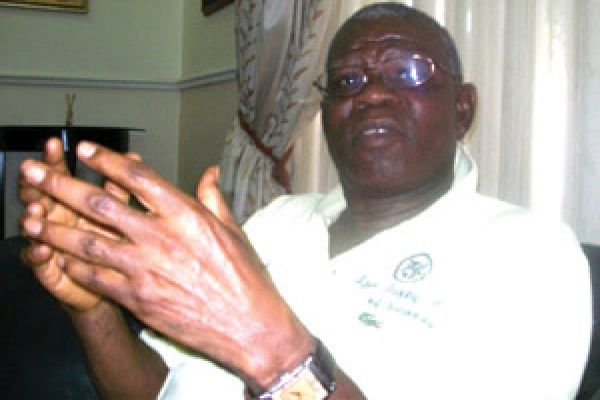
This perspective was presented in reaction to Babangida’s book, A Journey in Service, by a former member of the Provisional Ruling Council (PRC) and Minister of Communications under General Sani Abacha’s regime, Major General Tajudeen Olanrewaju (Rtd).
In Chapter 3, page 39, under the topic “A Young Officer and a Gentleman,” Babangida attempts to exonerate the first coup plotters from ethnic motivations. While Olanrewaju somewhat agrees with his former boss, he asserts that a coup is often labeled based on public perception.
General Olanrewaju categorically stated that such labeling occurs because coup groups are typically dominated by members of the same ethnic stock.
Corroborating Babangida’s stance, Olanrewaju—who also served as Nigeria’s Defence Adviser in Moscow, Russia—acknowledged IBB as a figure who “will continue to remain relevant in Nigeria’s national affairs.”
However, he expressed a differing opinion:
“The opinion expressed by IBB is flawed in my assessment. I have a copy of the book, and while he argues that the coup was not sectional, its outcome was also not national.
“A coup takes its identity from its chief planner and final outcomes. The leadership that directs the coup ultimately determines its label.
“The national media has always played a key role in shaping public perception and influencing how a coup is identified. The media’s interests—whether economic, political, or sectional—play into this. Whether a coup is successful or not, it will always be assigned a specific nomenclature.
“The narratives surrounding the nature, content, style, and aim of Nzeogwu’s coup cannot be dissociated from its Igbo identity. However, I concede that General IBB is entitled to his own conclusion. Military coups, by their nature, invite analysis and debate from security and defense experts.
“In the realm of human nature, we remember the past, experience the present, and hope for the future. These all shape our consciousness. While the present is a state of awareness, the past remains a recollection. General Babangida’s autobiography will serve as a key reference for historians and a valuable study for students and scholars examining Nigeria’s evolution from 1966 to the present.
“IBB will continue to remain a relevant figure in Nigeria’s national affairs. As former President Goodluck Jonathan said, the history of Nigeria would be incomplete without him.”
