


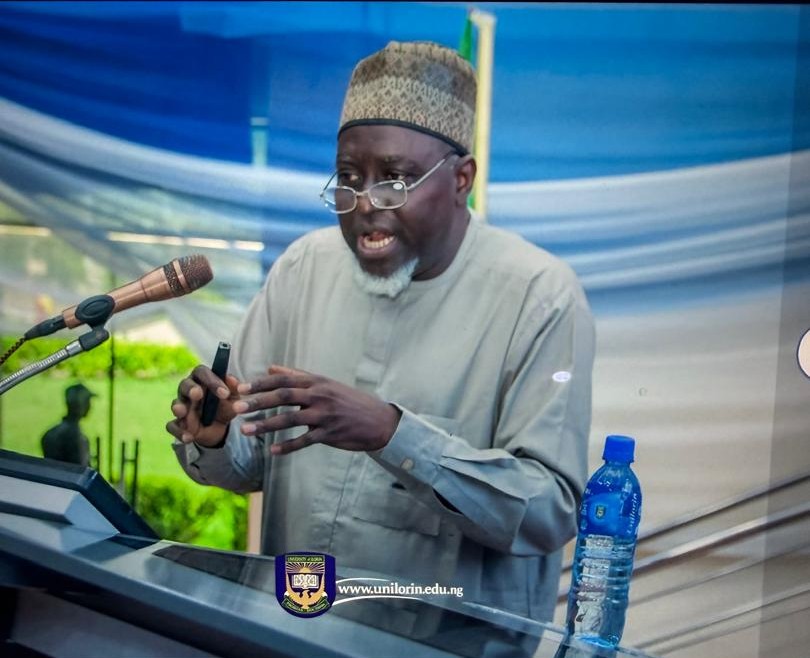
A professor of social history and Vice Chancellor of the Northwest University, Sokoto (NWUS), Mukhtar Umar Bunza, has revealed that scholars of the Sokoto Caliphate travelled to find and copy books, built private collections across the region and maintained libraries that supported a far-reaching intellectual culture.
He made the revelation as a Guest Lecturer, while delivering the Second Is-haq Oloyede Annual Humanities Lecture, organised by the Faculty of Arts at the University of Ilorin on Friday, October 8, 2026.
Bunza, in his paper “The Sokoto Caliphate Intellectual Legacy and the Future of Humanities in Nigeria”, argued that many public collections were later vandalised or looted during British and French military campaigns, leaving valuable manuscripts scattered or lost.
ALSO READ Caliphate scholars defended women’s education, historian tells UNILORIN lecture
ALSO READ Sokoto Caliphate’s intellectual legacy offers Nigerian universities homegrown knowledge — Historian
Drawing on accounts of the scholar Abdullahi Danfodiyo, Bunza said the pursuit of books was a defining feature of the Caliphate’s scholarly life. Abdullahi, he said, described seeking out books he had heard about, then acquiring or copying them.
According to the Guest Lecturer, Usman Danfodiyo maintained a well-stocked library at Degel. When the scholars migrated from Degel to Gudu, the collection was so large that a Tuareg disciple, Agali, used several camels to transport the books.
The culture of book collecting extended beyond the main centres of the Caliphate, Bunza said. Scholarly families kept private libraries across areas including Adamawa, Bauchi, Ilorin and Nupe, as well as regions now within Burkina Faso, Niger, Chad and Cameroon.
Bunza added that while public libraries suffered during the invasions, some private collections remained with families and were passed down through generations. The circulation and demand for books, the historian stressed, also helped make the book trade a lucrative activity in Muslim communities across the Caliphate.
His lecture focused on the intellectual legacy of the 19th-century polity, including its contributions to education, the humanities, science and medicine.
Bunza urged Nigerian universities to draw more on local historical writings and manuscript collections as sources for teaching and research.
The presentation described the destruction and dispersal of public collections as part of the broader history of the Caliphate’s libraries.
