

• Home
  • Agric
  • Sci & Tech
  • Health
  • Environment
  • Hausa News
  • More
    • Business/Banking & Finance
    • POLITICS
    • Entertainments & Sports
    • International
    • Investigation
    • Law & Human Rights
    • Africa
    • ACCOUNTABILITY/CORRUPTION
    • Hassan Gimba
    • Column
    • Prof. Jibrin Ibrahim
    • Prof. M.K. Othman
    • Defense/Security
    • Education
    • Energy/Electricity
    • Entertainment/Arts & Sports
    • Society and Lifestyle
    • Food & Agriculture
    • Health & Healthy Living
    • International News
    • Interviews
    • Investigation/Fact-Check
    • LAW & HUMAN RIGHTS
    • Oil & Gas/Mineral Resources
    • PRESS FREEDOM/JOURNALISM/PR
    • General News
    • Presidency
  • About Us
    • Contact Us
    • Board Of Advisory
    • Privacy Policy
    • Ethics Policy
    • Teamwork And Collaboration Policy
    • Fact-Checking Policy
    • Advertising
  • Media OutReach Newswire
    • Wire News
  • The Stories
Facebook Twitter Instagram
Trending
  • Lagos residents blame urbanisation for worsening floods
  • PTA rejects concession of King’s college Lagos to Old Boys
  • Calabar landslides kill 5, destroy homes
  • Who gets to participate? Zauro and the architecture of economic citizenship, by Mohammed M. Haruna, PhD, mnipr
  • PTA calls for upward review of teachers’ salaries
  • FG expands funding, local production to improve cancer care
  • Gov Otti warns Abia farmers to register for input support
  • AFAN in Ogun dismisses impostors parading as executives
Facebook Twitter Instagram YouTube
AsheNewsAsheNews
  • Home
  • Agric

    Gov Otti warns Abia farmers to register for input support

    July 11, 2026

    AFAN in Ogun dismisses impostors parading as executives

    July 11, 2026

    BOA launches 2026 wet season input distribution in Katsina

    July 11, 2026

    From scarcity to scale: What Africa can learn from India’s agricultural transformation, by Alice Ruhweza and Dr Purvi Mehta

    July 10, 2026

    Experts recommend local alternatives to cut poultry feed costs

    July 10, 2026
  • Sci & Tech

    Nigeria’s food service industry hits $11.09bn in 2025 – Moniepoint

    July 10, 2026

    Academy of medical sciences condemns maternal mortality, epidemic risks

    July 9, 2026

    NCC advances transparent pricing for fibre sharing

    July 8, 2026

    IHVN, partners launch Lassa fever research to support vaccine development in Bauchi

    July 8, 2026

    Meta rolls out first in-house AI image generator across WhatsApp, Instagram, Facebook

    July 8, 2026
  • Health

    FG expands funding, local production to improve cancer care

    July 11, 2026

    Niger targets 100 Level-2 PHCs by year-end

    July 11, 2026

    Psychiatrist urges Nigerians to prioritise brain health

    July 10, 2026

    Niger govt intensifies monitoring of PHC upgrades to level II

    July 10, 2026

    Zamfara approves 6 month maternity leave for female civil servants

    July 10, 2026
  • Environment

    Lagos residents blame urbanisation for worsening floods

    July 12, 2026

    PTA rejects concession of King’s college Lagos to Old Boys

    July 12, 2026

    Calabar landslides kill 5, destroy homes

    July 12, 2026

    NMC dismisses claims of Nigeria’s IMO observer status

    July 11, 2026

    Association urges Nigerians on proper waste management

    July 11, 2026
  • Hausa News

    UNA signs MoU to launch air Bissau in Guinea-Bissau

    June 15, 2026

    Otti plans 250-room 5-star hotel in Umuahia

    April 11, 2026

    Anti-quackery task force seals 4 fake hospitals in Rivers

    August 29, 2025

    [BIDIYO] Yadda na lashe gasa ta duniya a fannin Ingilishi – Rukayya ‘yar shekara 17

    August 6, 2025

    A Saka Baki, A Sasanta Saɓani Tsakanin ‘Yanjarida Da Liman, Daga Muhammad Sajo

    May 21, 2025
  • More
    1. Business/Banking & Finance
    2. POLITICS
    3. Entertainments & Sports
    4. International
    5. Investigation
    6. Law & Human Rights
    7. Africa
    8. ACCOUNTABILITY/CORRUPTION
    9. Hassan Gimba
    10. Column
    11. Prof. Jibrin Ibrahim
    12. Prof. M.K. Othman
    13. Defense/Security
    14. Education
    15. Energy/Electricity
    16. Entertainment/Arts & Sports
    17. Society and Lifestyle
    18. Food & Agriculture
    19. Health & Healthy Living
    20. International News
    21. Interviews
    22. Investigation/Fact-Check
    23. LAW & HUMAN RIGHTS
    24. Oil & Gas/Mineral Resources
    25. PRESS FREEDOM/JOURNALISM/PR
    26. General News
    27. Presidency
    Featured
    Recent

    Lagos residents blame urbanisation for worsening floods

    July 12, 2026

    PTA rejects concession of King’s college Lagos to Old Boys

    July 12, 2026

    Calabar landslides kill 5, destroy homes

    July 12, 2026
  • About Us
    1. Contact Us
    2. Board Of Advisory
    3. Privacy Policy
    4. Ethics Policy
    5. Teamwork And Collaboration Policy
    6. Fact-Checking Policy
    7. Advertising
    Featured
    Recent

    Lagos residents blame urbanisation for worsening floods

    July 12, 2026

    PTA rejects concession of King’s college Lagos to Old Boys

    July 12, 2026

    Calabar landslides kill 5, destroy homes

    July 12, 2026
  • Media OutReach Newswire
    • Wire News
  • The Stories
AsheNewsAsheNews
Home»Food & Agriculture»Sahel farmers turn to sorghum–cowpea intercropping for better harvests
Food & Agriculture

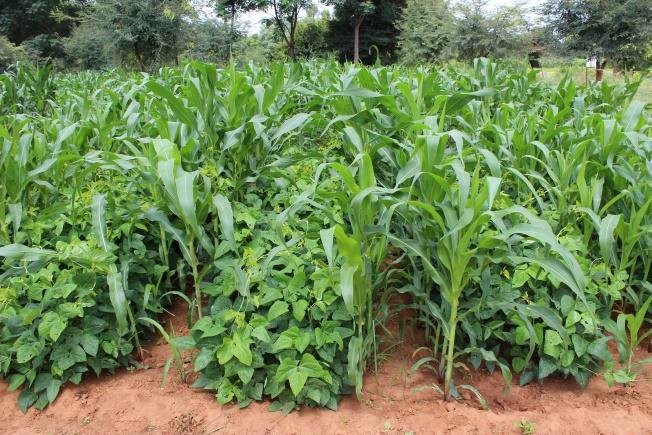
Sahel farmers turn to sorghum–cowpea intercropping for better harvests

Abdallah el-KurebeBy Abdallah el-KurebeSeptember 2, 2025Updated:September 2, 2025No Comments2 Mins Read
Share
Facebook Twitter LinkedIn Pinterest Email

Researchers working in the central plateau of Burkina Faso (Saria) have confirmed that intercropping sorghum and cowpea offers a highly effective solution to combat runoff, soil erosion, and poor yields in the Sahel region.

The semi-arid area, with annual rainfall averaging about 800 millimeters, sits on gently sloping land (less than 3%). Despite the modest slope, farmers face serious land degradation problems, with up to 40% of rainfall lost as runoff and soil erosion reaching 4–8 metric tons per hectare each year. These conditions threaten food security and long-term agricultural productivity.

The experiment

Over a three-year field study, scientists tested different cropping systems on ferric lixisol soils—a common but fragile soil type in the region that is prone to erosion and nutrient depletion.

They compared:

Sorghum grown alone

Cowpea grown alone

Sorghum–cowpea intercropping

Runoff and soil loss were carefully measured during rainfall events, while yields were recorded to assess productivity outcomes.

The results

The findings showed clear advantages for intercropping:

Runoff control: Sorghum–cowpea plots reduced runoff by 20–30% compared to sorghum monocrops, and by an even greater 45–55% compared to cowpea monocrops.

Erosion reduction: Soil loss was cut by at least 50% when the two crops were grown together, demonstrating intercropping’s protective effect on fragile Sahel soils.

Yield benefits: Intercropped plots produced double the grain yields of monocropped sorghum or cowpea, showing that conservation does not come at the expense of productivity.

Why Intercropping Works

The success of the system lies in how the two crops complement each other:

Sorghum, a tall cereal, provides ground cover with its canopy, reducing the impact of raindrops on the soil.

Cowpea, a spreading legume, covers the soil surface quickly, stabilizing it and improving nitrogen content through fixation.
Together, they create a natural shield against erosion while enhancing soil fertility and overall crop performance.

Broader Implications

For farming communities in the Sahel—where fragile soils, erratic rainfall, and food insecurity converge—this technique presents a low-cost, climate-smart solution. It addresses both environmental challenges (soil degradation, water loss) and economic needs (higher yields and better food security).

Experts believe that scaling up sorghum–cowpea intercropping across West Africa could help reverse land degradation trends while supporting sustainable agriculture for millions of smallholder farmers.

Burkina Faso Sorghum-Cowpea intercropping
Share. Facebook Twitter Pinterest LinkedIn WhatsApp Reddit Tumblr Email
Abdallah el-Kurebe
  • Website
  • Facebook
  • Twitter
  • LinkedIn

Related Posts

Gov Otti warns Abia farmers to register for input support

July 11, 2026

AFAN in Ogun dismisses impostors parading as executives

July 11, 2026

BOA launches 2026 wet season input distribution in Katsina

July 11, 2026

Leave A Reply Cancel Reply

Lagos residents blame urbanisation for worsening floods

July 12, 2026

PTA rejects concession of King’s college Lagos to Old Boys

July 12, 2026

Calabar landslides kill 5, destroy homes

July 12, 2026

Who gets to participate? Zauro and the architecture of economic citizenship, by Mohammed M. Haruna, PhD, mnipr

July 11, 2026
About Us
About Us

ASHENEWS (AsheNewsDaily.com), published by PenPlus Online Media Publishers, is an independent online newspaper. We report development news, especially on Agriculture, Science, Health and Environment as they affect the under-reported rural and urban poor.

We also conduct investigations, especially in the areas of ASHE, as well as other general interests, including corruption, human rights, illicit financial flows, and politics.

Contact Info:
  • 1st floor, Dogon Daji House, No. 5, Maiduguri Road, Sokoto
  • +234(0)7031140009
  • ashenewsdaily@gmail.com
Facebook Twitter Instagram Pinterest
© 2026 All Rights Reserved. ASHENEWS Daily Designed & Managed By DeedsTech

Type above and press Enter to search. Press Esc to cancel.