


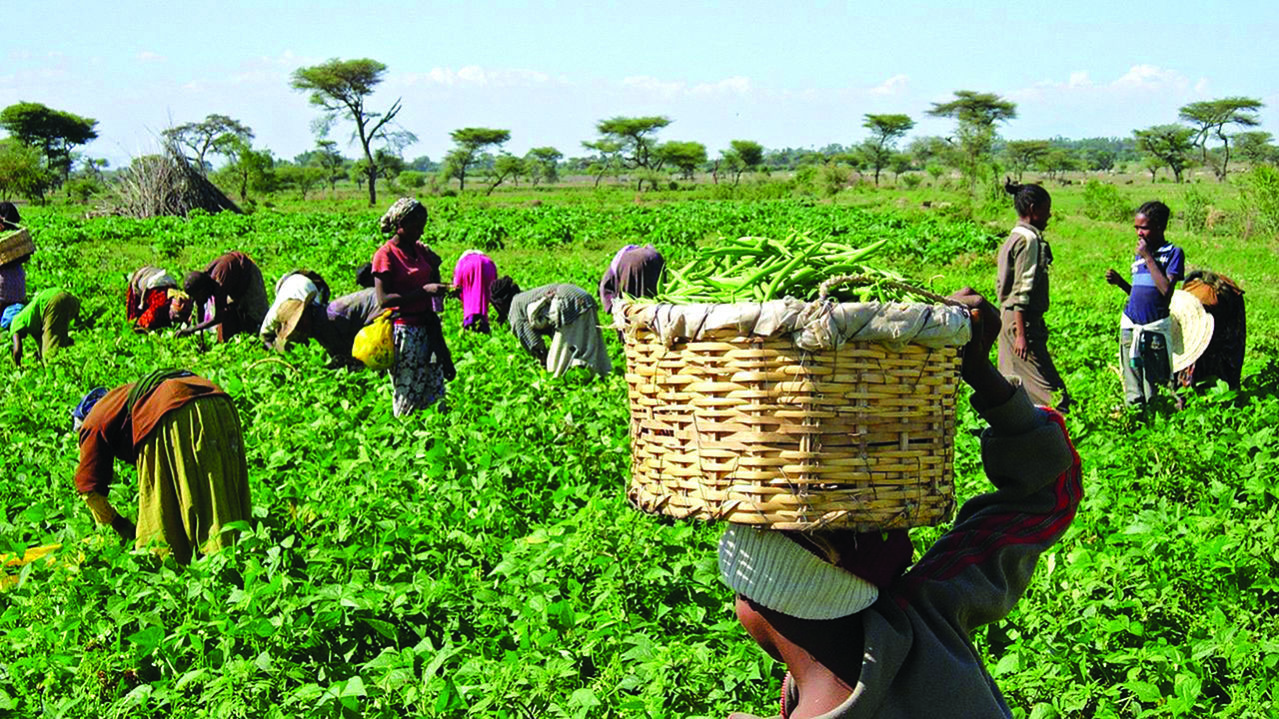
No fewer than 8,950 farmers have benefited from the Sasakawa Africa Association (SAA) agricultural intervention in Benue.
The beneficiaries lauded the programme for transforming farming practices, increasing yields and improving market opportunities.
They gave their testimonies on Monday during field trips to demonstration farms in communities in Gwer East and Gboko Local Government Areas (LGAs) of the state.
The Nippon Foundation funded the project through SAA, in partnership with the Benue Bureau of Agricultural Development and Mechanisation.
The integrated agricultural extension project is being implemented in eight LGAs, focusing on soybeans, maize, rice and horticultural crops to promote commercial, market-oriented agriculture.
Some beneficiaries, Richard Aondofa, Patience Kwaghba and Ronald Gbata, said the intervention provided modern knowledge, improved inputs and sustainable techniques that enhanced productivity and reduced production costs.
Aondofa said SAA training improved land preparation, planting, fertiliser application and crop management, while farmers learnt the effective use of herbicides, organic manure and crop residues.
The beneficiary stated that improved varieties and proper fertiliser application significantly increased yields, while the provision of fertiliser reduced the financial burden on smallholder farmers.
He added that the community had introduced measures to prevent crop theft and livestock invasion, including sensitisation and barriers to protect farms from destruction.
Kwaghba, who is the chairlady of her cooperative society, said farmers received training on farm preparation, manure and fertiliser application, pest control, and maize and soybean management.
She said the techniques enabled farmers to harvest more from smaller plots and changed their perception of agriculture from subsistence farming to a business.
Kwaghba said SAA provided improved seedlings, manure and fertiliser, while facilitating market access and helping farmers overcome transportation challenges and the poor prices offered by local traders.
Gbata, a farmer from Luga community, said he initially doubted the intervention but became convinced after applying the recommended techniques, especially biochar and compost manure.
He said the practices improved crop performance and reduced expenditure, urging SAA to expand the programme to benefit more farmers.
Dr Godwin Atser, SAA Country Director, Nigeria, said the initiative promoted sustainable and regenerative agriculture by providing climate-resilient seeds, training, extension support and practical demonstrations.
Atser said 1,366 farmers were mobilised and sensitised, while 8,950 farmers were reached through step-down extension training on group dynamics, aggregation, record-keeping and market access.
Speaking through Mr Nathaniel Otene, Technical Coordinator, Atser said SAA bridged the gap between research and grassroots farming by introducing improved technologies and varieties, biochar, compost, intercropping and crop rotation.
Mr Moshood Suleiman, Programme Officer, Safe, Adequate and Nutritious Food System, said SAA established a cassava processing centre at Cheedu, Gwer East, equipped with graters, presses, fryers and a solar-powered borehole.
Jonathan Yassah, Programme Officer, Markets, Inclusive Markets and Business Development, said the intervention targeted women, youths and persons with disabilities while improving cassava production, value addition and market linkages.
Yassah said the project secured buyers for gari while establishing 1.5 hectares of seed multiplication plots involving 75 producers, training 50 participants and facilitating 18 commercial agreements.
I shortened the headline and corrected grammar, punctuation, sentence flow and a few awkward constructions while retaining the original facts and news-reporting style.
