


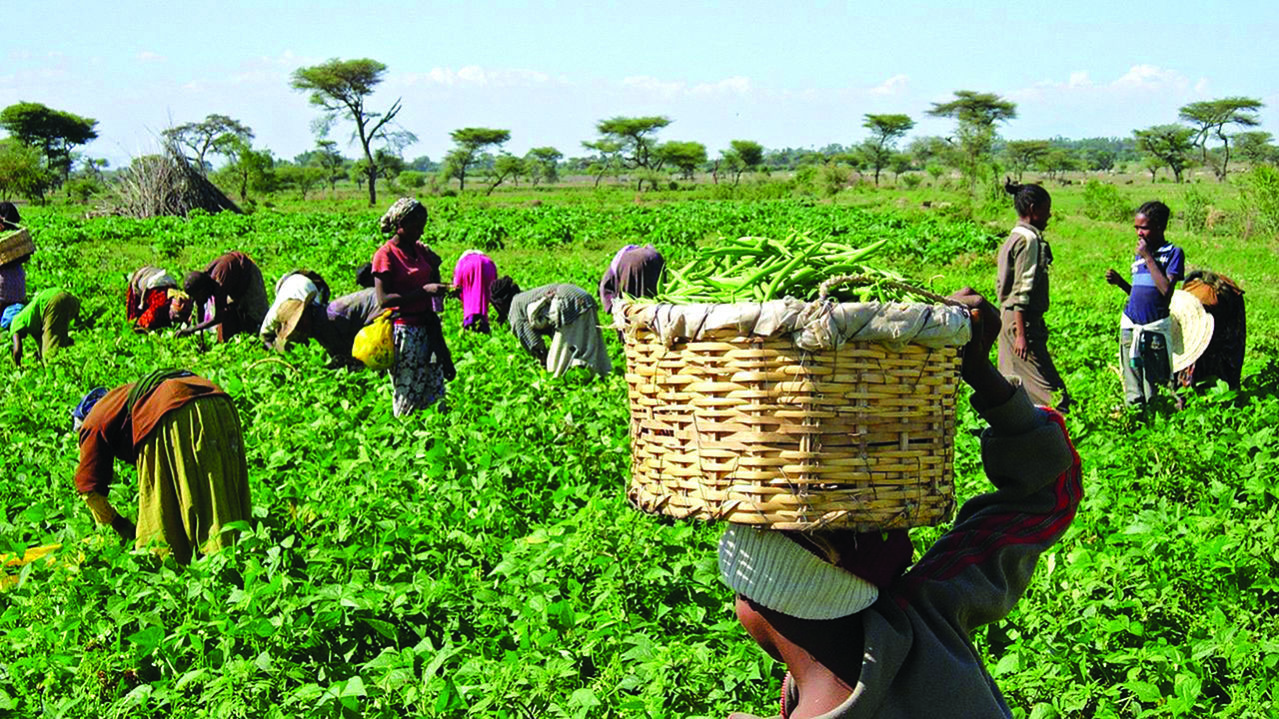
The Ojo Farmers Community in Lagos State has urged the government to provide shared irrigation and transportation facilities for farming clusters.
The chairperson of the community, Mrs Mariam Ali, made the call in an interview with reporters in Lagos.
Ali said high irrigation and transportation costs were limiting farmers’ ability to sustain production and take their produce directly to major markets.
According to her, farmers within the same cluster could jointly use pumping machines and share the cost of electricity and other operational expenses.
“We have a place inside the Lagos State University where four or five of us are farming together.
“If they give us a pumping machine with a direct source of electricity and a prepaid meter, everybody in the cluster can use it,” she said.
Ali said farmers could connect hoses to shared facilities and draw water when needed, while larger clusters could be provided with solar-powered pumping machines.
She added that smaller clusters might require conventional pumping machines connected to reliable electricity, while watering cans could be provided where larger facilities were not feasible.
The chairperson said access to water was particularly important for vegetable farmers because many vegetables have short production cycles and require regular attention.
She said shared irrigation facilities would help farmers sustain production and reduce the pressure associated with manually watering crops.
On transportation, Ali said many farmers had buyers for their produce but lacked affordable means of moving vegetables from farms to major markets.
“Because of transportation, I have people buying from me at Mile 12 and Mushin, but the major challenge I have is the means of transporting it,” she said.
Ali said she currently had more than 120 beds of shoko (spinach) and other vegetables that could be sold to buyers if transportation was readily available.
She said some potential buyers had contacted her after learning that she had produce available, but transportation cost and availability remained challenges.
According to her, affordable farm-to-market transport would encourage farmers to sell directly to traders, improve their earnings and reduce dependence on intermediaries.
Ali proposed that the government provide vans or other suitable vehicles to farming clusters under a leasing arrangement.
She said farmers could pay for the service while the government retained ownership of the vehicles and monitored their use.
“If we have a van and we are in a cluster, I will know that it is available in the morning and quickly go and pick the produce for them,” she said.
Ali said such an arrangement could reduce the cost of transporting individual bags of produce from farms to collection points.
She said farmers currently paid varying amounts to local transporters, depending on the distance between their farms and collection points.
The farmer recalled that transportation had also affected the success of some of her previous farming projects outside Ojo.
She said her group once cultivated watermelon on leased farmland but faced difficulties moving the produce from the farm after harvesting.
According to her, only one of about 10 groups involved in the project succeeded because some members could not regularly monitor their farms or move produce out.
Ali urged the government to include irrigation and farm transportation in agricultural support programmes, especially for farming clusters producing vegetables for urban markets.
She also called for regular visits by agricultural liaison officers to identify irrigation, transportation and other challenges affecting farmers in different locations.
Ali said farmers should be consulted before interventions were designed to ensure that equipment provided was suited to the conditions of each farming cluster.
She said farmers were willing to contribute financially to the maintenance of shared facilities if the arrangements were properly managed.
Ali expressed optimism that improved irrigation, access to land, finance, machinery and transportation would help farmers increase food production in Lagos.
She said better access to irrigation and markets would encourage farmers to increase production by giving them greater confidence that their produce could reach buyers on time.
