


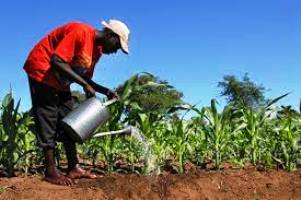
An agriculture expert, Mr. Sunday Obasi, has urged Nigerians and small-scale farmers to adopt all-year-round farming techniques, particularly organic and climate-resilient agriculture, to boost national food security.
Obasi, a staff member of the Federal Ministry of Agriculture and Food Security, gave the advice during an All-Year-Round Farming Training held on Thursday in Abuja.
The training was organized by the Allied Products Initiative (FFAPI).
Obasi stressed the need for Nigerian households and smallholder farmers to embrace improved dry-season farming techniques to increase food supply, reduce high market prices and economically empower women.
According to him, proper planning, water management, land preparation and the use of appropriate irrigation systems remain the backbone of successful dry-season farming.
He explained that in northern states such as Kano, Katsina and Sokoto, farmers commonly use flood irrigation, where water flows through channels across farmlands. While effective, he noted that the method often leads to nutrient loss as water moves from upstream to downstream, making soil enrichment essential.
Obasi identified land preparation as one of the major challenges facing agriculture in Nigeria.
“No matter the amount of fertilizer applied, crops will not perform well if the soil is not properly loosened,” he said.
He added that households could improve their diets and reduce health risks by producing vegetables in home gardens.
Obasi also highlighted the growing opportunities in greenhouse farming, describing it as a profitable venture for investors.
He said a standard greenhouse with about 490 plants could yield up to 1.2 metric tonnes of produce in six months, with steady demand from retailers and supermarkets.
According to him, promoting vegetable production at household and community levels would reduce market pressure and help stabilize food prices.
“The time has come for Nigerians to take their destiny in their own hands by producing what they consume, both for health and economic reasons,” he said.
In her remarks, Mrs. Christy Yakubu, President of FFAPI, said the programme was designed to equip farmers with practical skills to boost productivity amid climate variability.
She described the initiative as a pivotal step toward strengthening food security and expanding economic opportunities across communities.
Yakubu noted that with climate change and rapid technological advancements, traditional seasonal farming was no longer sufficient to meet national food needs.
“Our commitment is to ensure farmers gain hands-on knowledge in resilient crop cultivation, efficient water and soil management, and the use of digital tools that improve yields,” she said.
She assured participants that the organization would continue to champion innovative and sustainable agricultural practices aligned with global best standards.
Mr. Cornelius Agenyi, President of the National Sugarcane Producers, Processors and Marketers Association of Nigeria (NASPMAN), said the initiative mirrors the blueprint for the future of Nigerian agriculture.
He said seasonality, climate vulnerability and high input costs remain major constraints to food production.
Agenyi noted that the training would help address these challenges by equipping farmers with skills for all-year cultivation.
“By empowering smallholder farmers, especially women and youth, you are investing in the most potent catalyst for rural economic transformation.
“This initiative resonates with our core mission at NASPMAN to enhance productivity, promote value addition and improve the livelihood of our farmers,” he said.
Mrs. Yamusa Ladi, National Women Leader, All Farmers Association of Nigeria (AFAN), said agriculture remains the foundation of healthy living, wealth creation and national development.
She advised farmers to learn the correct planting seasons and soil conditions for various seeds.
“Some seeds are not meant for waterlogged areas. Many seeds do not need much water, but we must seek guidance to avoid planting wrongly and losing yield,” she said.
Ladi said the programme was aimed at developing a resilient, efficient and environmentally friendly agricultural system that enhances food security and economic growth.
She emphasized the importance of engaging credible agriculturists and accessing quality inputs, noting that improved seeds could significantly increase yields.
Ladi also advised farmers on the proper use of manure and fertilizers, warning that incorrect application could damage crops.
She shared new methods for maize cultivation, stressing the need for correct spacing and fertilizer placement.
“When planting maize, apply NPK 15-15-15 in the middle of the plant gaps, not directly on the roots. With this method, on a 100 by 100 plot, I harvest six to seven bags.
“It all depends on the method and the quality of seeds,” she said.
She called for continuous training and collaboration within the group to ensure that farmers, especially women, remain informed and empowered.
