


Farmers in Gwagwalada Area Council have appealed for increased support from the Federal Government and the FCTA to safeguard farmland and enhance mechanisation.
They said stronger intervention was needed to sustain food production and protect livelihoods across the area council.
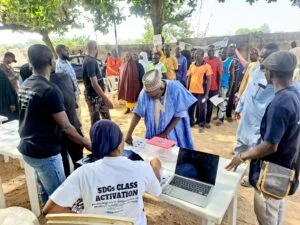
The farmers made their concerns known on Thursday in Abuja during a participatory budgeting and community voting session.
The exercise gathered residents, farmer groups and local leaders to identify the council’s priority development needs for the coming year.
The News Agency of Nigeria reports that the event was with the theme ‘Strengthening Climate Adaptation through Participatory Budgeting in Gwagwalada Area Council.’
The initiative was organised under the Climate Democracy Accelerator Programme, implemented by the DEAN Initiative.
The programme supports smallholder farmers, with a special focus on women and youths working to improve local agricultural resilience.
It encourages residents to shape the 2026 Area Council budget by outlining needs affecting daily productivity.
During the discussions, participants highlighted land security and mechanisation as the two most pressing challenges facing farmers.
Many farmers said threats from land disputes and the absence of machines had slowed production and discouraged expansion.
Mr Yunusa Anya, a retired civil servant and active farmer, said mechanisation gaps continued to undermine efforts to boost yields.
He stressed that farmers were struggling to increase output because they relied largely on manual labour for critical farm operations.
He said persistent land conflicts involving farmers and herders had further worsened production challenges across the council.
He called on authorities to establish a permanent dialogue forum for farmers and herders to address recurring disputes peacefully.
According to him, farmers sometimes arrive on their farms to find portions of their crops destroyed by grazing cattle.
He said such losses were discouraging, especially for those investing personal savings in rice and maize cultivation.
He noted that despite managing large hectares, farmers lacked tractors, planters and harvesters to work efficiently.
He explained that manual harvesting takes several days, while machinery can complete the same task within hours.
He said proper mechanisation would reduce drudgery, attract youths and strengthen food supply within the council.
Mr Taiye Ojo, Project Lead for the programme, said participatory budgeting ensured budget allocations reflected actual community needs.
He said government must work with citizens from the planning stage to achieve meaningful and targeted development outcomes.
He stated that co-creation was an obligation of government and not merely a privilege extended to citizens.
He emphasised that inclusive decision-making improved resource allocation and deepened democratic participation.
Also speaking, Mr Abdullahi Baba of the FCT Agricultural Development Programme described the exercise as timely and essential.
He said inclusive governance remained critical because farmers produced most of the food consumed within Gwagwalada.
He warned that food shortages could occur if authorities failed to capture farmers’ concerns in the council’s budget.
Baba also raised concerns about shifting climate patterns which continued to affect planting and harvest cycles.
He noted irregular rainfall this year, with rains starting late and stretching beyond the expected period.
He said the altered pattern helped some crops but negatively affected others, creating mixed outcomes for farmers.
He added that farmers must adopt drought- and flood-resistant seeds to cope with emerging climate realities.
Mr Ayodeji Bayeri, Education Portfolio Lead at the DEAN Initiative, said farmers had clearly outlined their priority needs.
He said farmers viewed land security and mechanisation as central to improving food production in the council.
He urged government agencies and development partners to respond quickly to the farmers’ demands.
He said timely intervention would strengthen resilience and protect food supply for communities in the council.
