


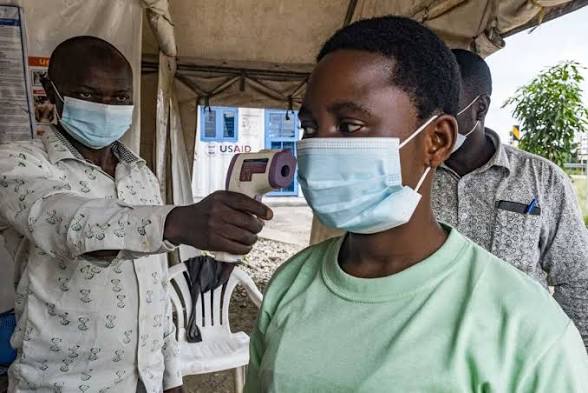
The United States says it is “rapidly supporting” the Ebola outbreak response by funding up to 50 treatment clinics in the Democratic Republic of the Congo (DRC) and Uganda.
The U.S. Department of State said it is actively responding to the outbreak in the affected regions of both countries. It is also funding associated frontline costs in Ebola-affected areas.
“These rapidly deployed clinics would enable implementing partners to establish clinical care and containment perimeters around affected areas. Clinics will provide emergency Ebola screening, triage, and isolation capacity,” the department said.
The U.S. said its funding commitment will accelerate the delivery of frontline medical care, life-saving humanitarian assistance, and critical outbreak response capabilities to communities at greatest risk.
“Incremental rapid U.S. funding will stimulate the expansion of emergency treatment capacity, strengthen field operations, and accelerate the delivery of protective equipment and diagnostics,” it added.
The department noted that the funding would ensure essential health services reach where they are needed most.
“We know from previous outbreak responses that ensuring partners rapidly scale up containment and treatment efforts is the most critical variable for an effective response and to prevent the disease from spreading,” the statement said.
The U.S. said the additional funding announcement, made in the first days of the epidemic, “sent a clear message.”
“The United States has an ironclad commitment to ensuring this response is fully resourced, rapid, and cooperative with key global health and humanitarian partners,” it said.
“Healthcare and humanitarian workers heading to the frontline should know that the United States has their back and is urgently mobilizing all available resources to assist frontline providers.”
The funding will be delivered primarily through the UN’s Central Emergency Response Fund (CERF), administered by the UN Office for the Coordination of Humanitarian Affairs (OCHA).
The U.S. said it is building on its partnership with OCHA to deliver life-saving assistance faster, more efficiently, and more accountably.
