


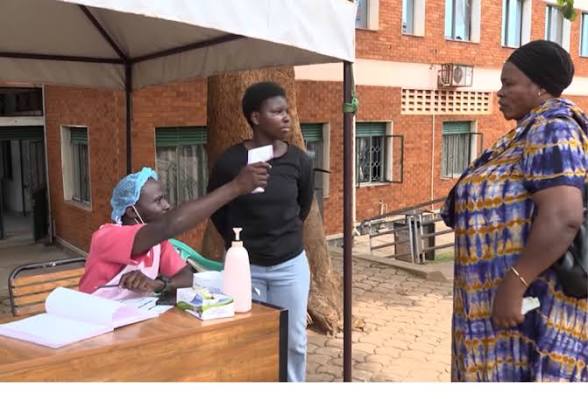
The World Health Organisation (WHO) says it has recorded more than 500 suspected cases, including 130 suspected deaths, in the ongoing Ebola outbreak in the Democratic Republic of Congo (DRC).
WHO’s representative in DRC, Dr Anne Ancia, told reporters in Geneva on Tuesday that only 30 cases had been confirmed so far.
She said the agency was working closely with Congolese authorities and rushing more testing kits to eastern DRC to confirm infections of the Bundibugyo virus, a strain of Ebola for which there are currently no approved vaccines or therapeutics.
“We have significant uncertainty about the number of infections and how far the virus has spread,” Ancia said.
Speaking from Bunia in Ituri Province, where the outbreak was first detected, Ancia confirmed that cases had also been recorded in North Kivu, including Butembo and Goma. Uganda has confirmed two imported cases.
She explained that the outbreak likely began after the death of a person in Bunia on May 5. The body was transported to Mongbwalu, where the family changed the coffin during funeral preparations, leading to further spread.
Initial detection was delayed because local tests in Bunia returned negative results for the more common Zaire strain of Ebola. The wide range of symptoms — fever, fatigue, diarrhoea and vomiting — and the late onset of nosebleeds (from day five of infection) also complicated early diagnosis. The Bundibugyo virus was only confirmed through testing in Kinshasa.
Ancia said a WHO technical advisory group was meeting on Tuesday to recommend which potential vaccines should be prioritised. The Ervebo vaccine, which protects against the Zaire strain, is under consideration but would take about two months to become available.
While a vaccine could provide additional protection, Ancia stressed that community engagement remains the key to containing the outbreak.
“If we use coercive measures and the population does not agree, we will see bodies disappear. We will see suspected cases refusing to come to hospitals,” she warned.
She added that WHO is supporting the government-led response with over 40 health professionals on the ground, along with supplies and enhanced diagnostic capacity.
The situation remains highly complex due to insecurity, displacement, and weakened healthcare systems. The affected provinces of Ituri and North Kivu are home to more than two million internally displaced people and returnees.
Ancia noted that while it may take two months for a vaccine to become available, “it is not two months before the outbreak will be done.”
