


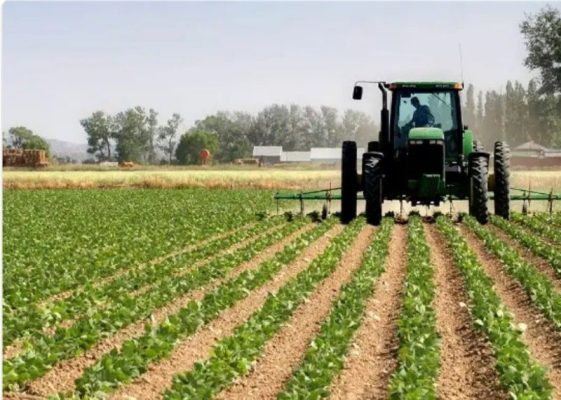
A Development Communications Strategist, Feyikemi Adurogbangba, has urged the Federal Government and other stakeholders to build on the legacy of previous agricultural programmes and stop implementing projects in silos.
Adurogbangba made the call on Wednesday in Abuja while reacting to farmers’ complaints about heavy losses from price crashes in food produce.
In a statement analyzing the situation, she expressed concern over the persistent cycle of challenges facing farmers despite multiple intervention programmes by government and development partners.
She specifically called on actors across the value chain to build on the foundation of past programmes “instead of working in isolation or restarting efforts with every new initiative”.
Farmers bear disproportionate risk
According to her, “the crisis confronting farmers is persistent and will continue until risk is no longer borne by those least able to absorb it”.
She emphasized that despite improved practices and infrastructure, many farmers still face harvest-time price crashes, lack access to affordable large-scale storage, and have limited ability to delay sales or negotiate better prices.
Adurogbangba identified recurring challenges as rising input and transportation costs, volatile markets, harvest-time losses, and farmers’ reliance on price hikes in one crop to offset losses in others.
She criticised the persistence of structural weaknesses in the agricultural system, noting that “risk has remained heavily concentrated at the farm level”.
Macroeconomic pressures outpace gains
She attributed the worsening situation to intensified macroeconomic pressures on food production, stating:
“In the past three to four years, farmers have faced sharp increases in input costs following subsidy removal, climate variability and flooding, and foreign exchange volatility affecting fertilizer, packaging and logistics.
“These system-wide shocks have moved faster than programme gains could scale, thereby eroding many of the improvements achieved.”
While acknowledging the value of productivity reforms, she added: “Improving productivity, storage and market information is essential, but these alone are not sufficient without coordinated stakeholder action.”
Call for coordinated stabilization efforts
She therefore called for coordinated action at both state and federal levels, a shift from pilot interventions to broader market-level stabilization efforts, and deliberate measures to reduce farmers’ exposure to seasonal price crashes.
