


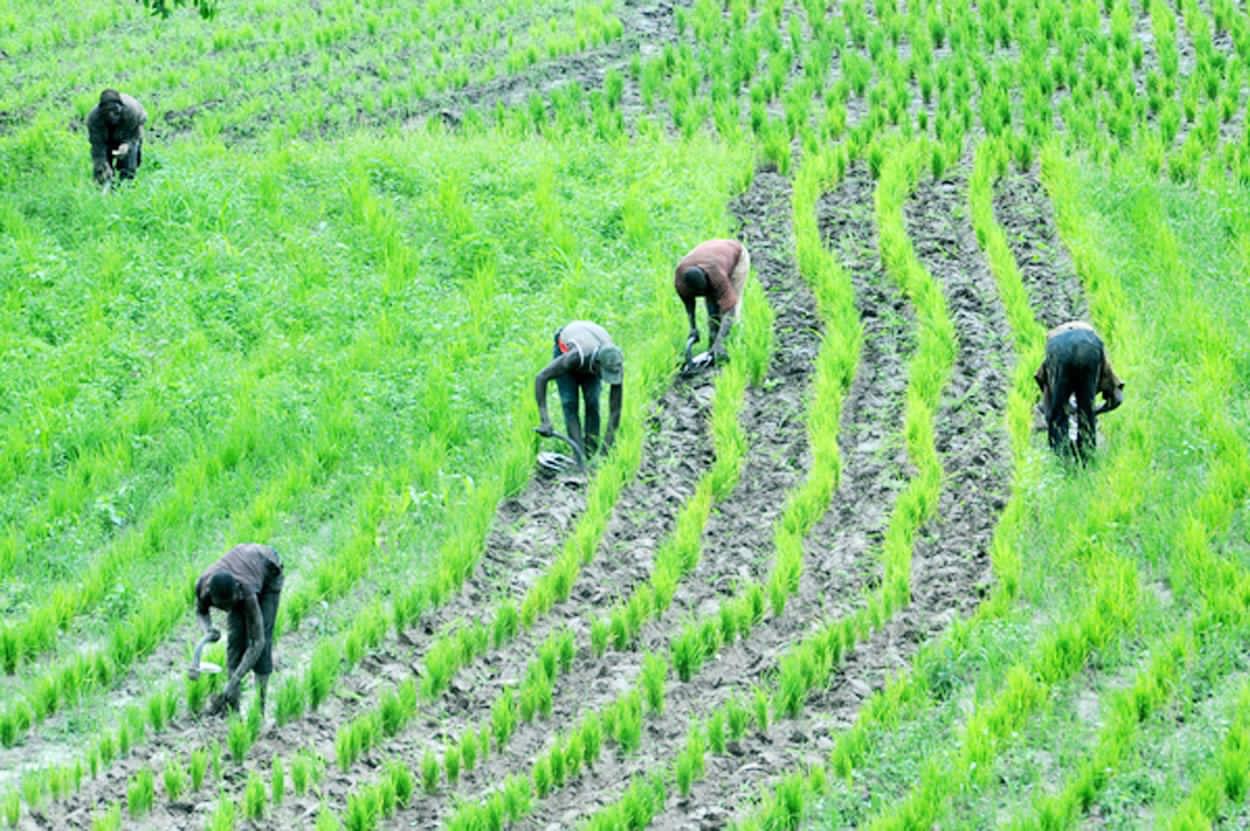
The Spokesperson, Mile 12 International Market, Mr Femi Odusanya has urged the government to subsidise the agricultural value chain as prices of consumables moderately soar following preparations to celebrate Eid-Adha, popularly known as “Big Sallah.”
Odusanya made the call on Thursday during a market survey conducted in various areas of Lagos.
The survey revealed that in Ajah, Kara, Mile 12, and Oyingbo markets, there was a moderate increase in the prices of items when compared to the same period in 2024.
A 50kg basket of tomatoes, which was sold for N35,000 in 2024, was found to have risen to N45,000 at Mile 12.
The price of the same commodity, however, ranged between N50,000 and N65,000 in Lekki and Ajah.
The price of a bag of scotch bonnet, popularly known as “atarodo,” jumped to N150,000 against N120,000, which it was sold for in 2024.
Similarly, a 50kg basket of bell pepper, also called “tatashe,” rose from N95,000 to between N110,000 and N130,000, depending on bargaining power.
However, the same quantity of red chilli pepper, also known as “bawa or shombo,” dropped from its 2024 cost of N110,000 to between N90,000 and N100,000, also depending on bargaining power.
The survey also showed that the price of a 100kg basket of onions rose from N70,000 to N160,000.
On the flip side, the price of a 50kg bag of local rice, which sold for N65,000 in 2024, had dropped to between N58,000 and N63,000.
Also, prices of animals used to celebrate the festival, such as rams, cows, and goats, increased moderately.
A medium-sized ram ranged from N250,000 to N700,000, and a cow from N800,000 to N1.2 million; almost the same as last year.
Prices of goats ranged from N120,000 upwards depending on bargaining strength, while chickens stayed between N13,000 and N18,000.
Addressing the developments, the spokesman stated that the rebasing of the economy kept the increase at a low ebb.
He, however, noted that purchases were low as buyers who would ordinarily buy whole baskets and livestock had to wait for others to share before they were able to make purchases.
“The cost of transportation is too high, and most of the agriculture clusters in the Northern states are affected by insecurity.
“Government should intensify efforts on the issue of security to enable farmers to go to farm,” he said.
Odusanya called on the governors of the Southern region to increase efforts to boost agricultural productivity, seeing that the region was relatively peaceful.
He added that the government should invest by supporting farmers in the Southern region to increase productivity all year round.
He also urged the government to address the issue of post-harvest losses and other challenges in the agro-food value chain.
“To further boost food production, farmers and stakeholders in the agric value chain should have access to finance with low interest.
“State governments with agricultural competitive advantage must begin to exploit their resources on all fronts to drive food sufficiency.
“Nigeria must do what it takes to increase the number of large-scale mechanised farmers while the issue of value addition is taken more seriously to support local processing,” he said.
NAN
