


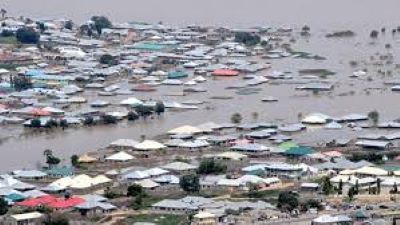
In Nigeria, flooding remains the most prevalent natural disasters, particularly affecting vulnerable communities residing along riverbanks and flood-plains.
By Tosin Kolade
The ramifications of floods extend beyond loss of lives and property, encompassing disruptions to agriculture, industrial productivity, infrastructure, and overall socio-economic stability, health and academic activities.
Consequently, effective flood forecasting and early warning systems are imperative in mitigating these adverse impacts.
Nigeria has encountered severe flood disasters, with the 2012 and 2022 floods being particularly devastating.
The 2022 flooding in Nigeria, as reported by the Global Rapid (Post Disaster) Damage Estimation (GRADE) Assessment Report, indicated losses ranging from $3.79 billion to $9.12 billion based on statistics available until November 25, 2023.
The report highlighted severe damage to crops, water infrastructure, fisheries, and livestock, with over 650,000 hectares of crops destroyed, resulting in an estimated loss of $1.8 billion to the agricultural sector.
Jigawa, Rivers, Taraba, Cross River, and Delta were identified as the worst affected states, emphasising the critical need for comprehensive flood mitigation strategies.
In response to these challenges, President Bola Tinubu inaugurated the National Economic Council Ad-hoc Committee on Flood Mitigation, Adaptation, Preparedness, and Response.
ALSO READ East Africa floods affecting 750,000 people, kill 235 – UN
The committee was tasked with developing a roadmap to enhance Nigeria’s flood resilience and response capabilities, underscoring the government’s commitment to proactive disaster management.
The 2024 Annual Flood Outlook (AFO), unveiled by the Nigeria Hydrological Services Agency (NIHSA), identifies 148 Local Government Areas (LGAs) in high flood risk areas across 31 states, and 249 LGAs in moderate risk zones.
The high flood-risk states include Adamawa, Akwa-Ibom, Anambra, Bauchi, Bayelsa, Benue, Borno, Cross River, Delta, Ebonyi, Edo, Imo, Jigawa, Kaduna and Kano.
Others are; Katsina, Kebbi, Kogi, Kwara, Lagos, Nasarawa, Niger, Ogun, Ondo, Osun, Oyo, Plateau, Rivers, Sokoto, Taraba, and Yobe.
Additionally, urban centers such as Abuja, Lagos, and Port Harcourt are susceptible to flash and urban flooding, while coastal regions face the threat of severe flooding due to rising sea levels and tidal surges.
Recognising the importance of proactive measures, NIHSA has disseminated the AFO publication and maps to state governors, urging swift action and preparedness.
The theme for this year’s flood awareness campaign, “Promoting the use of Data Analytics and Modeling for Flood Risk Assessments and Food Security,” aligns with the government’s commitment to food security and poverty alleviation.
Recall that Nigeria aims to uplift millions out of poverty and foster sustainable economic growth, hence the crucial role of flood resilience in achieving these objectives.
ALSO READ UNICEF: Flooding, landslides affect 1m people in East Africa
As outlined in the AFO, Stakeholders and decision-makers are urged to heed the insights and collaborate on effective flood mitigation strategies, including aggressive sensitisation campaigns and improved waste management practices.
Nigeria’s Minister of Water Resources and Sanitation, Prof. Joseph Utsev, emphasised that the 2024 Annual Flood Outlook serves as a vital tool for strategic planning and risk reduction efforts.
He said by prioritising early warning systems, community engagement, and coordinated response mechanisms, Nigeria aims to minimise the impact of floods and safeguard its citizens and infrastructure.
Utsev said state governments have alerted residents living in flood-prone areas to consider relocating as the rainy season approaches.
This proactive measure, he said ensures necessary preparations are made to mitigate flood impact in affected states.
Corroborating Utsev’s position, the Commissioner for Environment in Ogun, Mr Ola Oresanya issued a flood advisory during a news conference recently on the 2024 flood alert.
He said the Federal Government had notified 31 states, including Ogun, about expected flooding between April and November 2024.
According to him, 16 out of the state’s 20 LGAs are expected to experience the highest rainfall, emphasising the need for residents in wetland areas to relocate to safer ground or elevate their residences before heavy rain.
Regarding agriculture, Oresanya said the farming season in coastal areas spans between 250 and 292 days, while inland areas experience a shorter growing season ranging from 200 to 250 days.
Other state governments have implemented similar policies, urging relocation to higher ground and the avoidance of floodplains.
Following the FG’s directives, Benue is demolishing riverside buildings, and Lagos State is directing residents near rivers, canals, and the Atlantic Ocean to relocate.
Ongoing campaigns for environmental protection are also taking place in Sokoto and Edo states.
State governments stress the importance of clearing drainage systems and flood paths to mitigate flood risks, aiming to safeguard lives and property during the rainy season.
Stakeholders have observed that early preparedness and effective disaster management strategies are key to saving lives and reducing disaster impacts.
ALSO READ Kenya tasks African leaders on fertiliser affordability
At a recent workshop organised by NEMA and the World Bank, the agency’s Director-General, Zubeida Umar, underscored the importance of drawing lessons from previous flood disasters to avert their repetition.
Umar highlighted the devastating impact of floods in 2012 and 2022, which resulted in significant loss of lives, injuries, and displacement across Nigeria.
The workshop aimed to identify areas for improvement and promote Nigeria’s emergency preparedness and response mechanisms, particularly in the face of ongoing climate-related hazards like flooding.
Collaborating with the World Bank, NEMA sought to provide insights into systemic opportunities for enhancing emergency preparedness at both national and sub-national levels.
The workshop provided a platform for key government officials and emergency relief entities to engage in constructive dialogue, evaluating Nigeria’s systems, procedures, and experiences related to emergency response.
Drawing lessons from the 2022 flood disaster, participants discussed strategies to strengthen Nigeria’s emergency preparedness and response capabilities, with a focus on coordination and collaboration among relevant stakeholders.
A senior disaster risk management specialist at the World Bank, Nkem Joseph-Palmer, stressed the critical need for investing in disaster preparedness and response systems in Nigeria.
He cited a striking statistic that for every $1 spent on preparedness, up to $18 in potential disaster response costs could be saved.
He noted the importance of strengthening systems and capacities at all levels of government to protect local communities during disasters.
The Director-General of NIHSA, Dr Clement Nze urged stakeholders, policymakers, and relevant government departments to heed the information outlined in the 2024 AFO and prepare proactively.
He said there was a need for collective efforts in maintaining cleanliness in the environment, waterways, and flood paths, alongside proper waste management practices to mitigate flooding.
Nze highlighted floods as the most common natural disaster in Nigeria, emphasising their profound impact on vulnerable populations living along river courses and dependent on fertile floodplains for their livelihoods.
Stakeholders believe that addressing Nigeria’s annual flood disasters through preparedness requires a multifaceted approach involving proactive measures, collaboration among stakeholders, and community engagement.
Experts say by adopting a holistic approach to flood preparedness, Nigeria can reduce the impact of annual flood disasters, protect vulnerable communities, and build resilience to future flood events.
They argue that through proactive measures and collective action, the country can minimise loss of lives and property, safeguard livelihoods, and promote sustainable development.
NANFeatures
