

• Home
  • Agric
  • Sci & Tech
  • Health
  • Environment
  • Hausa News
  • More
    • Business/Banking & Finance
    • Politics/Elections
    • Entertainments & Sports
    • International
    • Investigation
    • Law & Human Rights
    • Africa
    • ACCOUNTABILITY/CORRUPTION
    • Hassan Gimba
    • Column
    • Prof. Jibrin Ibrahim
    • Prof. M.K. Othman
    • Defense/Security
    • Education
    • Energy/Electricity
    • Entertainment/Arts & Sports
    • Society and Lifestyle
    • Food & Agriculture
    • Health & Healthy Living
    • International News
    • Interviews
    • Investigation/Fact-Check
    • Judiciary/Legislature/Law & Human Rights
    • Oil & Gas/Mineral Resources
    • Press Freedom/Media/PR/Journalism
    • General News
    • Presidency
  • About Us
    • Contact Us
    • Board Of Advisory
    • Privacy Policy
    • Ethics Policy
    • Teamwork And Collaboration Policy
    • Fact-Checking Policy
    • Advertising
  • Media OutReach Newswire
    • Wire News
  • The Stories
Facebook Twitter Instagram
Trending
  • Pantami withdraws from Gombe APC governorship primary, cites electoral violations
  • Wizkid becomes first African artist to surpass 11bn Spotify streams
  • AFCON 2026 Qualifiers: Nigeria to face Tanzania, Madagascar, Guinea-Bissau
  • Alleged N33.8bn fraud: EFCC arrests ex-power minister Mamman after sentencing
  • Trump suspends planned Iran strike following appeal by Gulf leaders
  • Nigerian govt moves to end illegal taxes by states, LGAs with new guidelines
  • Reading the CBN: Why the current cycle in Nigerian banking is not a shock, By Olayinka Onanguga
  • CBN to auction N650bn in treasury bills, sets May 20 deadline
Facebook Twitter Instagram YouTube
AsheNewsAsheNews
  • Home
  • Agric

    Herders abandon cattle after farm invasion in Abia

    May 18, 2026

    Association warns against consuming fungus-infested tomatoes

    May 17, 2026

    LIFE-ND trains farmers in basic bookkeeping

    May 15, 2026

    Lagos to launch food security hub in 2026

    May 15, 2026

    FG to use microchips for nationwide livestock identification

    May 15, 2026
  • Sci & Tech

    Kaduna state trains 4,000 students in vocational skills

    May 18, 2026

    Association commits to bridging tech gap, strengthening STEM partnerships

    May 14, 2026

    Lagos to establish cybersecurity operations centre

    May 13, 2026

    ECOWAS pushes information integrity

    May 13, 2026

    NSE urges engineers to join politics

    May 13, 2026
  • Health

    WHO urges calm as Ebola outbreak declared PHEIC

    May 19, 2026

    NYSC mandates NERD certificates for mobilisation

    May 18, 2026

    WHO warns of growing pandemic threats, preparedness gaps

    May 18, 2026

    Hypertension: The silent killer affecting millions across Nigeria

    May 18, 2026

    Nigeria’s HIV fight hindered by stigma, funding gaps

    May 18, 2026
  • Environment

    University of Abuja student wins 2026 Amnesty international intervarsity debate

    May 19, 2026

    NEMA holds flood preparedness campaign in Katsina

    May 19, 2026

    Niger Delta experts call for urgent environmental clean-up

    May 19, 2026

    NESREA seals Kano rice mill over environmental violations

    May 19, 2026

    Lagos targets 2,000MW embedded power supply

    May 18, 2026
  • Hausa News

    Otti plans 250-room 5-star hotel in Umuahia

    April 11, 2026

    Anti-quackery task force seals 4 fake hospitals in Rivers

    August 29, 2025

    [BIDIYO] Yadda na lashe gasa ta duniya a fannin Ingilishi – Rukayya ‘yar shekara 17

    August 6, 2025

    A Saka Baki, A Sasanta Saɓani Tsakanin ‘Yanjarida Da Liman, Daga Muhammad Sajo

    May 21, 2025

    Dan majalisa ya raba kayan miliyoyi a Funtuwa da Dandume

    March 18, 2025
  • More
    1. Business/Banking & Finance
    2. Politics/Elections
    3. Entertainments & Sports
    4. International
    5. Investigation
    6. Law & Human Rights
    7. Africa
    8. ACCOUNTABILITY/CORRUPTION
    9. Hassan Gimba
    10. Column
    11. Prof. Jibrin Ibrahim
    12. Prof. M.K. Othman
    13. Defense/Security
    14. Education
    15. Energy/Electricity
    16. Entertainment/Arts & Sports
    17. Society and Lifestyle
    18. Food & Agriculture
    19. Health & Healthy Living
    20. International News
    21. Interviews
    22. Investigation/Fact-Check
    23. Judiciary/Legislature/Law & Human Rights
    24. Oil & Gas/Mineral Resources
    25. Press Freedom/Media/PR/Journalism
    26. General News
    27. Presidency
    Featured
    Recent

    Pantami withdraws from Gombe APC governorship primary, cites electoral violations

    May 19, 2026

    Wizkid becomes first African artist to surpass 11bn Spotify streams

    May 19, 2026

    AFCON 2026 Qualifiers: Nigeria to face Tanzania, Madagascar, Guinea-Bissau

    May 19, 2026
  • About Us
    1. Contact Us
    2. Board Of Advisory
    3. Privacy Policy
    4. Ethics Policy
    5. Teamwork And Collaboration Policy
    6. Fact-Checking Policy
    7. Advertising
    Featured
    Recent

    Pantami withdraws from Gombe APC governorship primary, cites electoral violations

    May 19, 2026

    Wizkid becomes first African artist to surpass 11bn Spotify streams

    May 19, 2026

    AFCON 2026 Qualifiers: Nigeria to face Tanzania, Madagascar, Guinea-Bissau

    May 19, 2026
  • Media OutReach Newswire
    • Wire News
  • The Stories
AsheNewsAsheNews
Home»Environment/Climate Change»Reservoirs and Boreholes: The unsung heroes of Sokoto’s water scarcity battle
Environment/Climate Change

Reservoirs and Boreholes: The unsung heroes of Sokoto’s water scarcity battle

NewsdeskBy NewsdeskJanuary 16, 2025No Comments6 Mins Read
Share
Facebook Twitter LinkedIn Pinterest Email

In Sokoto State, where the relentless sun beats down on parched lands, water scarcity is not just a challenge; it is a daily struggle. For many residents, the lack of reliable access to water is a story of resilience, innovation, and survival. Yet, amidst this scarcity, reservoirs, boreholes, and government investments shine as glimmers of hope.

In 2024, Sokoto State tried to put its money where its mouth is. The 2024 budget allocates ₦15.8 billion to water resources projects. The Ministry of Water Resources leads the charge with ₦8.8 billion, followed by allocations for the Water Board, Rural Water and Sanitation Agency, and the Department for Rural Water. While these funds offer hope for a better tomorrow, the present remains a tale of haves and have-nots in the realm of water.

“Water scarcity is a daily struggle for my family” – Simon Emmanuel

On Offa Road, Simon Emmanuel’s family feels the weight of water scarcity every single day.

“I buy water from Mairuwa every morning at ₦100 per jerrycan. We need at least eight, costing ₦800 daily. But it is never enough,” he explained when he spoke to ASHENEWS.

“Between my children bathing, washing clothes, cleaning, and cooking, the water is gone before nightfall.”

Despite having a tap in his area, long lines of jerrycans make accessing it a challenge. According to Simon, the water only flows between 12 p.m. and 4 – 5 p.m.

“Unfortunately, the long lines of jerrycans make it difficult for his family to fetch water. It is a big challenge for us because we spend so much money on water every day,” he lamented

For families like Simon’s, the promised billions in the water budget are a distant dream.

“Fetching water daily is tough for me” – Cynthia Ezeh

In Tamaje, where taps flow only sporadically, 14-year-old Cynthia Ezeh shoulders the burden of her family’s water needs. For students like Cynthia, water scarcity disrupts more than daily chores—it reshapes routines and robs them of time.

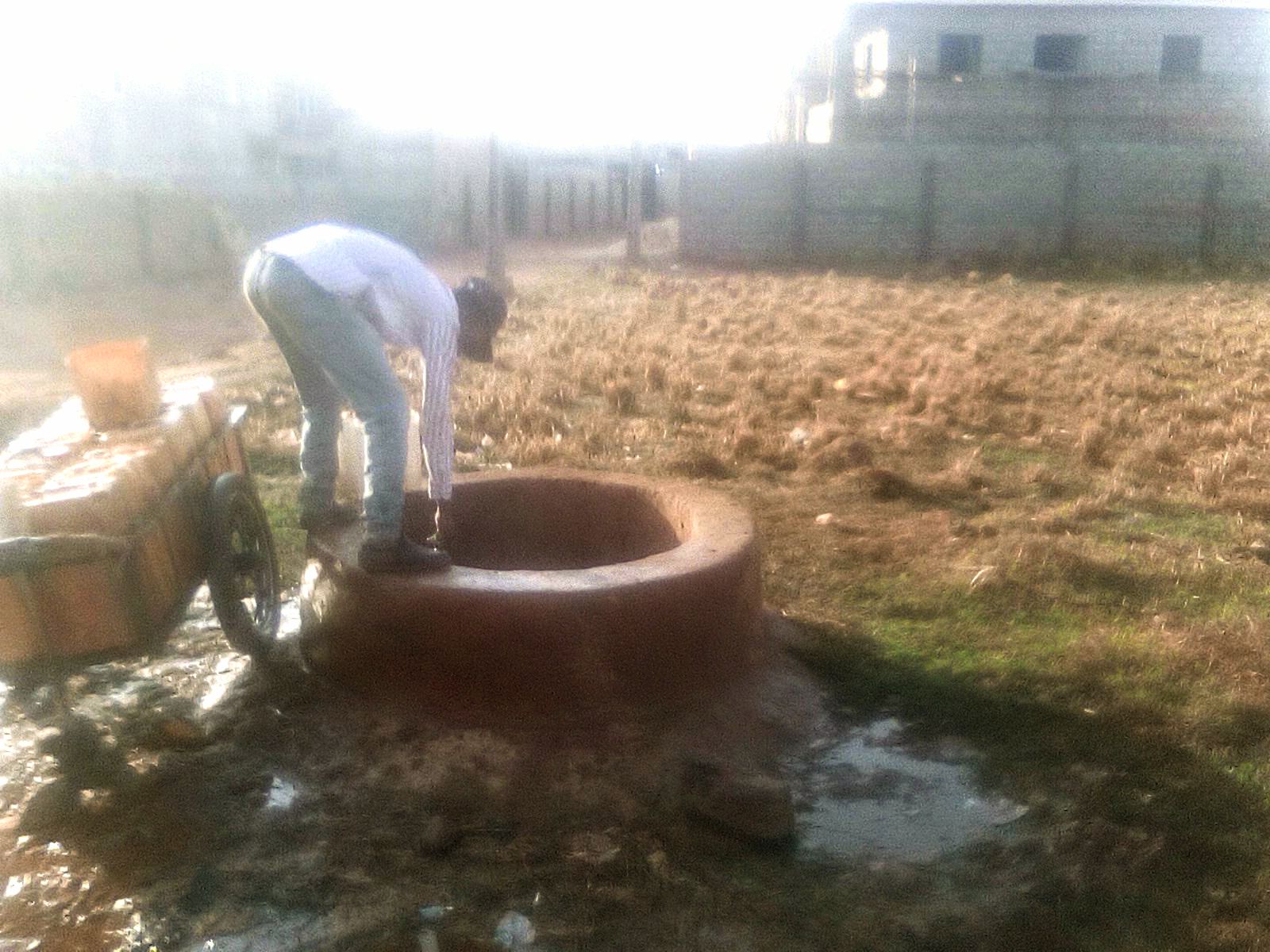
“Every morning, I fetch water from a well near our house. I wake up at 6 a.m. to fetch water from a well near our house. But most often, the well runs dry, because so many people use it,” she shared.
Cynthia’s struggles don’t end there. On days when the well runs dry, she and her family are forced to resort to the bush instead of using their indoor toilet. “when there is no water, my family has to go without enough water for bathing or using the toilet. It is embarrassing, but what can we do?” she asked.

In 2023, the government allocated ₦3.3 billion to the Water Board and ₦3.1 billion to the Department for Rural Water but these have done little to ease the burden of people like Cynthia’. For now, Cynthia’s days begin and end with the back-breaking task of fetching water.

“The reservoir makes things easier for me” – Miss Chinwe Obi

For some, government-installed reservoirs have been lifesavers. Near the Trade Fair area, Chinwe Obi depends on one such reservoir to meet her water needs.

“The reservoir helps a lot. When it’s not available, I buy from maruwa. Once you place your bucket in the line, it will eventually be your turn. I usually spend over an hour waiting.

“Some people even leave their buckets overnight because the reservoir is turned off at 6 p.m. and only comes back on at 6 a.mThe lines are long, but I know I will eventually get water,” she said.
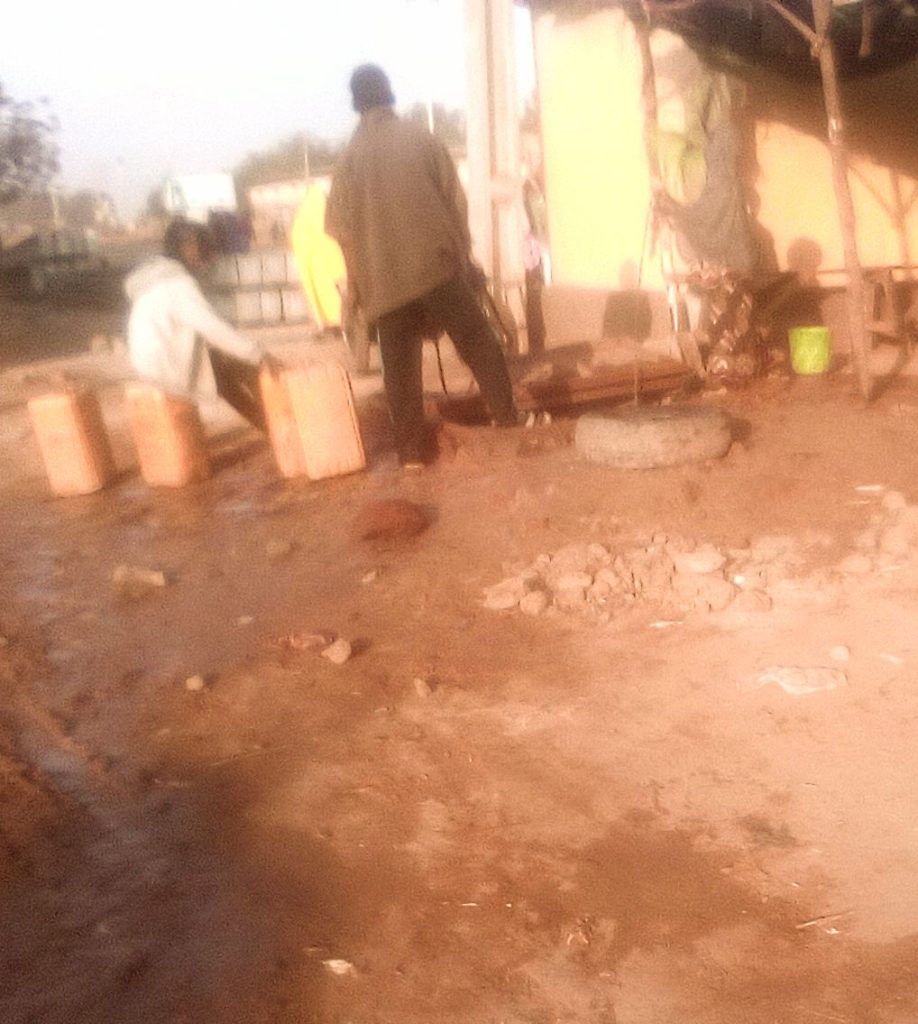
These reservoirs represent a slice of what the government’s ambitious budget aims to replicate across rural and urban areas. But for now, Chinwe’s reality includes waiting hours for her turn or relying on water vendors when the reservoir is dry.

“We don’t have water problems at home” – Olajumoke Yusuf

In stark contrast, for some privileged few, boreholes have turned water scarcity into a thing of the past. Olajumoke Yusuf’s family enjoys uninterrupted water access, thanks to a borehole installed by her father.

“Our borehole is connected to every room and the kitchen. We pump water whenever there is electricity and store it in two Geepee tanks,” she explained.

Olajumoke also highlighted how her family’s access to water has become a lifeline for friends. “Every weekend, my female friends come over with their dirty clothes to wash. They stay until evening before leaving. One of my friends told me they hardly get water because their tap flows only once in a while, and the long lines make it even harder to fetch water,” she said.

Olajumoke’s story is a testament to the power of private solutions, but it also underscores the disparity in water access. While her family thrives, others around them still queue for hours at taps or wells.

Promises in the pipeline

The state government’s total water budget of ₦15.8 billion may be a promise of a brighter future. From the Ministry of Water Resources’ sprawling projects to targeted interventions by the Rural Water and Sanitation Agency, these funds aim to bridge the gap between water scarcity and abundance.

The 2024 approved budget for capital expenditure on water in Sokoto State includes ₦8,804,174,750, Ministry of Water Resources, ₦3,311,100,000 to the state Water Board, ₦660,000,000 to the Rural Water and Sanitation Agency, while the Department for Rural Water was allocated ₦3,100,000,000. The total capital allocation for water resources-related projects sums up to ₦15,875,274,750.

Yet, residents like Emmanuel and Ezeh wonder when these promises will trickle down to them. Will the billions unlock more reservoirs, extend pipelines, and create boreholes where they are needed most? Or will water scarcity remain an unyielding specter for many in Sokoto?

A future fueled by water

The stories of Simon, Cynthia, Olajumoke, and Chinwe reflect the resilience of Sokoto’s residents in the face of water scarcity.

However, their struggles also highlight the urgent need for government and private stakeholders to invest in water infrastructure.

Reservoirs must be expanded to serve more communities, boreholes need to be made accessible to those in rural areas, and tap water systems must be repaired and maintained.

Beyond infrastructure, public education on water conservation can help ensure these resources are used sustainably.

Water is life, and in Sokoto, life depends on the reservoirs and boreholes that quietly keep communities afloat. But to truly quench the state’s thirst, more needs to be done. It is time to act before the crisis deepens.

From long lines at reservoirs to innovative solutions like in-house boreholes, the people of Sokoto are not just surviving—they are finding ways to thrive. Still, the hope remains that the government’s efforts will give results at ensuring that water flows freely, everywhere and for everyone.

environment Tap Water Water scarcity women
Share. Facebook Twitter Pinterest LinkedIn WhatsApp Reddit Tumblr Email
Newsdesk
  • Website

Related Posts

University of Abuja student wins 2026 Amnesty international intervarsity debate

May 19, 2026

NEMA holds flood preparedness campaign in Katsina

May 19, 2026

Niger Delta experts call for urgent environmental clean-up

May 19, 2026

Leave A Reply Cancel Reply

Pantami withdraws from Gombe APC governorship primary, cites electoral violations

May 19, 2026

Wizkid becomes first African artist to surpass 11bn Spotify streams

May 19, 2026

AFCON 2026 Qualifiers: Nigeria to face Tanzania, Madagascar, Guinea-Bissau

May 19, 2026

Alleged N33.8bn fraud: EFCC arrests ex-power minister Mamman after sentencing

May 19, 2026
About Us
About Us

ASHENEWS (AsheNewsDaily.com), published by PenPlus Online Media Publishers, is an independent online newspaper. We report development news, especially on Agriculture, Science, Health and Environment as they affect the under-reported rural and urban poor.

We also conduct investigations, especially in the areas of ASHE, as well as other general interests, including corruption, human rights, illicit financial flows, and politics.

Contact Info:
  • 1st floor, Dogon Daji House, No. 5, Maiduguri Road, Sokoto
  • +234(0)7031140009
  • ashenewsdaily@gmail.com
Facebook Twitter Instagram Pinterest
© 2026 All Rights Reserved. ASHENEWS Daily Designed & Managed By DeedsTech

Type above and press Enter to search. Press Esc to cancel.