


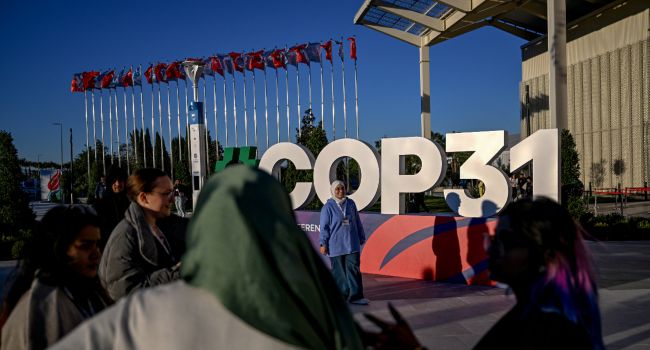
The UN’s annual climate talks kick off on Monday in Turkey as rising temperatures heighten the urgency of action, while financial constraints and geopolitical tensions complicate efforts to secure global cooperation.
More than 100,000 people are expected to attend COP31 over the next two weeks at a sprawling expo centre in the Mediterranean seaside city of Antalya.
Negotiators from nearly 200 countries face difficult discussions on how to accelerate the energy transition and provide funds to help developing nations cope with the worsening climate emergency.
However, observers say few major breakthroughs are expected as countries grapple with an oil price shock and geopolitical tensions fuelled by the US war with Iran and Russia’s conflict in Ukraine.
Meanwhile, the climate emergency continued to wreak havoc this year, as punishing heatwaves baked Europe, wildfires raged in Indonesia and a glacier collapse triggered devastating floods in Nepal.
An exceptionally strong El Niño climate phenomenon is forecast to peak later this year, adding to extreme weather and potentially making 2026 or 2027 the hottest year on record.
The outlook is bleak: in September, the United Nations warned that global temperatures were on course to exceed 1.5°C above pre-industrial levels, breaching the most ambitious threshold set by the Paris Agreement.
“Global leaders must pull us back from the brink and commit to rapidly transitioning away from fossil fuels and expanding renewable energy, an imperative reinforced by the current energy affordability crisis,” said Rachel Cleetus, climate programme director at the Union of Concerned Scientists.
‘Clean’ Electrification?
Turkey is presiding over COP31, with Australia leading negotiations under an unusual arrangement that resolved a dispute over which country would host the conference.
The partners have branded the summit the “implementation COP”, focusing on turning commitments into concrete action after years of pledges and ambitious announcements.
Turkey is promoting an “action agenda” alongside the formal negotiations, encouraging countries to support non-binding pledges on issues ranging from artificial intelligence to waste management.
Its centrepiece is an “electrification” drive to increase the share of global energy demand met by electricity from around 20 per cent today to 35 per cent by 2035.
But the initiative could become a source of friction.
The European Union has called for “clean” electrification, a term that could spark debate over the role of fossil fuels in Turkey’s proposal.
Countries committed to transitioning away from fossil fuels in a landmark pact at COP28 in Dubai in 2023, but have struggled to agree on how to put that pledge into action.
COP30 ended with a deal that made no explicit mention of fossil fuels after oil-producing countries opposed the wording.
Instead, Brazil produced a voluntary “roadmap” with proposals for phasing out fossil fuels that countries can tailor to their circumstances.
Finance Fight
The EU and other developed countries face pressure from developing nations to fulfil promises to provide funding to help them adapt to climate impacts and recover from extreme-weather disasters.
A senior EU official warned that there would be “no political will” for additional funding pledges.
African countries are pushing for the COP31 agenda to include discussions on tripling adaptation finance, which would help poorer nations pay for measures such as building sea walls or planting drought-resistant crops.
Climate diplomacy is still missing a major player: President Donald Trump has withdrawn the United States from the Paris Agreement, and the country has not sent officials to COP31.
A US congressional delegation, however, is expected in Antalya, with Democrats buoyed by last week’s historic US midterm election win.
As negotiations begin two weeks of gruelling talks, “the mood is very good”, Azerbaijan’s chief negotiator, Yalchin Rafiyev, told AFP.
Countries need to turn “this positive spirit of being in a favourable environment into concrete, successful results”, he said.
