


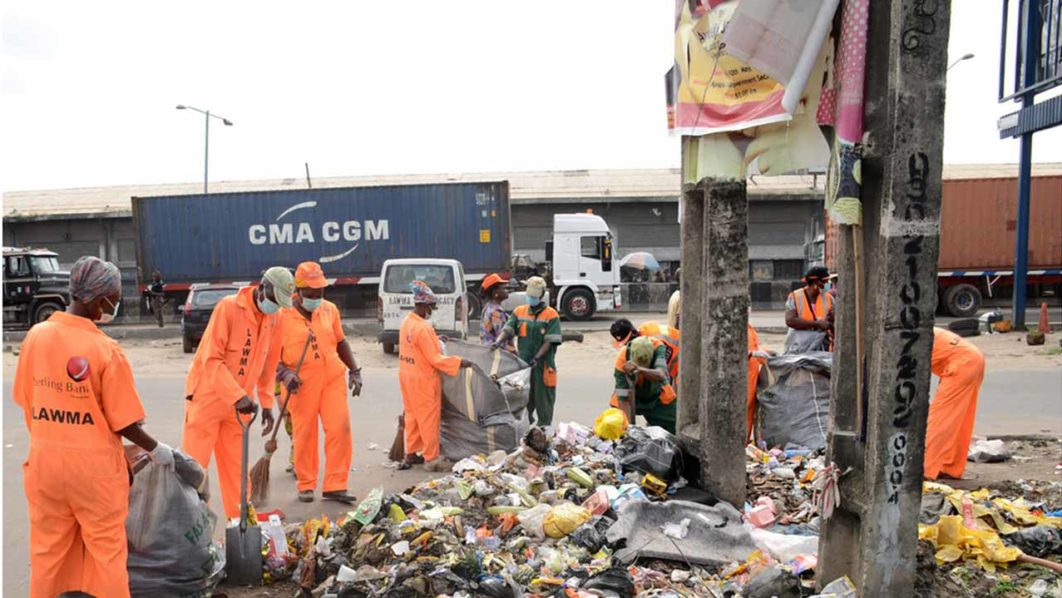
The Lagos State Waste Management Authority (LAWMA) has announced plans to recruit about 300 environmental health personnel to strengthen frontline enforcement of proper waste management and environmental sanitation across the state.
The Managing Director of LAWMA, Dr Olumuyiwa Gbadegesin, disclosed this during a courtesy visit to reporters on Wednesday in Lagos.
Gbadegesin said the personnel would educate residents on proper waste disposal practices, while anyone who refuses to comply would face sanctions.
He explained that, following approval from Governor Babajide Sanwo-Olu, the agency would employ 300 environmental health officers to operate in various areas of the state.
“We have secured the approval of Governor Sanwo-Olu to engage 300 environmental health personnel. These officers will be responsible for frontline enforcement of proper waste management and environmental sanitation throughout Lagos,” he said.
“The personnel will focus on modifying human behavior towards sanitation—the critical ‘software’ of waste management. Waste management goes beyond merely clearing refuse; it involves addressing behavioral change among residents.
“People must understand that there are consequences for illegal dumping, and enforcement will be swift and consistent,” Gbadegesin added.
He revealed that the agency had recently arrested 26 individuals for open defecation.
“In just the last few days, we arrested 26 people for open defecation of solid human waste. It is against the law, and we will continue to apprehend defaulters.
“These new personnel will first educate residents. Anyone who refuses to listen or comply will be punished,” he stated.
Gbadegesin emphasized that LAWMA would deploy every available strategy to achieve tangible improvements in waste management.
“When discussing waste, it’s not just about daily collection. It involves systems and human behavior. Equipment and infrastructure represent the hardware, while people and their attitudes are the software, and laws plus the regulatory framework serve as the operating system.
“To influence behavior, we have expanded LAWMA’s advocacy department. The advocacy team engages communities, liaises with Community Development Committees, and collaborates with PSP operators to resolve issues.
“We also work closely with local governments, which have now established waste management task forces that partner with our advocacy unit,” Gbadegesin explained.
