

• Home
  • Agric
  • Sci & Tech
  • Health
  • Environment
  • Hausa News
  • More
    • Business/Banking & Finance
    • POLITICS
    • Entertainments & Sports
    • International
    • Investigation
    • Law & Human Rights
    • Africa
    • ACCOUNTABILITY/CORRUPTION
    • Hassan Gimba
    • Column
    • Prof. Jibrin Ibrahim
    • Prof. M.K. Othman
    • Defense/Security
    • Education
    • Energy/Electricity
    • Entertainment/Arts & Sports
    • Society and Lifestyle
    • Food & Agriculture
    • Health & Healthy Living
    • International News
    • Interviews
    • Investigation/Fact-Check
    • LAW & HUMAN RIGHTS
    • Oil & Gas/Mineral Resources
    • PRESS FREEDOM/JOURNALISM/PR
    • General News
    • Presidency
  • About Us
    • Contact Us
    • Board Of Advisory
    • Privacy Policy
    • Ethics Policy
    • Teamwork And Collaboration Policy
    • Fact-Checking Policy
    • Advertising
  • Media OutReach Newswire
    • Wire News
  • The Stories
Facebook Twitter Instagram
Trending
  • Two Straits, One Storm: Yemen, Iran, and the Unfinished Arithmetic of Adventurism
  • Gynaecologist seeks stronger primary healthcare to cut maternal deaths
  • Beyond the dance: Lessons from Osun 2026 for Nigeria 2027, by Prof. M.K. Othman
  • Bwari riders decry motorcycle theft, seizures
  • SDNON felicitates with member over appointment as head of media directorate for Delta NDC guber campaign
  • States spend N35bn on flood, erosion control
  • Of caps, marabouts and politics of envy, by Hassan Gimba
  • FG scraps data charges for students on approved educational platforms
Facebook Twitter Instagram YouTube
AsheNewsAsheNews
  • Home
  • Agric

    Who is policing the poison in Nigeria’s food chain?

    September 12, 2026

    NASC, PIND sign seed partnership

    September 12, 2026

    Women farmers call for investment in value-added agriculture

    September 11, 2026

    Women farmers laud SAA rice program in Jigawa

    September 11, 2026

    Poultry industry key to food security, jobs – PAN official

    September 10, 2026
  • Sci & Tech

    Nigeria urged to mainstream election tech

    September 11, 2026

    Biotech key to Nigeria’s food security, experts say

    September 10, 2026

    Australia to let users switch off social media algorithms

    September 9, 2026

    Africa contributes less than 1% of dementia research despite projected 348% rise in West Africa – Maina

    September 9, 2026

    Nigeria must stop consuming foreign neuroscience knowledge, NSN president says

    September 9, 2026
  • Health

    Gynaecologist seeks stronger primary healthcare to cut maternal deaths

    September 13, 2026

    BRICON urges cancer survivors to embrace life

    September 13, 2026

    Doctor urges Nigerians to prevent illness

    September 12, 2026

    Kaduna begins diphtheria vaccination

    September 12, 2026

    JDPCI calls for disability inclusion

    September 12, 2026
  • Environment

    Bwari riders decry motorcycle theft, seizures

    September 13, 2026

    States spend N35bn on flood, erosion control

    September 13, 2026

    Lagos moves beyond dumpsites

    September 12, 2026

    LASCOPA, NDLEA partner on drug abuse

    September 12, 2026

    RDI urges action to save Okun Alfa

    September 12, 2026
  • Hausa News

    UNA signs MoU to launch air Bissau in Guinea-Bissau

    June 15, 2026

    Otti plans 250-room 5-star hotel in Umuahia

    April 11, 2026

    Anti-quackery task force seals 4 fake hospitals in Rivers

    August 29, 2025

    [BIDIYO] Yadda na lashe gasa ta duniya a fannin Ingilishi – Rukayya ‘yar shekara 17

    August 6, 2025

    A Saka Baki, A Sasanta Saɓani Tsakanin ‘Yanjarida Da Liman, Daga Muhammad Sajo

    May 21, 2025
  • More
    1. Business/Banking & Finance
    2. POLITICS
    3. Entertainments & Sports
    4. International
    5. Investigation
    6. Law & Human Rights
    7. Africa
    8. ACCOUNTABILITY/CORRUPTION
    9. Hassan Gimba
    10. Column
    11. Prof. Jibrin Ibrahim
    12. Prof. M.K. Othman
    13. Defense/Security
    14. Education
    15. Energy/Electricity
    16. Entertainment/Arts & Sports
    17. Society and Lifestyle
    18. Food & Agriculture
    19. Health & Healthy Living
    20. International News
    21. Interviews
    22. Investigation/Fact-Check
    23. LAW & HUMAN RIGHTS
    24. Oil & Gas/Mineral Resources
    25. PRESS FREEDOM/JOURNALISM/PR
    26. General News
    27. Presidency
    Featured
    Recent

    Two Straits, One Storm: Yemen, Iran, and the Unfinished Arithmetic of Adventurism

    September 13, 2026

    Gynaecologist seeks stronger primary healthcare to cut maternal deaths

    September 13, 2026

    Beyond the dance: Lessons from Osun 2026 for Nigeria 2027, by Prof. M.K. Othman

    September 13, 2026
  • About Us
    1. Contact Us
    2. Board Of Advisory
    3. Privacy Policy
    4. Ethics Policy
    5. Teamwork And Collaboration Policy
    6. Fact-Checking Policy
    7. Advertising
    Featured
    Recent

    Two Straits, One Storm: Yemen, Iran, and the Unfinished Arithmetic of Adventurism

    September 13, 2026

    Gynaecologist seeks stronger primary healthcare to cut maternal deaths

    September 13, 2026

    Beyond the dance: Lessons from Osun 2026 for Nigeria 2027, by Prof. M.K. Othman

    September 13, 2026
  • Media OutReach Newswire
    • Wire News
  • The Stories
AsheNewsAsheNews
Home»Column»June 12: Can we really Celebrate 25 years of Democracy? By Prof. Jibrin Ibrahim
Column

June 12: Can we really Celebrate 25 years of Democracy? By Prof. Jibrin Ibrahim

Abdoulaye KayBy Abdoulaye KayJune 14, 2024Updated:July 12, 2024No Comments6 Mins Read
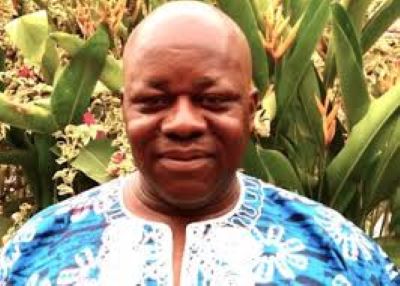
Prof. Jibrin Ibrahim
Share
Facebook Twitter LinkedIn Pinterest Email

As we celebrate the great events that followed the annulled election of June 12 1993, let us not forget that the event was a very long time ago, 31 years is ancient history for a majority of Nigerians where the median age of the population is 17.2 years. For those of us of a certain age and a tradition of democratic struggles, it was Nigeria’s rite of passage to becoming a true and enduring democratic society as President Tinubu declared in his address to Nigerians. Would young Nigerians accept the assertion that we now have a true and enduring democracy? The big issue is that the June 12 narrative is a story of great heroes and heroines, key names include the winner of the June 12, 1993 presidential election, Chief MKO Abiola, his wife, Kudirat, General Shehu Musa Yar’Adua and Pa Alfred Rewane are often cited. But maybe the great heroes of June 12 were the millions of Nigerians who came out, contested military rule and chased them out of power gaining a historic victory over military authoritarianism.

The paradox is that the current generation of young Nigerians has difficulties seeing the evidence for defining such people as selfless heroes who have contributed to consolidating democracy and providing public service. They have no experience of seeing selfless heroes they can look up to. We can ask whether they were truly selfless heroes or birds of circumstances but that question is not for today. The lived reality of the current generation is that the only agency they have seen in centres of power is powered by greedy looters of the public treasury. Our praise singing about our democratic heroes may therefore bounce off the majority of young Nigerians.

Regular readers of this column would be aware that I often say that in 2011, a positive narrative on Nigeria’s democracy emerged. There has been a significant improvement in the integrity of our elections and the massive fraud that accompanied 2003 and 2007 have not recurred. Democratic culture has been developing in a steady, even if uneven manner and citizen’s capacity for mandate protection, in particular, has grown considerably. I often tell this story to young Nigerians and they think I am delusional because they do not see what I see. Let us not forget that they did not see the 2003 and 2007 elections, so there should be no surprise when they assert categorically that 2023 is the worst election in Nigeria’s history. In other words, we are unable to write a consensual history of successive elections.

ALSO READ [COLUMN] The Northwest Peace and Security Summit, By Prof. Jibrin Ibrahim

How can we, with a judiciary that has made it clear that its “Jankara” judgements they deliver are for sale to the highest bidder and their contradictory judgements are a constant affront on truth, character and justice? There is no surprise that our great positive story of June 12, the overthrow of military dictatorship, often bounces off the young generation. Is it not true that our generation had hoped that the June 12, 1993 elections was a turning point away from ethno-religious politics but that has not been the case? Has corruption not continued to grow massively? The stories Nigerians are talking about today are about their lives and reality focused on deepening poverty, widening inequality, growing insecurity, massive unemployment, poor healthcare and education services. At the same time, we are also witnessing the coercion of the media and the shrinking of civic space. In other words, Nigerians are not enjoying many of the dividends of democracy they rightfully expect.   

I have repeatedly made the point that the main challenge to democratic development is the political party system which has refused to accept the practice of internal party democracy and remains locked into a logic of serving the interests of godfathers and party barons rather than party members and citizens. The result is that they have for the most part jettisoned the popularity principle that pushes parties to seek for the most popular candidates to enhance their chances of their victory at the polls. Their non-challant attitude is based on the capacity to determine electoral outcomes through non-democratic means. Victory at the polls is often determined by money, thuggery and collusion of officials from the electoral management body and/or security agencies. In other words, it is grounded in a deep culture of electoral fraud which makes nonsense of the vote. This culture has persisted even when the integrity of the electoral process began to improve in 2011. The main change was that monies previously used to bribe officials were then used to directly bribe the voters themselves. Let us at least engage on some reflection on what we think we are celebrating.

My view is that democracy is in its essence a good and resilient system because it’s a normative system people value for its positive content – political and human rights, civil liberties, participation, equality, rule of law and so on. For this reason, there are always demands for democracy and when countries move away from it, struggles for its return emerge. This is the crux of the matter. What is Nigeria’s pathway to democratic reform? What is the outlook for democratic resilience in Nigeria over the next decade? Maybe it might not be as bright as it should be. A core challenge has arisen, reckless and rising levels of corruption by the political class that is making governance impossible. Even the country’s main source of revenue, petroleum, is stolen and Nigeria is finding it difficult to generate sufficient revenue to carry our governmental tasks. It is getting worse. Increasingly, even the revenue that is available is being stolen by reckless officeholders. Kleptocracy is making governance impossible as monies for security, the provision of social services and the construction of infrastructure projects are stolen and governance is grinding to a halt. At the same time, current economic policies have created an unprecedented cost of living crisis at the same time that agriculture is becoming impossible due to rural insecurity. There is therefore a real risk of popular revolt and system collapse that could dismantle democracy and the political system. This is the outcome that all people of goodwill should play a role in avoiding.

To repeat the concluding point I made while addressing President’s Tinubu’s first year of governance failure, the desired outcome is a change of gear in which the governing class wakes up to its sense of enlightened self-interest and takes the war against corruption seriously so that public resources could henceforth be used for the public good. This would create a new situation in which respect for democratic principles and practices return and confidence in the system grows. Fat chance! HAPPY DEMOCRACY DAY.

Chief MKO Abiola June 12
Share. Facebook Twitter Pinterest LinkedIn WhatsApp Reddit Tumblr Email
Abdoulaye Kay
  • Website

Related Posts

Beyond the dance: Lessons from Osun 2026 for Nigeria 2027, by Prof. M.K. Othman

September 13, 2026

Of caps, marabouts and politics of envy, by Hassan Gimba

September 13, 2026

Who is policing the poison in Nigeria’s food chain?

September 12, 2026

Leave A Reply Cancel Reply

Two Straits, One Storm: Yemen, Iran, and the Unfinished Arithmetic of Adventurism

September 13, 2026

Gynaecologist seeks stronger primary healthcare to cut maternal deaths

September 13, 2026

Beyond the dance: Lessons from Osun 2026 for Nigeria 2027, by Prof. M.K. Othman

September 13, 2026

Bwari riders decry motorcycle theft, seizures

September 13, 2026
About Us
About Us

ASHENEWS (AsheNewsDaily.com), published by PenPlus Online Media Publishers, is an independent online newspaper. We report development news, especially on Agriculture, Science, Health and Environment as they affect the under-reported rural and urban poor.

We also conduct investigations, especially in the areas of ASHE, as well as other general interests, including corruption, human rights, illicit financial flows, and politics.

Contact Info:
  • 1st floor, Dogon Daji House, No. 5, Maiduguri Road, Sokoto
  • +234(0)7031140009
  • ashenewsdaily@gmail.com
Facebook Twitter Instagram Pinterest
© 2026 All Rights Reserved. ASHENEWS Daily Designed & Managed By DeedsTech

Type above and press Enter to search. Press Esc to cancel.