


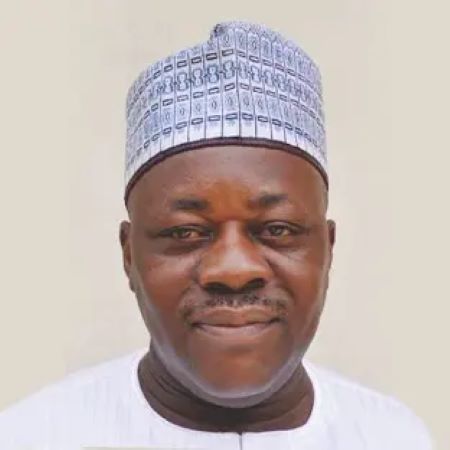
Last Saturday, I reviewed a book presented at a festschrift organised by CITAD in honour of my good friend, Ibrahim Muazzam. It was in recognition of his fifty years of scholarship, research, documentation, teaching, writing and reflections about life, society and human organisation. If everybody calls him Malam, it is because that is what he is: a teacher. I was particularly glad to notice many articles published over the past few weeks by many of his former students thanking him for the intellectual guidance and inspiration he gave them as their Malam.
It is appropriate that the focus of the book is the quest for philosophical understanding, as Ibrahim Muazzam is indeed a philosopher. This means he is a critical thinker who has spent his life in the systematic, rational, and critical study of fundamental questions about existence, knowledge, values, reason, mind, and language. The word, as we all know, comes from the ancient Greek philosophia, meaning the “love of wisdom”. Rather than gathering basic facts or running scientific lab experiments, philosophy investigates the underlying meanings, concepts, and assumptions behind how we live, think, and understand the world.
Muazzam has also been a documentarist with great respect for words, texts and their significance. He has a massive library and has lived a life of collecting sources of data before artificial intelligence emerged to redefine human existence on the basis of the power of access to big data and unleashing the massive strength and capabilities locked therein. Over the next five years, as AI accesses Muazzam’s library, a lot will be revealed about knowledge and alternative futures.
Unlike Muazzam, I am not a philosopher. I am a simple and mundane political scientist, and the editors, Y.Z, Ya’u and Murtala Muhammad, have no business asking me to review this book. In the end, I agreed to try at the task because my qualification is that I am his classmate who might present some insights into the background that produced Muazzam.
I met Ibrahim Muazzam in January 1973 as students at the School of Basic Studies (BASICO) of Ahmadu Bello University. We were 18 years old and had two assets: a solid secondary school education and blank minds that were ready to learn. In our time, being Basico meant having great ambition – to understand the world and change it into a better one. We were that arrogant, and we needed to be. It was a great beginning, and we had the teachers to guide us. We had a great teacher of World Contemporary History, Paul Claugh, who was in his twenties, rode a powerful motorbike and taught us that our mission of changing the world would only happen if we understood it. He analysed the post-industrial world by tracing the three industrial revolutions that had transformed the globe into a single system of exploitation based on control systems over human beings, natural resources and Nations. Imperialism is real, he argued, but it is also contested, and he trained us on the imperative of contesting, conquering and transforming the system.
We had Dr Bill and, above all, John Haynes, the poet who taught us to love words and introduced us to their mysteries. During the day, we learnt poetry in class. In the evenings, we re-assembled and he taught us how to write poems. His philosophy was simple: we must understand the word, voice; and we ourselves must have a voice and articulate it. In 2006, John Haynes won the Costa Poetry Award in the United Kingdom for his book-length poem – Letter to Patience. God bless Patience; she ran a beer parlour in Samaru village where we congregated to explore what the workers thought about the voices being articulated. Malam Muazzam would refuse to follow us to Patience but would demand I brief him about the discussions there.
And then the turning point came. We gained membership in STAR (Social Theory and African Reality), a Marxist-Leninist Study group initially established by Peter Waterman, where we learnt the theoretical basis for the praxis that would lead to the revolution. It was STAR that was transformed into the Movement for Progress Nigeria (MPN) when we decided that we would start the world revolution by launching the Nigerian one. We had the ambition and belief, we learnt the theoretical tools, and we were set to change the world as teenagers. Two voices in SBS moved us towards political science. One was the young lecturer, Mr Jacobs, later renaming himself as Prof A. T. Gana, who was inspirational in painting the beauty of political science as a discipline. The other was Mrs Amusa, a young Afro-American who introduced us to Malcolm X and his radical ideas.
After our Basico beginnings, Muazzam and I then moved to the Department of Government in 1974 to study political science. Our first move was to demand from the patriarch of the Department, Rev. Fr. (Professor) James O’Connell, that the Senate immediately change the name of the department from government to political science. He refused, saying the word politics would irritate the military, who would not want to employ a specialist in politics. We fought him, saying our ambition was not government jobs but overthrowing the government. We harassed him by writing articles criticizing his poster article – “The inevitability of Instability in Nigeria”, pointing out that he was the current incarnation of the colonial divide-and-rule tactics we were combating. Father O’Connell ran into trouble on two fronts. In his personal life, he fell in love with a colleague in the Faculty, married and had to leave the priesthood of the Catholic Church. On the political front, Murtala Mohammed came into power in 1975, and our prof was given a 24-hour deadline to leave the country and the department he had led since 1967. The Department of Government then became Political Science.
Muazzam’s love for philosophy was deepened by our political philosophy teacher, Ayuba Kadzai. The young and restless philosopher trained in the Chicago School introduced us to the approach of architectonic philosophy. It refers to the systematic classification of human knowledge and the art of building a unified, coherent philosophical system. Derived from the Greek word architekton (master builder), architectonics treats philosophy not as a collection of isolated ideas, but as a structured edifice where every part fits together logically. It seeks to map out how different branches of knowledge, science, and morality relate to and support one another. Muazzam and I were less convinced about Ayuba’s obsession with transforming Nigeria into a great power, as if that status was a higher order than building cadres for the revolution, which was, in our view, the fastest route to great power status with the people rather than against the people. May the souls of our teachers rest in perfect peace.
The final point about the Ahmadu Bello University of our time was the strong ideological position not to have a department of philosophy. The position was that philosophy is not an ordinary discipline you learn in a department. It is about architectonics and is integral to all disciplines. That is why a PhD, as a terminal degree, is a doctorate in philosophy. What ABU taught us is that the acquisition of knowledge must be purpose-driven but also based on strong ethics. Knowledge must always go beyond self-interest and aggrandizement. What we do with knowledge must flow from the output of our knowledge, which reveals domination and exploitation of our continent by capitalism and its system of imperialism. There is no surprise when purpose emerged as the liberation, the emancipation of our people and our resources. These fundamentals have not changed.
The book, The Quest for Philosophical Understanding: Essays in Honour of Malam Ibrahim Muazzam, has 23 chapters spread into six sections and 342 pages. It is a labour of love for the honouree, Ibrahim Muazzam, from friends, colleagues, former students and mentees. It is a sign that his lifelong commitment to critical thinking has borne fruit.
Section one is on the foundations and frameworks of philosophy and has six chapters. It looks at the value of philosophy, which guides us in knowing the types of questions we should pose so that our critical thinking can develop. Philosophy is about human conduct towards others, what is right, what is wrong and the norms and values that define society. Western philosophy is based on the Cartesian notion of personhood in which reason is embedded in individuals who have personal autonomy and free will. African philosophy, on the other hand, blurs the distinction between the individual and society.
In the five chapters in section two, the issue of philosophical approaches to governance and society is addressed. Nigeria, and indeed Africa, needs to pose the question of why we have recurrence in the emergence of poor leadership. Good governance has become a rare phenomenon on the continent. There has been no clear approach to develop a philosophy of governance, which means we do not have a basis for the establishment of responsible and legitimate governance systems. In addition, many feel they are marginalised from governance, and the imperative of developing an inclusive system is yet to be addressed.
Section three has four chapters on the philosophies of security, peace and inclusion. The classic position is that the state has the responsibility of the provision of security. Perspectives, however, differ on what security means, and for whom. There is also a wide gap between narrowly or broadly defined approaches to what security is. What is security has remained a persistent question.
In section four, four authors address the epistemology of knowledge systems in Africa. An African system of epistemology known as Igwebuike is presented and analysed. It is based on solidarity and complementarity within the society and could be viewed as part of the process of decolonising Africa’s theory of knowledge. Feminist epistemology and theories of power offering a gendered perspective are also presented. There is also a presentation of the intellectual history of Malam Amina Kano, a radical leader who advocated for the promotion of people’s power and the emancipation of the masses, talakawa.
The three chapters in section five present philosophical reflections on leadership and ethics. It is proposed that the Nelson Mandela model of leadership recruitment provides enough elements for a philosophy of leadership in Africa. There is a path to follow in improving our leadership selection system.
