


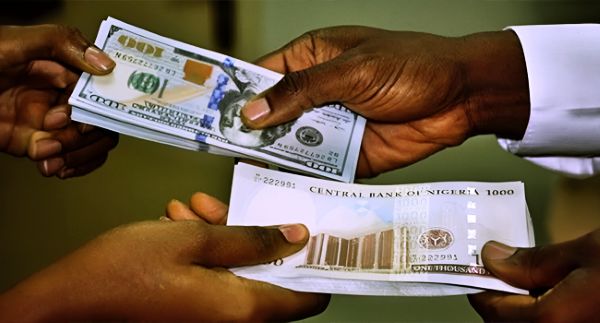
The naira appreciated to N1,355.25/$ at the official foreign exchange market on Friday, marking its strongest level in recent sessions, according to data released by the Central Bank of Nigeria (CBN).
The latest gain comes despite a continued decline in Nigeria’s external reserves, raising fresh concerns about the sustainability of the currency’s recent recovery.
The appreciation capped a shortened trading week following the Easter holiday, during which the naira recorded consistent gains. Trading resumed on Tuesday after the break, with the currency strengthening steadily through the week despite an initial dip.
CBN data showed the naira opened at N1,389/$ on Tuesday, before appreciating to N1,369/$ on Wednesday. It further strengthened to N1,365/$ on Thursday and closed the week at N1,355.25/$ on Friday.
This represents an improvement from the pre-Easter rate of N1,382.75/$ recorded on April 2, 2026. On a year-on-year basis, the currency has strengthened significantly from N1,606/$ recorded after Easter in April 2025, indicating a reversal of last year’s post-holiday depreciation trend and pointing to improved short-term stability.
The naira’s performance comes amid ongoing monetary and foreign exchange reforms by the Central Bank of Nigeria. Earlier in February 2026, external reserves rose to $50.45 billion—the highest level in over a decade—driven by improved foreign exchange inflows and policy measures aimed at boosting market liquidity and investor confidence.
Global factors also played a role in recent currency movements. The U.S. dollar strengthened in March as geopolitical tensions in the Middle East—particularly the conflict involving Israel and Iran—triggered a flight to safety among investors, driving up oil prices and inflation concerns. However, following a ceasefire earlier in the week, these pressures began to ease, leading to a broader decline in the dollar.
Despite the naira’s recent gains, Nigeria’s external reserves have continued to trend downward in April. Reserves fell to $48.85 billion as of April 9, 2026, from $49.18 billion at the start of the month, reversing part of the earlier accumulation recorded this year.
The decline has heightened concerns over the durability of the naira’s appreciation, particularly if reserve depletion persists.
Nonetheless, the Central Bank of Nigeria maintains a positive outlook, projecting external reserves to rise to $51.04 billion in 2026, up from $45.01 billion in 2025.
