


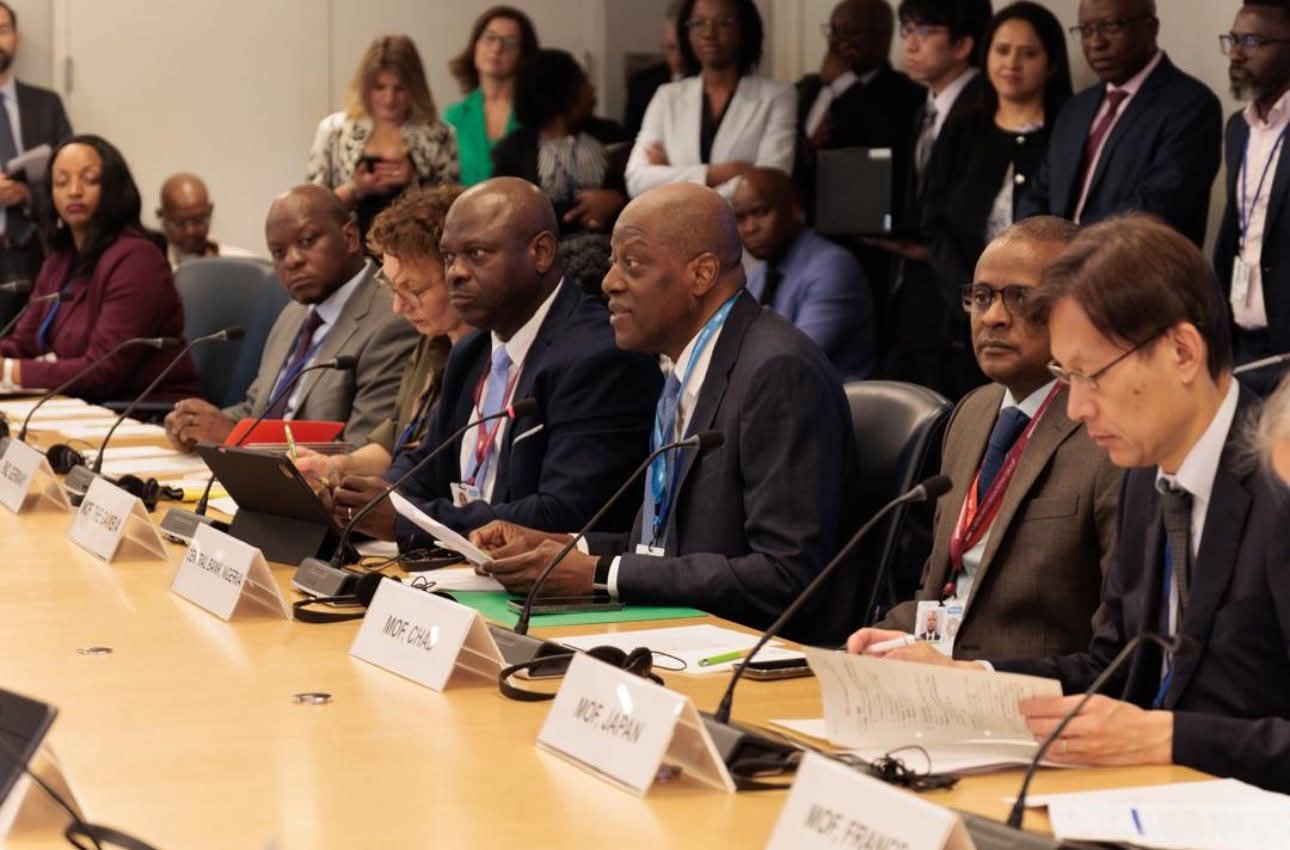
The Governor of the Central Bank of Nigeria, Olayemi Cardoso, has underscored the critical importance of strengthening institutional and human capacity across Africa to drive sustainable economic growth and resilience.
Cardoso made this known while addressing delegates at the Leadership Dialogue on Capacity Development in Africa, held on the sidelines of the 2026 Spring Meetings of the International Monetary Fund and the World Bank Group in Washington, D.C., on April 15, 2026.
The high-level dialogue brought together policymakers, central bankers, and development experts to examine how African countries can build stronger institutions, enhance policy effectiveness, and improve governance frameworks amid evolving global economic pressures.
Speaking at the forum, Cardoso emphasized that capacity development remains a cornerstone for Africa’s economic transformation, particularly as countries navigate complex macroeconomic challenges, including inflationary pressures, debt vulnerabilities, and external shocks.
His intervention aligned with broader discussions at the Spring Meetings, where global stakeholders have highlighted the growing strain on developing economies and the need for coordinated policy support.
The CBN governor’s participation forms part of Nigeria’s broader engagement at the meetings, where officials have been advocating reforms to strengthen financial systems, deepen regional cooperation, and enhance Africa’s voice in global economic governance. Recent engagements have also focused on advancing initiatives such as monetary integration and institutional capacity building across the continent.
The Leadership Dialogue is one of several thematic sessions at the IMF and World Bank Spring Meetings designed to foster knowledge sharing and policy coordination. For African economies, stakeholders at the event stressed that investing in technical expertise, data systems, and institutional frameworks will be essential to unlocking growth, improving fiscal management, and ensuring long-term development outcomes.
Cardoso’s remarks reinforce Nigeria’s position on the need for sustained investment in capacity development as a pathway to economic stability and inclusive growth across Africa.
