


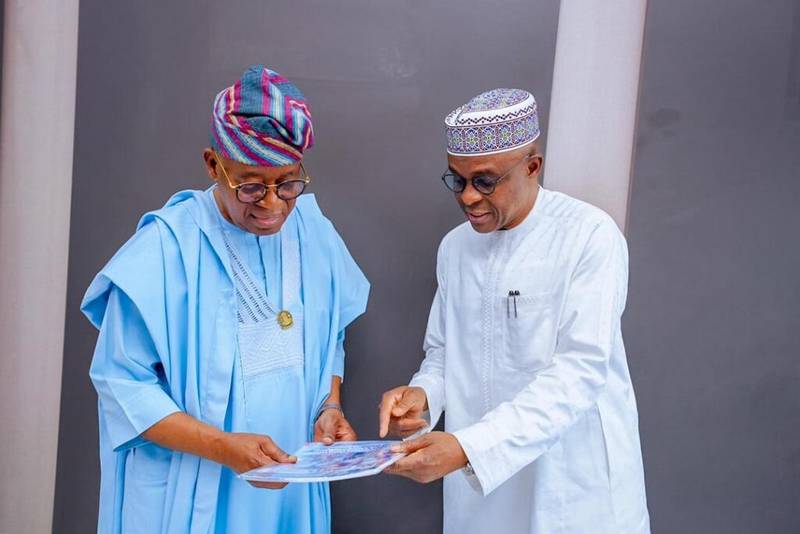
The Managing Director of the Nigerian Ports Authority (NPA), Abubakar Dantsoho, says the maritime sector recorded strong growth in the first quarter of 2026, driven by increased cargo throughput, higher vessel traffic, and ongoing port reforms.
Dantsoho disclosed this in a statement issued on Sunday in Lagos by the NPA General Manager of Corporate Communications and Strategy, Mr. Ikechukwu Onyemekara.
He said ocean-going vessel Gross Registered Tonnage (GRT) rose by 19.5 per cent to 46.75 million in the first quarter of 2026, reflecting improved efficiency and growing confidence by international shipping lines in Nigerian ports.
According to him, the increase was largely driven by the deployment of larger vessels at Lekki Deep Sea Port and rising regional trade under the African Continental Free Trade Area (AfCFTA).
“Ports must evolve beyond old limits. Efficiency, speed and reliability will determine who leads African trade,” Dantsoho said.
He noted that total cargo throughput increased by 11.6 per cent year-on-year to 32.38 million metric tonnes.
Outward cargo rose by 23.7 per cent to 14.13 million tonnes, while outward laden containers jumped by 67.6 per cent to 102,803 Twenty-foot Equivalent Units (TEUs).
Vehicle traffic also increased by 67 per cent to 58,870 units, and transshipment containers rose by 83.1 per cent, signalling Nigeria’s growing role in regional trade.
“The time has come to fully utilise our marine resources. Ports can drive major economic growth if properly harnessed,” he said.
Dantsoho noted that reforms under President Bola Tinubu’s administration are focused on infrastructure upgrades, digitalisation, and restructuring to position Nigeria as a leading maritime hub in Africa.
He revealed that the $1 billion overhaul of the Lagos Port Complex and Tin Can Island Port is underway following the approval of the Memorandum of Understanding (MoU).
The Minister of Marine and Blue Economy, Adegboyega Oyetola, said procurement processes are ongoing for upgrades at Warri, Port Harcourt, Onne, and Calabar ports to ensure balanced development.
Oyetola added that the Port Community System and National Single Window projects would reduce delays, lower costs, and improve transparency in port operations.
He noted that investments in rail, inland dry ports, barging, and export corridors are aimed at easing congestion and improving cargo evacuation.
The NPA also reported that Nigeria has sustained over four years without piracy incidents under the Deep Blue Programme.
Dantsoho observed that Nigeria currently handles only 25 per cent of West Africa’s cargo, despite accounting for about 60 per cent of the region’s Gross Domestic Product (GDP).
“With sustained commitment, Nigeria’s port system will emerge as Africa’s leading maritime logistics hub,” he said.
