

• Home
  • Agric
  • Sci & Tech
  • Health
  • Environment
  • Hausa News
  • More
    • Business/Banking & Finance
    • POLITICS
    • Entertainments & Sports
    • International
    • Investigation
    • Law & Human Rights
    • Africa
    • ACCOUNTABILITY/CORRUPTION
    • Hassan Gimba
    • Column
    • Prof. Jibrin Ibrahim
    • Prof. M.K. Othman
    • Defense/Security
    • Education
    • Energy/Electricity
    • Entertainment/Arts & Sports
    • Society and Lifestyle
    • Food & Agriculture
    • Health & Healthy Living
    • International News
    • Interviews
    • Investigation/Fact-Check
    • LAW & HUMAN RIGHTS
    • Oil & Gas/Mineral Resources
    • PRESS FREEDOM/JOURNALISM/PR
    • General News
    • Presidency
  • About Us
    • Contact Us
    • Board Of Advisory
    • Privacy Policy
    • Ethics Policy
    • Teamwork And Collaboration Policy
    • Fact-Checking Policy
    • Advertising
  • Media OutReach Newswire
    • Wire News
  • The Stories
Facebook Twitter Instagram
Trending
  • DSN CEO: Data classification key to Nigeria’s data sovereignty
  • Nigeria’s national metering rate rises to 57%
  • Lagos to increase investment in tech, innovation
  • Fulani group urges herders to support security efforts, expose criminals in Southwest
  • Nigeria’s local petrol production hits 48m litres daily
  • Kano suspends water scheme manager over alleged sabotage
  • DRC Ebola outbreak surpasses 1,000 cases, spreads to 3rd camp
  • Lagos joins global under2 climate coalition
Facebook Twitter Instagram YouTube
AsheNewsAsheNews
  • Home
  • Agric

    Nigeria’s neem advantage: Unlocking a strategic bioeconomy industry for climate, agriculture and industrial growth, Dr Fakunle Aremu

    June 22, 2026

    AFAN predicts drop in food prices after fertiliser distribution

    June 22, 2026

    Northern Nigeria’s poultry economy: Unlocking a multi-billion dollar investment opportunity across the value chain, By Dr. Fakunle Aremu

    June 19, 2026

    Association trains farmers on agroforestry, carbon opportunities

    June 18, 2026

    IWMI, IFPRI link Kano farmers to solar irrigation support

    June 17, 2026
  • Sci & Tech

    DSN CEO: Data classification key to Nigeria’s data sovereignty

    June 23, 2026

    Lagos to increase investment in tech, innovation

    June 23, 2026

    ALTON supports CBN’s local data hosting mandate

    June 20, 2026

    NDPC seeks INEC data records over breach allegations

    June 20, 2026

    SGF urges Galaxy Backbone to boost cybersecurity, broadband

    June 20, 2026
  • Health

    RCCG freedom court parish holds community cleanup for 18th anniversary

    June 23, 2026

    NAFDAC holds workshop on medicine safety in Karu

    June 22, 2026

    Expert urges focused use of N10bn for Ebola preparedness

    June 22, 2026

    From Sokoto to Bulgaria: Dr. Dange’s mission to transform pediatric care

    June 21, 2026

    Nigeria’s Fathers face silent mental health crisis

    June 21, 2026
  • Environment

    Nigeria’s national metering rate rises to 57%

    June 23, 2026

    Nigeria’s local petrol production hits 48m litres daily

    June 23, 2026

    Lagos joins global under2 climate coalition

    June 23, 2026

    FAAN considers extending airport taxi upgrade deadline to October

    June 23, 2026

    Floods, Windstorm devastate Ebonyi farmlands, shops

    June 22, 2026
  • Hausa News

    UNA signs MoU to launch air Bissau in Guinea-Bissau

    June 15, 2026

    Otti plans 250-room 5-star hotel in Umuahia

    April 11, 2026

    Anti-quackery task force seals 4 fake hospitals in Rivers

    August 29, 2025

    [BIDIYO] Yadda na lashe gasa ta duniya a fannin Ingilishi – Rukayya ‘yar shekara 17

    August 6, 2025

    A Saka Baki, A Sasanta Saɓani Tsakanin ‘Yanjarida Da Liman, Daga Muhammad Sajo

    May 21, 2025
  • More
    1. Business/Banking & Finance
    2. POLITICS
    3. Entertainments & Sports
    4. International
    5. Investigation
    6. Law & Human Rights
    7. Africa
    8. ACCOUNTABILITY/CORRUPTION
    9. Hassan Gimba
    10. Column
    11. Prof. Jibrin Ibrahim
    12. Prof. M.K. Othman
    13. Defense/Security
    14. Education
    15. Energy/Electricity
    16. Entertainment/Arts & Sports
    17. Society and Lifestyle
    18. Food & Agriculture
    19. Health & Healthy Living
    20. International News
    21. Interviews
    22. Investigation/Fact-Check
    23. LAW & HUMAN RIGHTS
    24. Oil & Gas/Mineral Resources
    25. PRESS FREEDOM/JOURNALISM/PR
    26. General News
    27. Presidency
    Featured
    Recent

    DSN CEO: Data classification key to Nigeria’s data sovereignty

    June 23, 2026

    Nigeria’s national metering rate rises to 57%

    June 23, 2026

    Lagos to increase investment in tech, innovation

    June 23, 2026
  • About Us
    1. Contact Us
    2. Board Of Advisory
    3. Privacy Policy
    4. Ethics Policy
    5. Teamwork And Collaboration Policy
    6. Fact-Checking Policy
    7. Advertising
    Featured
    Recent

    DSN CEO: Data classification key to Nigeria’s data sovereignty

    June 23, 2026

    Nigeria’s national metering rate rises to 57%

    June 23, 2026

    Lagos to increase investment in tech, innovation

    June 23, 2026
  • Media OutReach Newswire
    • Wire News
  • The Stories
AsheNewsAsheNews
Home»ACCOUNTABILITY/CORRUPTION»More FAAC, more debt: States’ fiscal paradox deepens
ACCOUNTABILITY/CORRUPTION

More FAAC, more debt: States’ fiscal paradox deepens

EditorBy EditorFebruary 15, 2026Updated:February 15, 2026No Comments4 Mins Read
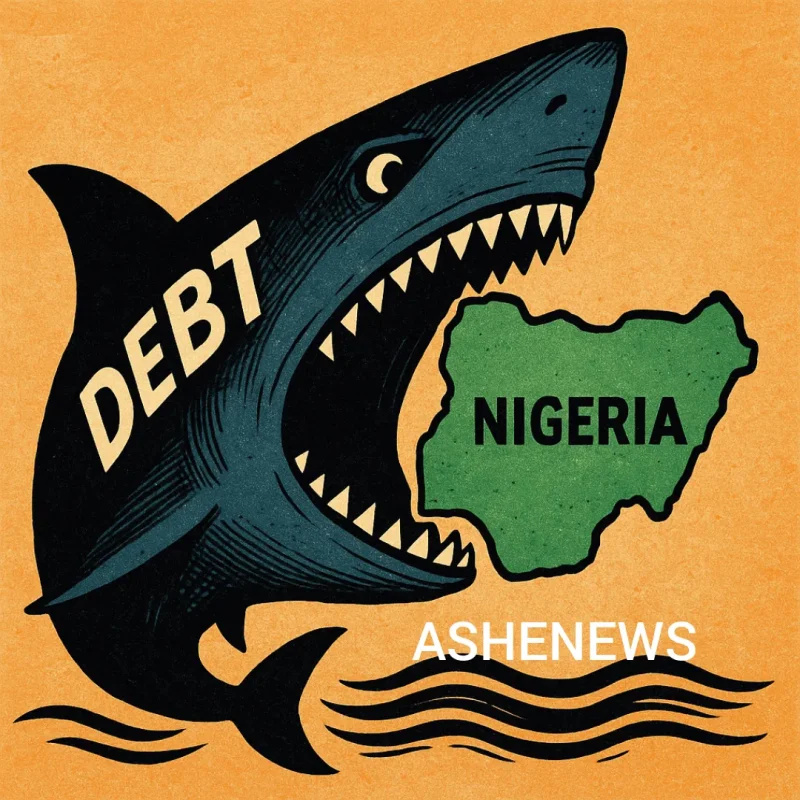
Debt in Nigeria
Share
Facebook Twitter LinkedIn Pinterest Email

Nigeria’s state governments have experienced one of their strongest revenue expansions in recent years, driven by fuel subsidy removal, foreign exchange reforms and improved oil receipts that boosted Federation Account Allocation Committee (FAAC) disbursements into trillions of naira.

Yet rising allocations have not translated into improved fiscal health or welfare outcomes. Instead, debt servicing — particularly on foreign obligations — is absorbing an increasing share of resources, while spending on healthcare and other human development priorities remains low. The outcome is a widening disconnect between fiscal inflows and living conditions in a country grappling with rising poverty.

Data from BudgIT’s State of States Report 2025 show that states collectively spent N2.11 trillion on debt servicing in 2024 — 26.45 percent of total expenditure. In effect, more than one-quarter of state spending went to creditors rather than infrastructure, education, or healthcare.

Total debt stock across 35 states rose by 6.87 percent to N10.57 trillion in 2024 from N10.01 trillion a year earlier. Domestic debt declined sharply by N1.99 trillion to N3.54 trillion, but foreign debt increased to $4.58 billion, exposing states to exchange-rate risk.

Twenty-four states now hold more than half of their debt in US dollars. Kaduna’s exposure stands at 97.39 percent, followed by Jigawa at 96.42 percent and Ondo at 90.04 percent — a structure that heightens vulnerability amid currency volatility. Per capita debt also edged higher to N41,766 in 2024, with Lagos recording the highest burden at N166,253 per resident.

Beyond official borrowing, legacy liabilities continue to weigh on finances, including contractor arrears of N434.87 billion, pension and gratuity backlogs of N626.8 billion, salary claims of N33.73 billion, judgment debts of N64.44 billion, and other obligations totalling N79.91 billion.

Servicing pressures intensified in 2025. National Bureau of Statistics data show states paid N455.38 billion in foreign debt service that year, up from N362.08 billion in 2024 — largely deducted directly from FAAC inflows before distribution. Lagos recorded the highest deductions at N92.80 billion, followed by Rivers, Kaduna, Ogun and Cross River. Regionally, the South-West accounted for 35.74 percent of total foreign debt service.

The strain is striking when viewed alongside the surge in FAAC allocations. Figures from the Nigeria Extractive Industries Transparency Initiative indicate disbursements rose from N8.21 trillion in 2022 to N15.26 trillion in 2024 — a 66 percent jump — before reportedly reaching about N33.27 trillion in 2025.

Despite the windfall, social investment remains thin. BudgIT reports states spent an average of just N3,483 per capita on healthcare in 2024, with no state reaching N10,000 per person. Only seven states exceeded N5,000 — a modest commitment in a country confronting fragile primary healthcare systems and rising disease burdens.

Welfare indicators reflect the disconnect. World Bank estimates suggest poverty rose to 61 percent in 2025 — about 139 million Nigerians living on less than $3 per day — with projections pointing to further increases in 2026. The trajectory indicates that higher public revenues have yet to deliver broad-based improvements in living standards.

Analysts attribute part of the gap to political incentives that prioritise visible infrastructure over long-term human capital investment. Capital projects offer immediate visibility within electoral cycles, while education and health reforms yield outcomes beyond political tenures.

Others argue accountability pressure must come from citizens, urging voters to demand credible governance commitments as elections approach.

Nigeria’s states are therefore confronted with a structural paradox: rising nominal revenues alongside expanding debt obligations and persistent poverty. With over a quarter of expenditures devoted to debt servicing and foreign exposure increasing, fiscal space for transformative social investment remains constrained.

As FAAC inflows reach historic highs, the central development question endures — whether subnational governments can translate revenue windfalls into measurable welfare gains, or whether mounting debt and spending priorities will continue to crowd out inclusive growth.

Source: BusinessDay

BudgIT’s State of States Report 2025 s debts FAAC
Share. Facebook Twitter Pinterest LinkedIn WhatsApp Reddit Tumblr Email
Editor
  • Website

Related Posts

Why UK court cleared Alison-Madueke of all bribery charges

June 18, 2026

FAAC shares ₦2.3trn May revenue among FG, states, LGCs

June 17, 2026

FG, states, LGs share N2.257trn from April 2026 FAAC allocation

June 15, 2026

Leave A Reply Cancel Reply

DSN CEO: Data classification key to Nigeria’s data sovereignty

June 23, 2026

Nigeria’s national metering rate rises to 57%

June 23, 2026

Lagos to increase investment in tech, innovation

June 23, 2026

Fulani group urges herders to support security efforts, expose criminals in Southwest

June 23, 2026
About Us
About Us

ASHENEWS (AsheNewsDaily.com), published by PenPlus Online Media Publishers, is an independent online newspaper. We report development news, especially on Agriculture, Science, Health and Environment as they affect the under-reported rural and urban poor.

We also conduct investigations, especially in the areas of ASHE, as well as other general interests, including corruption, human rights, illicit financial flows, and politics.

Contact Info:
  • 1st floor, Dogon Daji House, No. 5, Maiduguri Road, Sokoto
  • +234(0)7031140009
  • ashenewsdaily@gmail.com
Facebook Twitter Instagram Pinterest
© 2026 All Rights Reserved. ASHENEWS Daily Designed & Managed By DeedsTech

Type above and press Enter to search. Press Esc to cancel.