


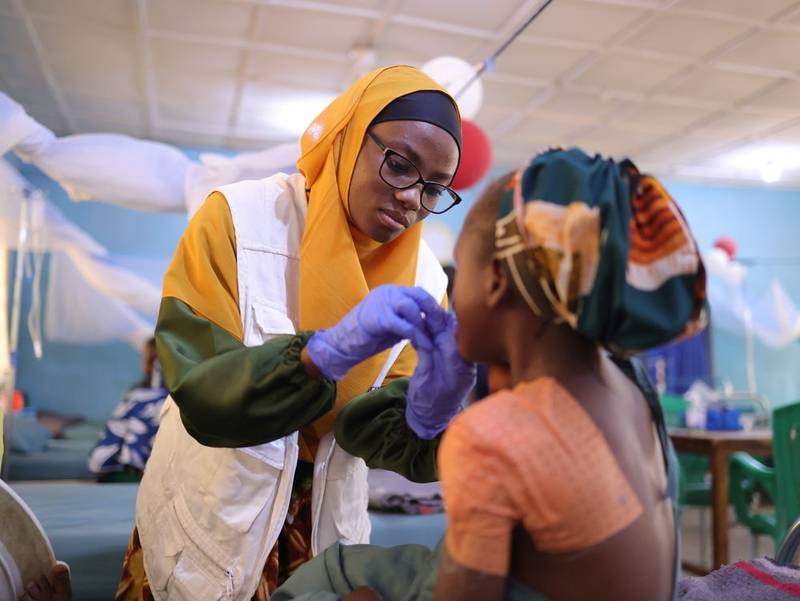
The medical humanitarian organisation Médecins Sans Frontières (MSF) has called for increased awareness, prevention and early treatment of noma, a neglected tropical disease that primarily affects young children in poor communities.
This is contained in a statement issued on Wednesday in Abuja by MSF Field Communication Officer Abdulkareem Yakubu to raise awareness about the disease.
The statement noted that the World Health Organisation (WHO) recognised noma as a neglected tropical disease in 2023.
According to the statement, noma is a non-communicable disease that rapidly destroys facial tissues and bones, with children under the age of seven being the most vulnerable.
Yakubu attributed the disease to severe malnutrition, limited vaccination, poor oral hygiene and restricted access to healthcare services, particularly in rural and underserved communities.
He said many noma survivors arrive at health facilities after years of living with severe facial disfigurement, making it difficult to eat, speak or breathe, while exposing them to stigma and social exclusion.
Yakubu added that survivors often face psychological trauma, educational disruption and financial hardship, underscoring the need for early diagnosis and comprehensive medical care.
MSF Medical Team Leader in Sokoto, Ms Florencia Maghanga, said noma is preventable and can be successfully treated when detected early, but becomes life-threatening if left untreated.
According to her, more than 70 to 90 per cent of untreated patients die from the disease, despite the availability of effective treatment in its early stages.
Maghanga said early-stage noma can be managed with antibiotics, proper wound care, nutritional support and treatment of underlying medical conditions before the disease progresses.
She explained that advanced cases require clinical stabilisation to control infection, followed by complex and resource-intensive reconstructive surgery to restore facial function and appearance.
Yakubu said MSF has supported the Federal Ministry of Health’s Noma Children Hospital in Sokoto since 2014, describing it as one of the few specialised facilities worldwide dedicated to noma treatment.
He said the hospital performed reconstructive surgeries for 1,078 patients between 2014 and 2025, while 1,034 patients received medical treatment, nutritional support, physiotherapy and psychosocial care in 2025.
Maghanga emphasised the need for greater public awareness of noma, saying more education is required on its impact on children and communities, as well as increased investment in healthcare personnel.
She said existing treatment facilities are too few and understaffed to meet growing needs, calling for stronger government commitment to addressing the disease.
“No child should suffer or die from a disease that can be prevented and treated,” Maghanga said.
She urged urgent, coordinated action to integrate noma prevention, early detection, treatment and disease surveillance into primary healthcare services and national child health programmes.
