


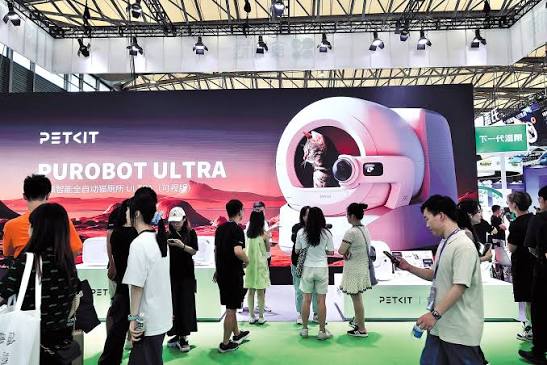
The range of products in China’s smart pet care market is expanding rapidly, driven by growing consumer demand and advances in artificial intelligence (AI) technology.
Pet care is becoming increasingly tech-driven and sophisticated, according to Belt and Road News Network (BRNN), a partner of TV BRICS.
Statistics show that by 2025, the number of cats and dogs in China’s cities had exceeded 126 million, while the consumer market was worth approximately $46 billion.
At a popular pet products exhibition held in Shanghai this spring, visitors saw a wide range of smart technologies for pet care, including smart cameras, water dispensers, feeders, and companion robots.
For example, Wang, a Chinese woman who owns several cats, explained that she uses a feeder with face-recognition technology. After initial registration, each pet is assigned its own profile in the system.
“Even if I add large chunks of freeze-dried food, the device works flawlessly. When I’m away on business, I use the app to monitor when and how much each cat has eaten, and I can also see how much food is left in the feeder,” said Wang.
Smart wearable devices for pets are improving year on year. Some smart collars continuously monitor a pet’s activity, sleep duration, and heart rate. If any worrying deviations are detected, the system instantly notifies the owner.
One company has unveiled an entire ecosystem: a smart water bowl with drinking behaviour recognition, a food bowl that alerts the owner to any anomalies, and a cat litter tray with face recognition and litter analysis features — all integrated into a dedicated platform that tracks the pets’ health data.
There are also reports of a smartphone designed for pets. The gadget focuses on three main objectives: communication, safety, and health monitoring.
The owner can interact with their pet remotely, send training commands, and track its location via GPS. A camera records what is happening from the pet’s perspective.
The Chinese AI-based smart pet gadget industry is confidently moving from automatic feeding and health monitoring towards full-fledged interaction between humans and animals.
