


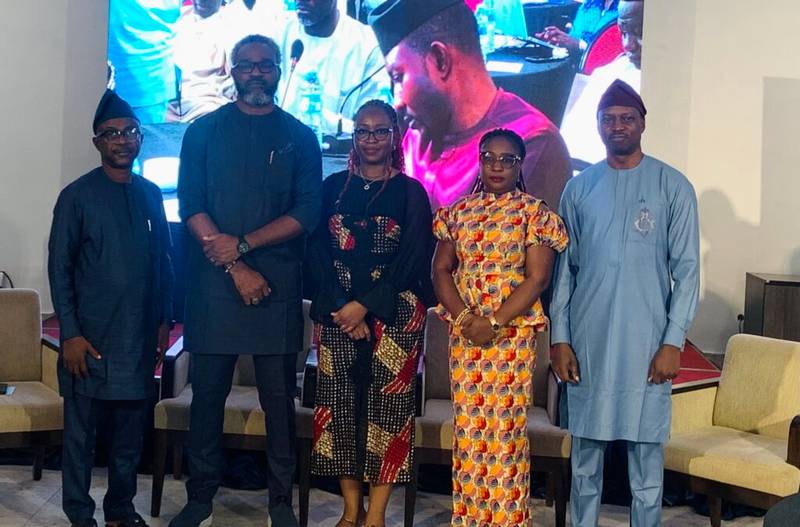
Stakeholders in the health sector have called for increased community involvement in grassroots malaria eradication strategies following a decline in international donor funding to combat the disease in Nigeria.
The stakeholders made this call in Abuja on Friday during a two-day High-Level Advocacy Engagement on Domestic Financing for Malaria Elimination in Nigeria.
The event, themed “Strengthening Malaria Financing, Surveillance, and Resistance Response in a Turbulent Global Context by Influencing Policy and Practice,” was organized by Malaria Consortium Nigeria.
Speaking at the event, Mr. Vahyala Kwaga, the Country Director of the BudgIT Foundation, stated that international donor funds for malaria had dried up, making it crucial for Nigeria to look inward.
Kwaga emphasized the need for deeper community involvement in grassroots malaria eradication efforts.
He explained that the Federal Government should create an enabling environment for the private sector through grants, import licenses, policy stability, and adherence to the rule of law.
“It’s not new that donor funding for malaria has basically dried up. Nigeria and Nigerians need to take the lead and develop innovative ways to fund and manage malaria prevention,” he said.
Kwaga also urged the government to support the private sector via grants, import licenses, and a stable policy environment to sustain efforts.
Additionally, Frank Muonemeh, the Executive Secretary of the Pharmaceutical Manufacturers Group of the Manufacturers Association of Nigeria (PMG-MAN), said Nigeria cannot eradicate malaria until it takes ownership of medicine production.
According to Muonemeh, true medicine security requires local dominance across the entire value chain—from research and development to Active Pharmaceutical Ingredients (APIs), budgeting, and accountability.
“So, when you talk about malaria, you cannot end it in Nigeria or Africa until Nigeria takes ownership of the process,” he stated.
Mr. Isaac Adejo, Project Director at Management Sciences for Health (MSH) Nigeria, noted that the success of Nigeria’s malaria interventions depends on the consistent availability of essential health products at facilities.
Adejo suggested that incentives for local manufacturers to produce Insecticide-Treated Nets (ITNs) and Rapid Diagnostic Tests (RDTs) could reduce dependence on imports and donor support.
Lovelyn Gabriel, Monitoring and Evaluation Manager at the Association of Civil Society Organizations on Malaria Control, Immunization, and Nutrition, described the meeting as a key step toward ending reliance on foreign aid.
She highlighted that finding local funding is the only sustainable way forward, noting that government healthcare spending has improved but still has a long way to go.
“This meeting aims to explore all ways to source domestic funding for malaria elimination,” she said. “Relying solely on donor support is not sustainable or predictable given the global funding landscape.”
Gabriel urged the public to keep their surroundings clean to prevent the spread of malaria.
Mrs. Mary Ogangwu, COO of Codix Pharma, explained that local manufacturers face significant financial challenges in meeting international standards without government support.
She noted that obtaining funds from the Bank of Industry (BOI) is very difficult, forcing businesses to rely on high-interest loans from commercial banks.
“Accessing BOI funding has been very challenging,” she said.
Sharing insights on supply chain issues, she mentioned that malaria tools donated by donors often leak into open markets, harming local businesses.
“We continue to depend on donor support, which is not ideal. The country lacks full control over commodity movement to the last mile, which hurts local producers,” she added.
