


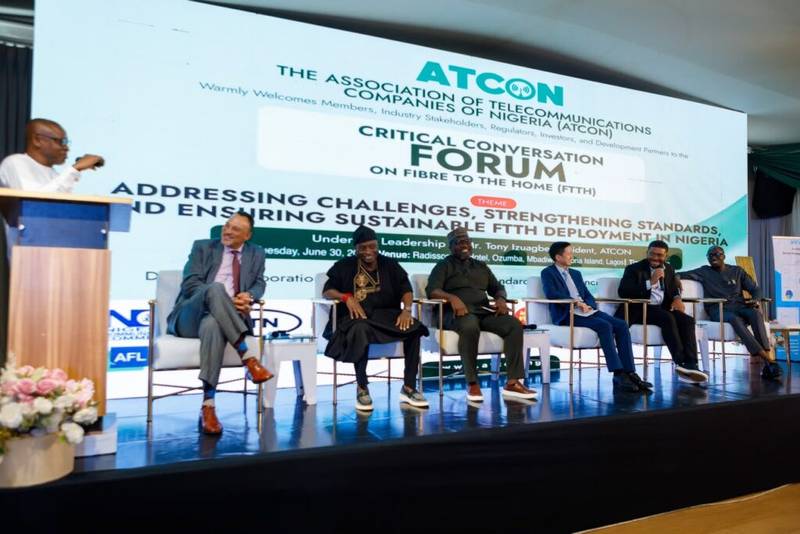
Mr. Eghosa Urhoghide, Managing Director of the Edo Information and Communications Technology Agency (EdoICTA), has called for stronger collaboration among governments, telecom operators, regulators, and host communities to reduce damage to Nigeria’s fibre-optic infrastructure.
Urhoghide made this statement on Monday in Benin during a session on Technical Standards and Infrastructure Resilience at the Fibre-to-the-Home (FTTH) 2026 Forum.
Industry leaders discussed practical measures to strengthen broadband infrastructure nationwide.
The EdoICTA boss emphasized that collaboration would support sustainable broadband expansion.
He noted that poor deployment standards could undermine broadband growth.
He stressed that sustainable broadband development requires deliberate investment in infrastructure built to approved technical standards.
“If you are going to invest in infrastructure, invest properly so it is sustainable,” Urhoghide said.
He explained that frequent fibre cuts, which disrupt internet services and slow broadband expansion, could be significantly reduced through stronger stakeholder coordination.
Drawing from Edo’s experience, Urhoghide said the state established a coordination mechanism that kept telecommunications operators informed before and during road construction projects.
This approach enabled underground fibre infrastructure to be identified and protected before work began.
He highlighted that this strategy helped minimize accidental fibre cuts and demonstrated the importance of continuous collaboration among ministries responsible for works, road maintenance agencies, ICT institutions, and telecom operators in safeguarding critical digital infrastructure.
Urhoghide also stressed the need for fibre cables to be laid at approved depths and in compliance with established engineering standards.
He warned that substandard installation increases the risk of repeated damage during civil works.
He noted that investing in resilient infrastructure from the start is more cost-effective than repeatedly repairing damaged networks and is essential for the long-term sustainability of broadband systems.
The EdoICTA managing director further urged regulators to strengthen compliance with technical standards and promote greater cooperation within the telecommunications sector.
According to him, Nigeria’s broadband goals will depend not only on expanding fibre infrastructure but also on protecting existing investments through better planning, industry collaboration, and strict adherence to technical standards.
Urhoghide added that Edo’s approach aligns with the digital transformation agenda of Gov. Monday Okpebholo’s administration, with EdoICTA leading these initiatives to improve digital connectivity and strengthen critical ICT infrastructure across the state.
