


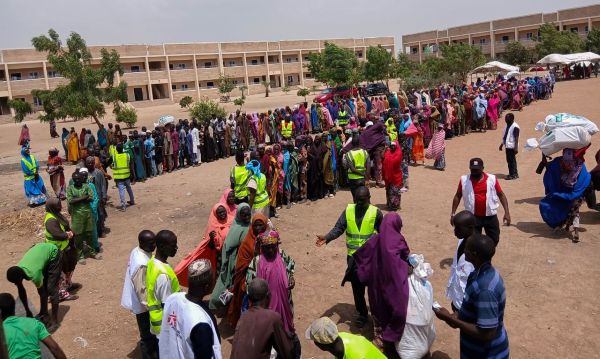
Médecins Sans Frontières (MSF) has launched an emergency response in Gwoza Local Government Area (LGA) of Borno State following a fresh wave of displacement triggered by armed violence.
The organisation said attacks on Ngoshe on March 3, 2026, resulted in multiple deaths and abductions, forcing more than 5,000 people to flee their homes.
The displaced persons are now sheltering in Pulka, about 15 kilometres away within Gwoza LGA, where they are living in extremely precarious conditions.
Many of those affected—including women, children, and the elderly—arrived with little or no belongings. With inadequate shelter, several families are sleeping in open spaces and along streets.
“Our homes were bombed; everything we owned was destroyed,” said Safiya Mohammed Aga, a displaced resident of Ngoshe. “We fled to Pulka with almost nothing. Some of us came without clothes or any possessions. We had to leave everything behind and run.”
Access to essential services such as food, safe water, sanitation, and hygiene remains critically limited, raising the risk of disease outbreaks, particularly among children and other vulnerable groups.
In response, MSF commenced a four-week emergency intervention on April 10, 2026, targeting newly displaced populations in Pulka. So far, more than 900 families have received non-food items, including cooking utensils, sleeping mats, mosquito nets, jerrycans, and buckets.
The organisation has also distributed 884 dignity kits containing menstrual hygiene products, soap, and oral care items to vulnerable individuals.
Additionally, MSF has begun rehabilitating sanitation facilities and is delivering approximately 16,000 litres of safe drinking water daily to meet urgent needs. Health promotion teams are also conducting hygiene awareness campaigns to curb the spread of disease.
Despite these efforts, MSF said the scale of humanitarian needs far exceeds its current capacity.
“People urgently need food and improved access to water, sanitation, and hygiene services,” said Abdoulaye Mahmoudoune, MSF emergency field coordinator. “MSF is responding, but we cannot meet these overwhelming needs alone. Families who fled violence are struggling to survive in extremely difficult conditions. Other humanitarian organisations must urgently step in.”
Gwoza LGA has faced years of conflict and repeated displacement, leaving communities with severe humanitarian and medical challenges. Health facilities remain overstretched, while humanitarian assistance continues to decline.
“Funding gaps and a broader reduction in humanitarian support across Borno State are putting critical healthcare and life-saving services at serious risk,” Mahmoudoune added.
MSF has been supporting Gwoza General Hospital since August 2025 by providing emergency medical care and referral services. The organisation also collaborates with the Ministry of Health to support maternal and newborn care in Kushari and runs nutrition programmes in Maiduguri for children under five suffering from acute malnutrition.
MSF has called on humanitarian organisations to urgently scale up assistance in Pulka, particularly in the areas of food aid and water, sanitation, and hygiene interventions.
