


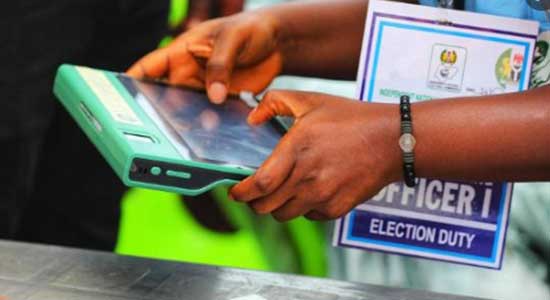
In recent years, Nigeria’s electoral reforms have been dominated by one seductive idea: technology will save democracy. Electronic accreditation, BVAS deployment, and the promise of real-time result transmission were presented as watershed moments in the struggle against electoral fraud. Many citizens believed that once results are transmitted electronically, rigging would become impossible. The 2023 general elections delivered a sobering lesson. Technology can improve transparency, but it cannot replace political will, institutional integrity, or the rule of law. Elections fail not only because systems are weak, but because powerful actors deliberately subvert them.
Nigeria’s electoral crisis is structural, not merely technical. Electronic transmission of results is necessary, but far from sufficient. Unless the legal hierarchy of evidence is reformed, discretionary authority in result declaration is reduced, electoral offences are meaningfully punished, and institutional independence is strengthened, technology will continue to polish the surface of a deeply compromised process.
Historically, the most contested phase of Nigerian elections has not been voting itself, but the collation and declaration of results. Polling units are increasingly monitored by citizens, observers, party agents, and the media. In many locations, votes are counted and announced publicly. The problem emerges after ballots leave the polling unit and enter the bureaucratic chain of collation. At these stages, power becomes concentrated in the hands of a few officials, particularly collation and returning officers. Where a single human decision can override hundreds of polling unit outcomes, the integrity of the entire process rests on the integrity of a few individuals. This institutional design is ill-suited to a fragile democracy.
Electronic transmission was introduced to weaken this bottleneck by uploading results directly from polling units to a central server. Yet the legal framework still vests final authority in returning officers. The law permits electronic transmission but does not make it decisive. Electronically transmitted polling unit results are not clearly established as primary legal evidence. The technology documents what happened. The law empowers humans to decide what counts.
This contradiction lies at the heart of Nigeria’s electoral dilemma. Electronic transmission does not remove the legal authority of returning officers to declare winners. It merely creates an additional layer of evidence. In legal terms, the declaration of results remains the formal act that produces an electoral outcome. Courts continue to treat such declarations as prima facie valid, even where electronic records suggest irregularities. As a result, manipulation is not prevented; it is deferred to post-election litigation, where political power has often already been consolidated.
Technology also does not purify bad data. It only moves it faster. If results are manipulated at the polling unit level, electronic transmission faithfully transmits the manipulation. Where presiding officers are compromised, intimidated, or induced, digital transmission becomes a vehicle for clean-looking fraud. This vulnerability is magnified where party agents are absent, security protection is weak, communities fear violence, and polling officials are economically vulnerable. Although electoral law criminalises undue influence, bribery, and disorderly conduct, weak enforcement means malpractice is condemned in theory while tolerated in practice. Technology thus digitises a process that remains socially and institutionally corrupted.
A further illustration of the limits of technology emerged during the 2023 elections through the controversy surrounding mutilated or illegible polling unit results uploaded to the public results portal managed by the Independent National Electoral Commission. Digital publication was expected to enhance transparency by enabling citizens to independently verify polling unit outcomes. In practice, however, many uploaded result sheets were blurred, incomplete, improperly photographed, or otherwise unreadable. In some instances, critical sections of result forms were obscured or cropped, undermining their evidentiary value.
This phenomenon exposed a deeper institutional vulnerability. The transparency value of a digital publication depends not merely on transmission, but on the integrity and usability of what is transmitted. Where electoral officers upload defective or compromised records, the digital platform faithfully preserves opacity rather than resolving it. A system designed to enhance verification can therefore become a repository of contested evidence.
The problem is not a technological malfunction alone. It reflects deficiencies in training, supervision, accountability, and legal consequences. Where electoral officers face minimal professional risk for uploading unusable records, compliance becomes discretionary. Where no clear legal consequences attach to the submission of defective polling unit documentation, the integrity of digital transparency mechanisms depends on individual diligence rather than institutional obligation.
The legal implications are significant. If uploaded polling unit results are to serve as a basis for verification, dispute resolution, or public oversight, their authenticity and legibility must be legally enforceable standards rather than administrative preferences. Without such enforceability, digital publication risks becoming symbolic transparency; visible but unreliable.
The controversy also illustrates a broader doctrinal problem. When courts continue to privilege formally declared results over primary polling unit records, defects in digital uploads weaken citizens’ capacity to challenge irregularities effectively. Where primary records are unclear, incomplete, or compromised at the point of upload, the evidentiary burden placed on petitioners becomes even more onerous. In this way, defective digital publication does not merely reflect institutional weakness; it amplifies the structural imbalance already embedded in electoral dispute resolution.
Addressing this problem requires both policy and operational reforms. The legal framework should impose a clear statutory duty on electoral officers to upload complete, legible, and verifiable polling unit records, with defined professional and criminal consequences for non-compliance. Standardised technical protocols should govern image capture, including mandatory quality thresholds and automated rejection of unreadable uploads. The upload process should include supervisory confirmation and audit trails that identify responsible officials and preserve accountability. Independent post-election forensic audits of uploaded records should be institutionalised to detect systemic irregularities and inform enforcement action. Electoral training programmes must treat digital documentation as a core legal responsibility rather than a procedural formality.
One of the most powerful but least discussed drivers of electoral malpractice is the appointment process for electoral officials. Elections are administered by people, not machines. Where the appointment pipeline is politically compromised, institutional neutrality becomes an illusion. The leadership of the electoral management body in Nigeria is appointed through processes dominated by political actors with direct stakes in electoral outcomes. Even upright officials operate within an ecosystem shaped by political expectations, and institutional culture adapts accordingly.
More consequential is the politicisation of operational appointments. Resident electoral commissioners, returning officers, and senior collation officials exercise decisive influence over logistics, personnel deployment, and result declaration. When these roles are filled through opaque processes influenced by elite networks, neutrality erodes from within the institution. At the frontline, thousands of temporary staff manage polling units under conditions of intimidation, inducement, and insecurity with limited institutional protection. A democracy that outsources its moral defence to disposable labour is structurally fragile. Technology can perform only as well as the integrity of those who operate it.
Another overlooked vulnerability is the uneven presence of party agents. In many rural, insecure, or opposition-leaning areas, some parties lack the organisational capacity to deploy agents to every polling unit. Where no agent is present, the presiding officer becomes the sole narrator of events. Any manipulation becomes structurally invisible. Electronic transmission does not solve this problem. If falsified figures are uploaded in real time, the digital record faithfully reflects the falsification. The result appears clean because it is uncontested, not because it is accurate.
Electoral malpractice persists because it is rational under current incentives. The rewards of rigging are immense. The risks are low. Prosecutions are rare, and punishments are weak. Electoral crime is treated as a procedural irregularity rather than an assault on constitutional order. Until the cost of manipulation outweighs its benefits, malpractice will remain a rational strategy for desperate political actors.
Electoral litigation further entrenches this imbalance. Petitioners often bear an overwhelming burden of proof, required to demonstrate not merely non-compliance but substantial effect on outcomes. Courts remain anchored to formal declarations rather than primary records. This doctrinal posture burdens citizens with disproving official outcomes instead of requiring officials to justify deviations from verified polling unit results. The legal framework thus privileges procedural form over substantive electoral truth.
If Nigeria is serious about credible elections, reform must go beyond devices and dashboards. Polling unit results transmitted electronically should be made legally decisive such that any declaration inconsistent with them is automatically void unless justified by a verifiable technical failure. The discretion of returning officers should be limited to certification and aggregation, with automatic reversion to polling unit records where discrepancies arise. Falsification at the polling unit level should attract severe professional and criminal consequences. Election-day security should be institutionally accountable to electoral authorities rather than political executives. The appointment of electoral leadership and key operational officers should be removed from exclusive executive control and placed under a transparent, merit-based process. Electoral offences should be investigated and prosecuted by an independent body with specialised capacity and strict timelines. Courts should treat electronic polling unit results as primary evidence and inconsistent declarations as presumptively invalid.
Comparative experience from established democracies shows that credible elections are sustained not by technology alone, but by institutional design. Election administration is strengthened when authority is distributed across multiple oversight mechanisms, reducing the possibility of partisan capture. Professionalised election administration also matters. Where electoral officials are career professionals rather than temporary workers, institutional memory deepens, ethical standards stabilise, and resistance to political pressure becomes more realistic. Nigeria can adapt these principles by building a permanent professional electoral service corps with strong training, career protection, and accountability structures.
Judicial enforcement is equally critical. Where courts intervene promptly against violations of electoral rules and impose personal consequences on officials who defy lawful procedures, the credibility of elections is reinforced. Strengthening fast-track adjudication and elevating verified polling unit records as primary evidence would significantly alter incentives across the electoral system.
Nigeria’s electoral future will not be saved by platforms, devices, or dashboards alone. Technology can expose wrongdoing, but it cannot cure political opportunism. Democracy is not a software update that can be installed on a broken political culture. It is a moral and institutional choice enforced through law, incentives, and accountability. Until Nigeria confronts the uncomfortable truth that its electoral failures are rooted in power rather than process, reforms will remain cosmetic. Real-time transmission may make manipulation harder in some places and easier in others. Courts may correct some outcomes years later. But democracy, to be meaningful, must be credible when it happens, not only correct in hindsight. God is with us!
