


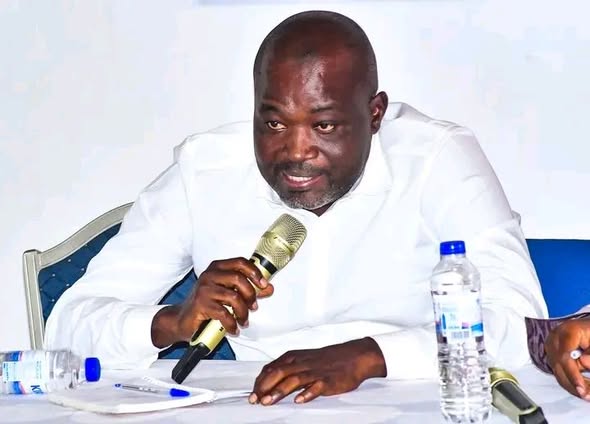
The Network of Journalists for the Promotion of Agro-Sylvo-Pastoral and Fisheries Systems in West Africa and the Sahel (ReJPAH-AOS) is taking part in a July 1-3 workshop in Saly, Senegal, focused on dialogue and collaboration between farmers’ organizations and the media under the Family Farmers for Climate campaign.
Workshop focus
The president of ReJPAH-AOS, Gilles Esssonana Podjoley, joined the president of the West African Farmers and Producers Organizations Network (ROPPA), Ibrahim Coulibaly, for a panel discussion on the visibility of family farms in the media, the financing constraints facing small producers, farmers’ resilience to climate change, and ways to improve living and working conditions for people in agriculture.
The Saly workshop is designed to help media professionals better understand farmers’ organizations, while also strengthening the ability of those organizations to present issues and provide content that is relevant to the media.
Campaign goals
The meeting also aims to increase the visibility of the Family Farmers for Climate Action campaign and related advocacy efforts in regional and national media.
It is further intended to improve journalists’ understanding of key issues linked to climate, food, agriculture and fisheries in West Africa.
What organizers said
Podjoley said it was an honor for his association to be involved in the Family Farmers for Climate Action campaign, adding that family farms play a crucial role in the growth of West African economies.
“Our presence here in Saly is to exchange with farmers and other influential actors to find ways and means to support small producers so that they can be more resilient to different shocks, especially climate change,” he said.
He added that, after the regional workshop, ReJPAH-AOS would make concrete proposals to ROPPA and its partners, with the hope that they would be turned into country-level communication activities to keep the farmers-media momentum alive.
About the campaign
Family Farmers for Climate Action is an alliance of farmer organizations representing more than 95 million producers across Africa, Asia, Latin America and the Pacific.
The campaign seeks to put family farmers at the center of media and policy debates on food and climate, while stressing the need to work with and invest in farmers’ organizations to strengthen climate resilience, protect and restore nature, fight hunger and build prosperous rural economies.
