


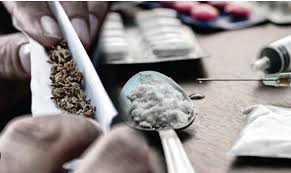
A counselling psychologist, Dr. Gloria Eifediyi, has raised urgent concerns over the increasing rate of drug and substance abuse in Nigeria, particularly among young people.
Dr. Eifediyi, who works at the Irrua Specialist Teaching Hospital in Edo State, shared her insights during an interview on Sunday in Lagos.
She identified key root causes of youth drug abuse, including broken homes, negative social media influence, boredom, and unresolved trauma.
“Drug abusers are not criminals; they are victims who need help,” Eifediyi emphasised, warning of the severe consequences of substance abuse on both individuals and society.
According to her, drug abuse can trigger a range of mental health disorders, such as anxiety, depression, psychosis, and bipolar disorder.
“As a society, we are losing our workforce. We now import people to do jobs we are fully capable of handling ourselves,” she said.
Eifediyi further highlighted the broader social impact, including family breakdown, financial instability, lack of education, and rising unemployment.
She listed commonly abused substances such as cannabis, tramadol, codeine, methamphetamine, and highly dangerous synthetic opioids like “kush” and nitazenes.
Calling for a collective response to the crisis, she reiterated: “Drug abusers are not criminals—they are victims who need help.”
She urged parents to be more actively involved in their children’s lives—“Know their friends and listen to them,” she advised.
Eifediyi also called on law enforcement to intensify efforts in clamping down on drug traffickers and outlets that distribute harmful substances to young people.
Adding to the conversation, Dr. Jude Obasanmi, Chief Responsibility Officer of the Josemaria Escriva Foundation, described the rising use of harmful substances among youths as deeply troubling.
The foundation, a non-governmental organisation, focuses on advocacy and the continuous development of human life.
Also speaking, Obasanmi noted, “People are becoming more creative with harmful substances. That’s why we must raise our voices and warn our people about the dangers.”
He explained that the foundation regularly addresses societal challenges, particularly through its lecture series on the International Day Against Drug Abuse.
Citing recent statistics, he noted that drug and substance abuse among Nigerian youths has become a national crisis.
“Current data shows that approximately 14 to 14.6 million Nigerians aged 15 to 64 engage in non-medical drug use, representing a prevalence rate of 14.3 to 14.6 percent—significantly higher than the global average of 5.3 percent,” Obasanmi said.
