


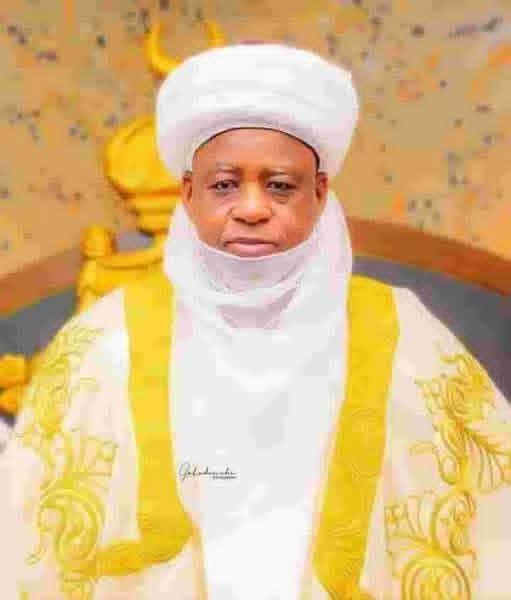
Today, August 24, 2026, marks the 70th birthday of one of Africa’s most distinguished traditional rulers, one of the Muslim world’s influential voices, and, most importantly for Nigeria, a leader whose influence extends far beyond the walls of his palace.
His Eminence, Ambassador Dr. General Alhaji Muhammad Sa’ad Abubakar, CFR, mni, Sultan of Sokoto, President-General of both the Nigeria Supreme Council for Islamic Affairs (NSCIA) and Jama’atu Nasiril Islam (JNI), turns 70 today.
For those of us privileged to know him closely, this is more than a birthday. It is a celebration of a life of service, discipline, faith, courage, wisdom and uncommon leadership.
I call him my principal, father and spiritual leader. But beyond my personal description of him, Sultan Muhammad Sa’ad Abubakar is a national institution whose voice has, for two decades, been an important part of Nigeria’s religious, traditional and national conversation.
He is, to me, a leopard in the palace.
The metaphor is deliberate.
The leopard does not need to make noise to establish its presence. It carries its strength with dignity. It watches carefully, moves deliberately and knows when to speak and when silence is wiser. Its authority comes not merely from sound, but from presence.
That is the kind of leadership I have come to associate with the Sultan.
The men behind the throne
Before celebrating the Sultan himself, however, it is only fair to recognise the remarkable men and institutions that have helped him carry the enormous responsibilities of the Sokoto Caliphate and the leadership of Nigeria’s Muslim community over the past 20 years.
No great institution is sustained by one man alone.
The Sultanate Council, religious scholars, traditional rulers, members of the Nigeria Supreme Council for Islamic Affairs (NSCIA), Jama’atu Nasril Islam (JNI), Muslim organisations across Nigeria and countless individuals have contributed in different ways to the success of his reign.
I begin by paying posthumous tribute to the late former President of Nigeria, His Excellency Alhaji Shehu Usman Aliyu Shagari, GCFR, the Turakin Sokoto, who remained a respected member of the Sultanate Council and was known for the respect and loyalty he accorded the institution of the Sultanate under Sultan Sa’ad Abubakar.
May Allah continue to grant him rest and repose in Jannatul Firdaus. Amiin.
I also acknowledge the Waziri of Sokoto and Chairman of the Advisory Committee on Religious Affairs of the Sultanate Council, His Royal Highness Professor Sambo Wali Junaidu, whose wealth of knowledge and experience has remained valuable to the institution.
The same appreciation goes to the Magajin Garin Sokoto, His Royal Highness Alhaji Ahmad Bello Danbaba; Magajin Rafin Sokoto, His Royal Highness Alhaji (Barrister) Rilwanu Bello; the Galadiman Garin Sokoto, His Royal Highness Alhaji Aliyu Attahiru Galadanci; Sai’n Kilgori Sokoto, His Royal Highness Dr. Mohammed Jabi Kilgori; and the many other members and officials of the Sultanate whose names may not all appear here but whose contributions remain important.
Leadership is often celebrated through the person at the top, while the men and women who make the machinery of leadership work remain in the shadows.
Today, I salute them.
The Sultan’s lieutenants in the Muslim community
The same appreciation must go to the leadership of the Nigeria Supreme Council for Islamic Affairs (NSCIA).
The NSCIA is a broad umbrella representing Nigeria’s Muslim community, and its effectiveness depends on the cooperation of many distinguished personalities.
I therefore acknowledge, among others, His Royal Highness Alhaji Abubakar Ibn Umar Garbai El-Kanemi, Shehu of Borno and Deputy President-General (North) of the NSCIA; Alhaji Rasaki Oladejo, FCA, President of the Muslim Ummah of South West Nigeria (MUSWEN) and Deputy President-General (South) of the NSCIA; Professor Is-haq Olanrewaju Oloyede, CON, Secretary-General of the NSCIA; and Professor Khalid Abubakar Aliyu, Secretary-General of Jama’atu Nasril Islam (JNI).
Sarki Fulani of Lagos, His Royal Highness Alhaji Mohammed Abubakar Bambado II is among the wonderful lieutenants.
To these men, and to the many others who have stood behind the Sultan in the discharge of his religious and traditional responsibilities, I say: thank you.
For 20 years, the Sultan has carried an extraordinary burden. He could not have carried it alone.
Every successful leader needs loyal, competent and courageous lieutenants. The Sultan has been blessed with many.
A prince born into history
Alhaji Muhammad Sa’ad Abubakar was born on August 24, 1956, into the distinguished lineage of the Sokoto Caliphate.
He is a descendant of Sheikh Usman dan Fodio, the great Islamic scholar and reformer whose legacy gave birth to the Sokoto Caliphate and whose influence remains deeply embedded in the history of West Africa.
He was born to Sir Siddiq Abubakar III, the 17th Sultan of Sokoto, who occupied the throne from 1938 until his demise in 1988.
Thus, the young Sa’ad was born not merely into a family, but into an institution with a history stretching across generations.
From childhood, he was introduced to the responsibilities expected of a prince of the Sokoto Caliphate. He received Islamic education, learned the Qur’an and Arabic, and simultaneously pursued Western education.
He attended Barewa College, Zaria, before proceeding to the Nigerian Defence Academy, Kaduna, where another important chapter of his life began.
That military experience would later become one of the defining features of his personality.
From the barracks to the palace
There is something remarkable about the journey of Sultan Muhammad Sa’ad Abubakar.
He did not move directly from the classroom into the palace.
He first wore the military uniform.
The discipline of the Nigerian Army became part of his formation. He served his country as a soldier and rose to the rank of Brigadier General before eventually answering the call of history to become Sultan of Sokoto, which materialised in his coronation as the 20th Sultan, succeeding his elder brother and 19th Sultan, Alhaji Muhammadu Maccido, on 2nd November 2006.
The transition from soldier to traditional ruler is not a small one.
The military teaches command, discipline and obedience to constituted authority. The traditional institution demands patience, wisdom, consultation and the ability to accommodate people of different backgrounds and interests.
Sultan Sa’ad Abubakar, a former footballer and sports administrator, has had to combine these qualities.
And perhaps that is one reason his leadership carries a distinctive character.
There is the soldier in him, but there is also the scholar.
There is the traditional ruler, but there is also the diplomat.
There is the father, but there is also the commander.
There is the religious leader, but there is also the Nigerian patriot.
This multiplicity explains the word multifaceted in describing him.
Twenty years on the Usmaniyya throne
Since he acceded to the throne in November 2006, Sultan Muhammad Sa’ad Abubakar has presided over a period of extraordinary complexity in Nigeria.
He has witnessed governments come and go.
He has seen Nigeria confront religious tensions, communal conflicts, terrorism, banditry, political disagreements, economic hardship and profound questions about national identity.
Through it all, the Sultan has remained one of the country’s most recognisable voices for peace, dialogue and national unity.
His interventions have not always been comfortable.
A traditional ruler of his stature cannot speak only when his words are popular.
Sometimes leadership means saying what must be said, even when those listening would rather hear something else.
That is where courage becomes important.
The Sultan’s leadership has repeatedly demonstrated that religious authority should be used to build bridges rather than walls.
His engagement with Christian leaders, traditional institutions, government officials, international organisations and civil society has reinforced his reputation as a bridge-builder.
His role in international interfaith initiatives, including his association with World’s Religions for Peace, has also placed him within a wider global conversation about peaceful coexistence and religious responsibility.
Elegant without excess
Another quality about the Sultan deserves mention: his elegance without excess.
He carries the grandeur of the Sokoto throne, but the grandeur does not have to shout.
The palace has its protocol. The turban has its symbolism. The title carries centuries of history.
Yet the man underneath it all has often demonstrated an ability to relate to ordinary people.
That is an important quality in traditional leadership.
A throne becomes meaningful when the people can see humanity behind the institution.
The Sultan’s charm is not merely in the magnificence of his regalia or the solemnity of his office. It is in the combination of authority and accessibility, firmness and warmth, tradition and modernity.
That is what makes him charismatic.
A father to his people
For many Muslims across Nigeria, the Sultan is more than the occupant of the Sokoto throne.
He is the father of a vast spiritual family.
When he speaks on matters of Islam, millions listen.
When he speaks about national unity, politicians take note.
When he speaks about peace, religious leaders listen.
When he calls for prayers, the faithful respond.
This is an enormous responsibility.
Leadership of this nature requires restraint because words spoken from such a platform can travel far beyond their original context.
The Sultan has therefore had to master the delicate art of speaking with authority without inflaming passions.
In a country where religious and ethnic identities can sometimes become fault lines, this responsibility cannot be underestimated.
The leopard in the palace
And so I return to my metaphor.
Why celebrate a leopard?
Because the leopard represents strength without unnecessary noise.
It represents dignity.
It represents vigilance.
It represents courage.
It represents an understanding that power is not demonstrated by constantly displaying it.
For 20 years, Sultan Muhammad Sa’ad Abubakar has occupied one of Nigeria’s most revered thrones.
He has not needed to compete with politicians.
He has not needed to become a politician.
He has remained a traditional ruler, a religious leader and a national elder whose influence comes principally from the institution he represents, the values he upholds and the confidence people place in him.
That is the beauty of the leopard.
It knows what it is.
Seventy years of service
At 70, Sultan Muhammad Sa’ad Abubakar is celebrating more than longevity.
He is celebrating a journey.
A journey from the palace of his birth to the military barracks; from the barracks to national service; and from military service to the throne of the Sokoto Caliphate.
He has spent 20 years wearing the crown.
But the crown is not the achievement.
Service is.
The real measure of a leader is not the magnificence of his title but what his people can say about the years in which he held it.
And for Sultan Muhammad Sa’ad Abubakar, the record is still being written.
My prayer, therefore, is simple.
May Almighty Allah preserve His Eminence in good health.
May He grant him wisdom beyond his years, strengthen him for the responsibilities ahead and continue to guide his decisions.
May Allah protect the Sokoto Caliphate, strengthen the institution of the Sultanate and bless all those who support the Sultan in the service of Islam and humanity.
May He bless Nigeria with peace, justice, unity and responsible leadership.
And may He reward all the men and women who have stood faithfully beside the Sultan during these 20 years.
Your Eminence, Sultan Muhammad Sa’ad Abubakar III, as you attain 70 today, permit me to say what many of us feel:
You are not merely celebrating a birthday.
We are celebrating a life of service.
We are celebrating a soldier who became a Sultan.
We are celebrating a prince who became a father to millions.
We are celebrating a traditional ruler who understands the weight of history.
We are celebrating a Muslim leader who continues to speak for peace.
We are celebrating a Nigerian who has carried the dignity of his country beyond its borders.
And we are celebrating the man we have come to know as elegant without excess, firm without arrogance, powerful without unnecessary noise, and deeply human beneath the majesty of the throne.
At 70, the leopard still walks.
Quietly.
Majestically.
Watchfully.
In the palace.
Happy 70th birthday, Your Eminence.
Long may you live in wisdom, good health and service to Allah, Islam, Nigeria and humanity.
Jazakumullahu khairan, Mai Alfarma. Amin.
Bashir Adefaka, one of the Sultan of Sokoto’s countless sons from other tribes, is a Nigeria-based media proprietor and publisher of The DEFENDER Newspaper. Reach him via his email: omope72@gmail.com
