

• Home
  • Agric
  • Sci & Tech
  • Health
  • Environment
  • Hausa News
  • More
    • Business/Banking & Finance
    • POLITICS
    • Entertainments & Sports
    • International
    • Investigation
    • Law & Human Rights
    • Africa
    • ACCOUNTABILITY/CORRUPTION
    • Hassan Gimba
    • Column
    • Prof. Jibrin Ibrahim
    • Prof. M.K. Othman
    • Defense/Security
    • Education
    • Energy/Electricity
    • Entertainment/Arts & Sports
    • Society and Lifestyle
    • Food & Agriculture
    • Health & Healthy Living
    • International News
    • Interviews
    • Investigation/Fact-Check
    • LAW & HUMAN RIGHTS
    • Oil & Gas/Mineral Resources
    • PRESS FREEDOM/JOURNALISM/PR
    • General News
    • Presidency
  • About Us
    • Contact Us
    • Board Of Advisory
    • Privacy Policy
    • Ethics Policy
    • Teamwork And Collaboration Policy
    • Fact-Checking Policy
    • Advertising
  • Media OutReach Newswire
    • Wire News
  • The Stories
Facebook Twitter Instagram
Trending
  • Sokoto to spend N1.59bn on 38 health infrastructure projects
  • Tompolo urges Anambra voters to shun tribal politics, vote Tinubu in 2027, unveils 25 vehicles, 60 bikes
  • Inner wheel centre to empower women, youths
  • Northwest states plan to recruit sanitary inspectors
  • Nigeria group calls for community-led climate action
  • UN official seeks greater role for women in peacebuilding
  • MAUTH Chief: Teaching hospitals should drive innovation
  • Regular screening key to preventing diabetes complications, expert says
Facebook Twitter Instagram YouTube
AsheNewsAsheNews
  • Home
  • Agric

    Dangote eyes Ghana for 500,000-tonne cocoa processing deal

    November 13, 2026

    Rural women learn climate-smart farming in Nasarawa

    November 13, 2026

    Kebbi farmers endorse Idris for 2027 re-election

    November 13, 2026

    CBN moves to strengthen credit guarantees, boost private-sector agricultural financing

    November 12, 2026

    Lagos reaffirms food security push

    November 12, 2026
  • Sci & Tech

    CADEF: Low public trust threatens Nigeria’s energy transition

    November 14, 2026

    Nigeria plans satellite facility in Epe

    November 12, 2026

    3MTT seeks partners to train Nigerians in digital skills

    November 12, 2026

    Expert urges Nigeria to build sovereign AI platform

    November 11, 2026

    NATCOMS flags cybersecurity risks in SPARK loan service

    November 11, 2026
  • Health

    Sokoto to spend N1.59bn on 38 health infrastructure projects

    November 14, 2026

    Inner wheel centre to empower women, youths

    November 14, 2026

    Northwest states plan to recruit sanitary inspectors

    November 14, 2026

    UN official seeks greater role for women in peacebuilding

    November 14, 2026

    MAUTH Chief: Teaching hospitals should drive innovation

    November 14, 2026
  • Environment

    Nigeria group calls for community-led climate action

    November 14, 2026

    Edo identifies 129 erosion sites for urgent action

    November 13, 2026

    Residents push for stronger environmental health checks

    November 13, 2026

    COP31: Why governments must confront systems exploiting women and Earth, by Melania Chiponda

    November 11, 2026

    FUTA Don urges sustained advocacy against deforestation, technology to assess termite risks

    November 11, 2026
  • Hausa News

    Foundation unveils public sector reform playbook

    November 12, 2026

    Tinubu asks Reps to approve N10.79tn external borrowing for 2026 budget

    November 11, 2026

    UNA signs MoU to launch air Bissau in Guinea-Bissau

    June 15, 2026

    Otti plans 250-room 5-star hotel in Umuahia

    April 11, 2026

    Anti-quackery task force seals 4 fake hospitals in Rivers

    August 29, 2025
  • More
    1. Business/Banking & Finance
    2. POLITICS
    3. Entertainments & Sports
    4. International
    5. Investigation
    6. Law & Human Rights
    7. Africa
    8. ACCOUNTABILITY/CORRUPTION
    9. Hassan Gimba
    10. Column
    11. Prof. Jibrin Ibrahim
    12. Prof. M.K. Othman
    13. Defense/Security
    14. Education
    15. Energy/Electricity
    16. Entertainment/Arts & Sports
    17. Society and Lifestyle
    18. Food & Agriculture
    19. Health & Healthy Living
    20. International News
    21. Interviews
    22. Investigation/Fact-Check
    23. LAW & HUMAN RIGHTS
    24. Oil & Gas/Mineral Resources
    25. PRESS FREEDOM/JOURNALISM/PR
    26. General News
    27. Presidency
    Featured
    Recent

    Sokoto to spend N1.59bn on 38 health infrastructure projects

    November 14, 2026

    Tompolo urges Anambra voters to shun tribal politics, vote Tinubu in 2027, unveils 25 vehicles, 60 bikes

    November 14, 2026

    Inner wheel centre to empower women, youths

    November 14, 2026
  • About Us
    1. Contact Us
    2. Board Of Advisory
    3. Privacy Policy
    4. Ethics Policy
    5. Teamwork And Collaboration Policy
    6. Fact-Checking Policy
    7. Advertising
    Featured
    Recent

    Sokoto to spend N1.59bn on 38 health infrastructure projects

    November 14, 2026

    Tompolo urges Anambra voters to shun tribal politics, vote Tinubu in 2027, unveils 25 vehicles, 60 bikes

    November 14, 2026

    Inner wheel centre to empower women, youths

    November 14, 2026
  • Media OutReach Newswire
    • Wire News
  • The Stories
AsheNewsAsheNews
Home»General News»WHO: Global AMR pledges must translate into action and implementation
General News

WHO: Global AMR pledges must translate into action and implementation

Abdallah el-KurebeBy Abdallah el-KurebeNovember 14, 2026Updated:November 14, 2026No Comments6 Mins Read
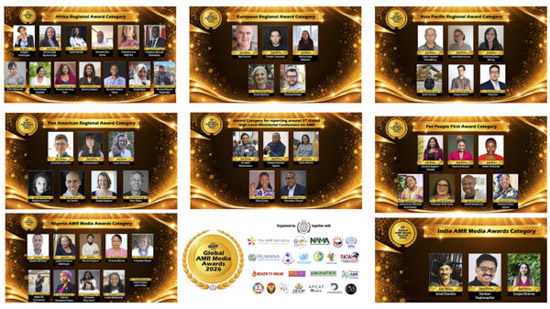
6th Annual Global Media Forum on AMR ahead of the 2026 World AMR Awareness Week
Share
Facebook Twitter LinkedIn Pinterest Email

By Abdallah ELKUREBE I The World Health Organization (WHO) has called on countries to translate global commitments on antimicrobial resistance (AMR) into funded, measurable actions, warning that weak implementation, inadequate financing and poor surveillance continue to undermine efforts to tackle the growing health threat.

ASHENEWS reports that the WHO, FAO, UNEP and WOAH are working under the Quadripartite Joint Secretariat on AMR to strengthen governance, surveillance, responsible antimicrobial use and infection prevention across sectors.

The WHO said bacterial AMR was associated with more than 4.7 million deaths in 2021, describing the crisis as one of the most urgent global health and development challenges.

Dr Jean-Pierre Nyemazi, Director a.i. of WHO’s Department of Antimicrobial Resistance and Director of the Quadripartite Joint Secretariat on AMR, said the problem threatens the ability to treat infections, protect animal and plant health and produce safe food, while also affecting the environment.

Nyemazi spoke at the 6th Annual Global Media Forum on AMR ahead of the 2026 World AMR Awareness Week, scheduled for November 18–24, under the theme, “One Health, One Action: Prevent AMR Now.”

He said AMR is driven by the misuse and overuse of antimicrobials, gaps in infection prevention, poor water and sanitation, and environmental contamination.

At the 2024 United Nations General Assembly High-Level Meeting on AMR, world leaders pledged to reduce bacterial AMR-associated deaths by 10 per cent by 2030 from the 2019 baseline of 4.95 million.

They also committed to ensuring that at least 60 per cent of countries have funded national AMR action plans by 2030 and called for at least $100 million in catalytic funding, including through the AMR Multi-Partner Trust Fund.

However, Nyemazi said the gap between political commitments and implementation remained wide because of limited financing, fragmented coordination and weak surveillance.

“Global pledges matter only when they deliver results in communities,” he said, urging journalists to sustain public attention through accurate, evidence-based and solution-focused reporting.

Countries urged to strengthen AMR implementation

Dr Kefas Samson, Senior Technical Officer and Lead of Multisectoral Coordination in WHO’s AMR Department, said countries needed support to assess their needs, cost interventions and adapt implementation to local realities.

He identified inadequate financing, weak nationwide surveillance of AMR and antimicrobial use, poor infection prevention in healthcare facilities, limited diagnostic capacity, unequal access to quality-assured antimicrobials and workforce shortages among the major barriers to progress. Pasted markdown(2)

According to Samson, WHO is strengthening surveillance and monitoring to generate reliable data, track implementation of the updated Global Action Plan on AMR and measure progress towards the 2030 targets.

Among the targets is ensuring that 70 per cent of antibiotics used in human health belong to WHO’s Access group, while 80 per cent of countries should be able to test for priority bacterial and fungal pathogens included in the Global Antimicrobial Resistance and Use Surveillance System.

The updated Global Action Plan on AMR for 2026–2036, described by Samson as a renewed blueprint, focuses on prevention, cross-sector surveillance, responsible antimicrobial use, stronger laboratories, equitable access, resilient supply chains, research, innovation and sustainable financing.

The plan is expected to be launched at the Fifth Global High-Level Ministerial Conference on AMR in Abuja from December 6 to 8, 2026.

Livestock antibiotic use could rise 30% by 2040

The Food and Agriculture Organization of the United Nations (FAO) warned that global antibiotic use in livestock could increase by nearly 30 per cent by 2040 without stronger preventive measures.

Dr Junxia Song, FAO Deputy Chief Veterinarian and Chief of its One Health and Disease Control Branch, said better animal health and farm management practices could reduce antibiotic use by as much as 57 per cent.

She said prevention must become central to the global response to AMR, with farmers placed at the heart of efforts.

Song said the agri-food sector remained inadequately integrated and funded in many national AMR action plans, while nearly half of countries had either no legislation or only partial legislation governing antimicrobial use in animal and plant health.

She said FAO’s Reduce the Need for Antimicrobials on Farms (RENOFARM) initiative was addressing the gap through better health services, improved production practices, alternatives and innovation, incentives, and stronger connections among stakeholders.

More than 400 partners, including over 80 FAO member countries, are engaged in the initiative, while FAO’s InFARM system has involved 80 countries in strengthening AMR monitoring across agri-food systems.

UNEP warns environmental neglect could undermine AMR fight

The United Nations Environment Programme (UNEP) said the global response to AMR could fail unless environmental pollution is tackled alongside interventions targeting human health, agriculture and animal health.

Aitziber Echeverria, AMR Coordinator, Chemicals and Health Branch, UNEP, said the environment plays a critical role in the emergence, transmission and spread of AMR.

She identified pharmaceutical manufacturing, agriculture and food systems, healthcare, and municipal waste and wastewater management as four priority areas requiring urgent intervention.

Echeverria called for stronger environmental monitoring, wastewater treatment, safe antimicrobial disposal, laboratory capacity and environmental surveillance.

She also urged governments to ensure that environmental authorities are represented in national AMR governance structures and that environmental objectives are properly funded in national action plans.

$1 investment in animal health can yield $28 return

The World Organisation for Animal Health (WOAH) said increased investment in animal disease prevention and stronger animal health systems could deliver significant economic returns.

Dr Jane Lwoyero, Programme Officer at WOAH, said every $1 invested in preventing animal diseases and improving animal health systems could generate a $28 return.

She identified vaccination, farm biosecurity, surveillance and veterinary services as essential measures for preventing infections and reducing antimicrobial use.

Lwoyero said only fewer than 20 per cent of WOAH member countries vaccinate animals against notifiable diseases, while animal diseases cause estimated annual losses of up to $300 billion globally.

She also said global antimicrobial use in animals fell by three per cent between 2019 and 2024, but antimicrobial use for growth promotion remained a concern.

According to WOAH, 74 per cent of countries do not use antimicrobials for growth promotion, while 19 per cent report using them and seven per cent have not reported their position. Countries permitting the practice use 45 per cent more antimicrobials than those that do not, Lwoyero said.

She called for stronger coordination across sectors, sustainable financing and greater integration of animal health into national AMR action plans.

FAO Global AMR UNEP WHO WOAH
Share. Facebook Twitter Pinterest LinkedIn WhatsApp Reddit Tumblr Email
Abdallah el-Kurebe
  • Website
  • Facebook
  • Twitter
  • LinkedIn

Related Posts

Sokoto to spend N1.59bn on 38 health infrastructure projects

November 14, 2026

Tompolo urges Anambra voters to shun tribal politics, vote Tinubu in 2027, unveils 25 vehicles, 60 bikes

November 14, 2026

Inner wheel centre to empower women, youths

November 14, 2026

Leave A Reply Cancel Reply

Sokoto to spend N1.59bn on 38 health infrastructure projects

November 14, 2026

Tompolo urges Anambra voters to shun tribal politics, vote Tinubu in 2027, unveils 25 vehicles, 60 bikes

November 14, 2026

Inner wheel centre to empower women, youths

November 14, 2026

Northwest states plan to recruit sanitary inspectors

November 14, 2026
About Us
About Us

ASHENEWS (AsheNewsDaily.com), published by PenPlus Online Media Publishers, is an independent online newspaper. We report development news, especially on Agriculture, Science, Health and Environment as they affect the under-reported rural and urban poor.

We also conduct investigations, especially in the areas of ASHE, as well as other general interests, including corruption, human rights, illicit financial flows, and politics.

Contact Info:
  • 1st floor, Dogon Daji House, No. 5, Maiduguri Road, Sokoto
  • +234(0)7031140009
  • ashenewsdaily@gmail.com
Facebook Twitter Instagram Pinterest
© 2026 All Rights Reserved. ASHENEWS Daily Designed & Managed By DeedsTech

Type above and press Enter to search. Press Esc to cancel.