


By Tunde Omolehin
31-year-old Umar Muhammed, a Nigerien businessman could not believe that an outbreak of novel coronavirus in a far-away Asian- nation will bother any African country when considering the thousands of miles interval between the two continents.
But soon Nigeria recorded her first covid-19 case in February 2020, a widespread virus that emanated from Wudi, China, panic ensued among citizens and the government.
It took no longer time for the Nigerian authorities to enforce a strict border closure, and imposed a lockdown order nationwide as part of proactive measures to curtail the virus spreading bound.
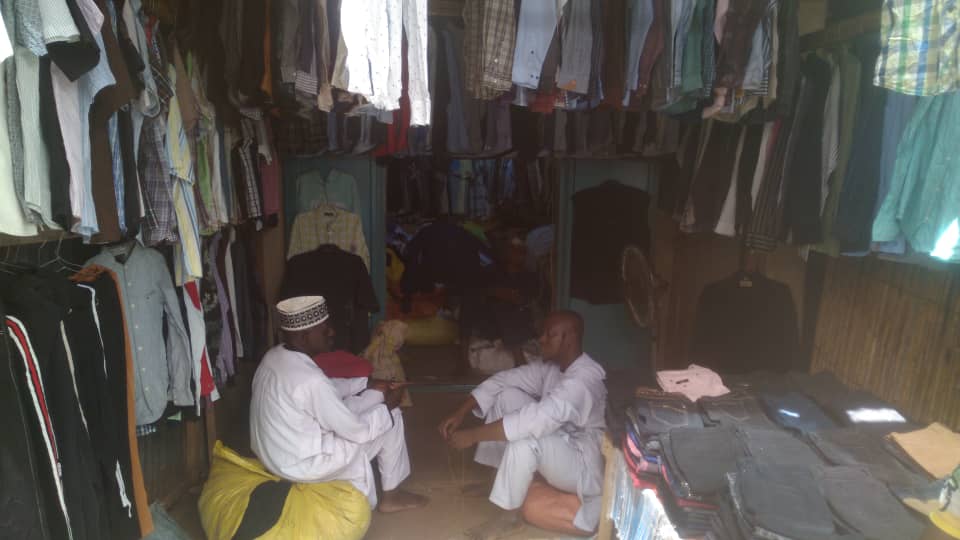
Umar recounts how the pandemic put a long pause to his thriving clothing business in Sokoto, a state he based for years.
“During the lockdown enforcement, my shop was under lock for about three months, no movement within and outside the city, not to mention embarking on a business trip,” says the migrant trader.
Until covid-19 pandemic, the likes of Umar ranked high among many migrants from neighboring Niger Republic who are trading in both clothing and shoe business.
As a citizen of the francophone country, trans-trading goods from similar countries like Togo and Benin Republic through the Illela-Konni border to Nigeria’s shore comes with ease.
Many Nigerien compatriots like Umar who migrated into Nigeria’ soil many decades ago are now happily married with children in Sokoto, northwest Nigeria, with sustainable livelihoods.
“I migrated to Nigeria from Konni town in Niger Republic about eight years ago. Am now married with two children, sustaining them with my sizable clothing shop at Sokoto Central market which I started four years ago,” he explains.
But in 2021, the effect of the pandemic has taken a huge toll on Umar and other of his contemporary businesses. “My stores were loaded with clothing and shoes and other wares at Sokoto Central Market before the lockdown.
“Since the lockdown, people are not coming because of the economic hardship. This is just the reality for some of us who eke out our livelihoods through buying and selling.
The borders were shut against us. The pandemic has really weakened our livelihood, says the 31-yrs-old Nigerien trader.
Aminu Abdullahi, 52, who inherited the business from his father, said the effect is being managed in order to remain in business as foreign exchange rates such as the US dollar are always sky-rocketing against Naira by the day.
“To be realistic, the pandemic has really slowed down our businesses, especially, most of us travelling out to get these goods into Nigeria.
“The borders were closed for a while and there was no movement of goods into the country. That has really affected our business. Occasionally, we encountered Nigerian Customs officials that confiscated our goods without any genuine reason.
“Most of us travel as far as Mali and Togo to get these clothes and shoes for Nigeria’s market. It is a booming business now in Nigeria. Most Nigerians prefer to wear these English fabrics than the traditional ones.”
Fading African Attire
The once thriving Africa attire is now fading among Nigerians due to changing fashion trends among young Nigerians, says Dr. Dare Ayin, an historian.
“Today, migrants from Niger Republic and Togo are now taking advantage of the open market to ship loaded trucks of second-hand wares into Nigeria.
“Most locals prefer to just deck in English dress, popularly called Okrika in the country”, referring to English fabrics.” Dr Ayin said.
A local, Bashiru Ahmed, who hails from Sokoto shared Ayin’s thought saying they are being forced out of business since they can no longer compete with modern fabric who he described as the raves of the market.
Bashiru says “I have been in the dyeing business for more than 40 years and this is the only business I have known all my life.

“We are the people that produce the real thing, but modern dyers have taken over the market as we don’t receive encouragement or assistance from anybody, including the government.
“They have abandoned us to our fate and we are only struggling to survive. However, despite all the hiccups, we manage to remain in business.”
Hassan believes “if we get adequate encouragement from the government, we will do even better and keep the legacies of our forefathers alive.”
Chairman, Nigeriens Clothing traders, Mohammed Hassan, acknowledged how the clothing business is more booming in Nigeria compared with other neighbouring countries and even my own country- Niger Republic.
“We are many in this business, especially those who came from Niger Republic. Unlike other of my compatriots, I was born in this business. In fact, it is a family business. I have about eleven people working under me. Most of them are my relatives.
“Being a Nigeria-bred Nigerien is a plus for Hassan as he lives with his extended family and enjoys all the privileges due to the citizens.
“In this business, I married a wife and we have seven children. My children are both in Islamiyya and government schools. They enjoyed the free education policy of the state government since inception just like me because I attended both my elementary and secondary education in Sokoto, Nigeria.
“My status of being born and bred in Nigeria is one of my happiness. I have assimilated all Nigeria’s norms and culture. I wish to remain in Nigeria as long as possible.
“Don’t forget that, I am also raising my offspring here in Nigeria. I hope they live in this country as long as possible. Above all, I remain grateful to Almighty God for letting me achieve thus far. We hope the Nigerian Government will incorporate us into her economic policy,” he asserts.
At Home
Mr. Ismaila Mutiu, Nigerian believes most migrants have nothing to lose in the wake of COVID-19 effect on their businesses, they feel more at home in Nigeria than their origins.
“Just look around you today, you will notice that most of the migrants are doing well despite the economic challenges they are facing at present time.”
Mutiu, a Nigerian from Southern part maintained that many encounters with non-Nigerians especially those from Niger Republic have been a cordial memoir. “The relationship between the two citizens has been cordial.
“They feel more at home than those Nigerians that come from the Southern part. The people of Sokoto relate with Nigeriens more than their co-citizens from Nigeria.
“Nevertheless, the typical Nigerien is peace-loving. My encounter with them has viewed them to be good and business inclined people. Most of them started trading at a very tender age. You will see them on the street hawking any sellable goods.”
Collaborating Mutiu’s view, a resident, Sani Halilu, maintained that most of the Migrants in the state as peaceful and trustworthy persons owing to many attestation. “In my view, I can describe them as peace-loving and trustworthy people.
“If you partner with them in trading, rest assured that they will never betray you in the course. I have heard of someone that engaged one of them with goods worth millions of Naira and has no course to regret doing that.” Sani submitted.
The Marital Bond
The District Head of Gwabadawa District, Alhaji Lawan Muhammadu Zayyanu traced the marital bond of the two countries to eighteen centuries when the famous Islamic jihadist Usmanu Dan Fodio migrated from Marata town in present Niger Republic to establish Sokoto caliphate in the present Nigeria.
“There is evidence of marital bond between the two countries and could be dated to eighteen centuries. In fact, my kingdom, Gwadabawa district used to be the headquarters where the traditional head of Konni town in Niger Republic and its environs were crowned in those days. “We are like citizens with dual nationalities.”
The traditional head reasoned that such bonds between citizens of the two countries may not be affected despite various government policies of the two neighbouring countries.
“There are marital, social and economic relationships that have existed for centuries between the two countries. One can say this might be the reason why business thrives within border communities.” Zayyanu explained.
… Still a Barrier
Despite regional cohesion under the Economy Countries of West African States (ECOWA) treaty, most of the migrants still face hurdles in carrying out trading within the region’s borders.
Umar recalls how often officials of Nigeria’s border guards not ‘cooperating’ with him and other migrant on business trip despite in possession of valid travel documents
“Aside from COVID-19 pandemic has affected our business here in Nigeria. We are also battling with Nigerian Immigration officials even with your valid papers; you could still be subjected to harassment and intimidation from their personnel.”
Leader of the Nigerien community in Sokoto, Adam Ba’re said; “although, we have not raised any alarm or complaint before the government because we are aware that it is all about policies of the government.
He urged the Nigerian government to consider their plights in this situation. “We must also commend the Nigerian security agencies for doing their job. When you do not indulge in illegal business, you are free in the country (Nigeria).
“Our relationship with the host is quite peaceful and cordial at all times. We are part of the people here in terms of culture and religion.
“Although we occasionally have issues with security personnel but always find a way out to resolve such issues.” Ba’are explained.
“We want Nigerian authorities to look into this issue and call this security agency to order. Let them stop harassing us.
Officials of the Nigerian Immigration in Sokoto, declined to comment when this reporter visited the command while its Spokesman, Mr. Amos Okpu could not be reached for a response when this reporter placed several calls and texts through his mobile line.
However, Ba’are believes in spite of the hurdles; “we are living in peace and harmony with our hosts. We are like brothers, especially the Immigration personnel that are fond of harassing us often,” the Octogenarian said.
