

• Home
  • Agric
  • Sci & Tech
  • Health
  • Environment
  • Hausa News
  • More
    • Business/Banking & Finance
    • POLITICS
    • Entertainments & Sports
    • International
    • Investigation
    • Law & Human Rights
    • Africa
    • ACCOUNTABILITY/CORRUPTION
    • Hassan Gimba
    • Column
    • Prof. Jibrin Ibrahim
    • Prof. M.K. Othman
    • Defense/Security
    • Education
    • Energy/Electricity
    • Entertainment/Arts & Sports
    • Society and Lifestyle
    • Food & Agriculture
    • Health & Healthy Living
    • International News
    • Interviews
    • Investigation/Fact-Check
    • LAW & HUMAN RIGHTS
    • Oil & Gas/Mineral Resources
    • PRESS FREEDOM/JOURNALISM/PR
    • General News
    • Presidency
  • About Us
    • Contact Us
    • Board Of Advisory
    • Privacy Policy
    • Ethics Policy
    • Teamwork And Collaboration Policy
    • Fact-Checking Policy
    • Advertising
  • Media OutReach Newswire
    • Wire News
  • The Stories
Facebook Twitter Instagram
Trending
  • Rising insecurity: Shari’ah Council demands urgent government action
  • Naira holds firm at N1,361/$ amid CBN’s sustained market interventions
  • No woman or child should be left behind on health services – Bago
  • Nigeria-U.S. partnership weakens terrorist groups
  • Sokoto APC leader commends democratic success
  • NDLEA, MTN foundation launch anti-substance abuse initiatives
  • Ministry launches framework for standardising Tom Brown in Nigeria
  • Association invests in security, reforms under new VC
Facebook Twitter Instagram YouTube
AsheNewsAsheNews
  • Home
  • Agric

    IFAD-VCDP distributes poultry equipment to 20 persons with disabilities in Enugu

    June 10, 2026

    AANI, DGF launch support program for women, youths in Kaduna

    June 8, 2026

    FAO highlights data’s role in ensuring food safety

    June 8, 2026

    N-HYPPADEC distributes power tillers to Kaduna farmers

    June 6, 2026

    Niger Assembly approves $14.4m loan to finance Niger Foods

    June 3, 2026
  • Sci & Tech

    Perplexity AI locks in 2028 IPO date, won’t wait for Anthropic or OpenAI to market

    June 9, 2026

    Q4 2025: TikTok removes over 4m videos in Nigeria

    June 9, 2026

    NCC appoints princess Emiko as interim DBI chair

    June 9, 2026

    Okedeyi calls for more investment in climate physics

    June 8, 2026

    NCC supports girls in ICT with industry excursion for 185 students

    June 8, 2026
  • Health

    No woman or child should be left behind on health services – Bago

    June 10, 2026

    Ministry launches framework for standardising Tom Brown in Nigeria

    June 10, 2026

    NYSC Zamfara urges permanent orientation camp

    June 10, 2026

    SUNU health Nigeria to launch mobile app for easier healthcare access

    June 9, 2026

    WHO chief urges Uganda to keep borders open amid Ebola outbreak

    June 9, 2026
  • Environment

    Nuclear weapons evolve from tools of war to conflict drivers, says Otubanjo

    June 10, 2026

    Yomi named chair of Nigeria digital PR summit advisory board

    June 10, 2026

    NRC clarifies Dafinone, Ukah not on derailed train

    June 10, 2026

    Key drivers for water utility improvement highlighted at Abuja workshop

    June 9, 2026

    Warri–Itakpe train derails, kills infant, 3 others in Delta

    June 9, 2026
  • Hausa News

    Otti plans 250-room 5-star hotel in Umuahia

    April 11, 2026

    Anti-quackery task force seals 4 fake hospitals in Rivers

    August 29, 2025

    [BIDIYO] Yadda na lashe gasa ta duniya a fannin Ingilishi – Rukayya ‘yar shekara 17

    August 6, 2025

    A Saka Baki, A Sasanta Saɓani Tsakanin ‘Yanjarida Da Liman, Daga Muhammad Sajo

    May 21, 2025

    Dan majalisa ya raba kayan miliyoyi a Funtuwa da Dandume

    March 18, 2025
  • More
    1. Business/Banking & Finance
    2. POLITICS
    3. Entertainments & Sports
    4. International
    5. Investigation
    6. Law & Human Rights
    7. Africa
    8. ACCOUNTABILITY/CORRUPTION
    9. Hassan Gimba
    10. Column
    11. Prof. Jibrin Ibrahim
    12. Prof. M.K. Othman
    13. Defense/Security
    14. Education
    15. Energy/Electricity
    16. Entertainment/Arts & Sports
    17. Society and Lifestyle
    18. Food & Agriculture
    19. Health & Healthy Living
    20. International News
    21. Interviews
    22. Investigation/Fact-Check
    23. LAW & HUMAN RIGHTS
    24. Oil & Gas/Mineral Resources
    25. PRESS FREEDOM/JOURNALISM/PR
    26. General News
    27. Presidency
    Featured
    Recent

    Rising insecurity: Shari’ah Council demands urgent government action

    June 10, 2026

    Naira holds firm at N1,361/$ amid CBN’s sustained market interventions

    June 10, 2026

    No woman or child should be left behind on health services – Bago

    June 10, 2026
  • About Us
    1. Contact Us
    2. Board Of Advisory
    3. Privacy Policy
    4. Ethics Policy
    5. Teamwork And Collaboration Policy
    6. Fact-Checking Policy
    7. Advertising
    Featured
    Recent

    Rising insecurity: Shari’ah Council demands urgent government action

    June 10, 2026

    Naira holds firm at N1,361/$ amid CBN’s sustained market interventions

    June 10, 2026

    No woman or child should be left behind on health services – Bago

    June 10, 2026
  • Media OutReach Newswire
    • Wire News
  • The Stories
AsheNewsAsheNews
Home»International News»From Hitler Youth to Papacy: Life and Legacy of Pope Emeritus Benedict XVI
International News

From Hitler Youth to Papacy: Life and Legacy of Pope Emeritus Benedict XVI

EditorBy EditorDecember 31, 2022Updated:December 31, 2022No Comments6 Mins Read
Share
Facebook Twitter LinkedIn Pinterest Email

By Sven Hoppe

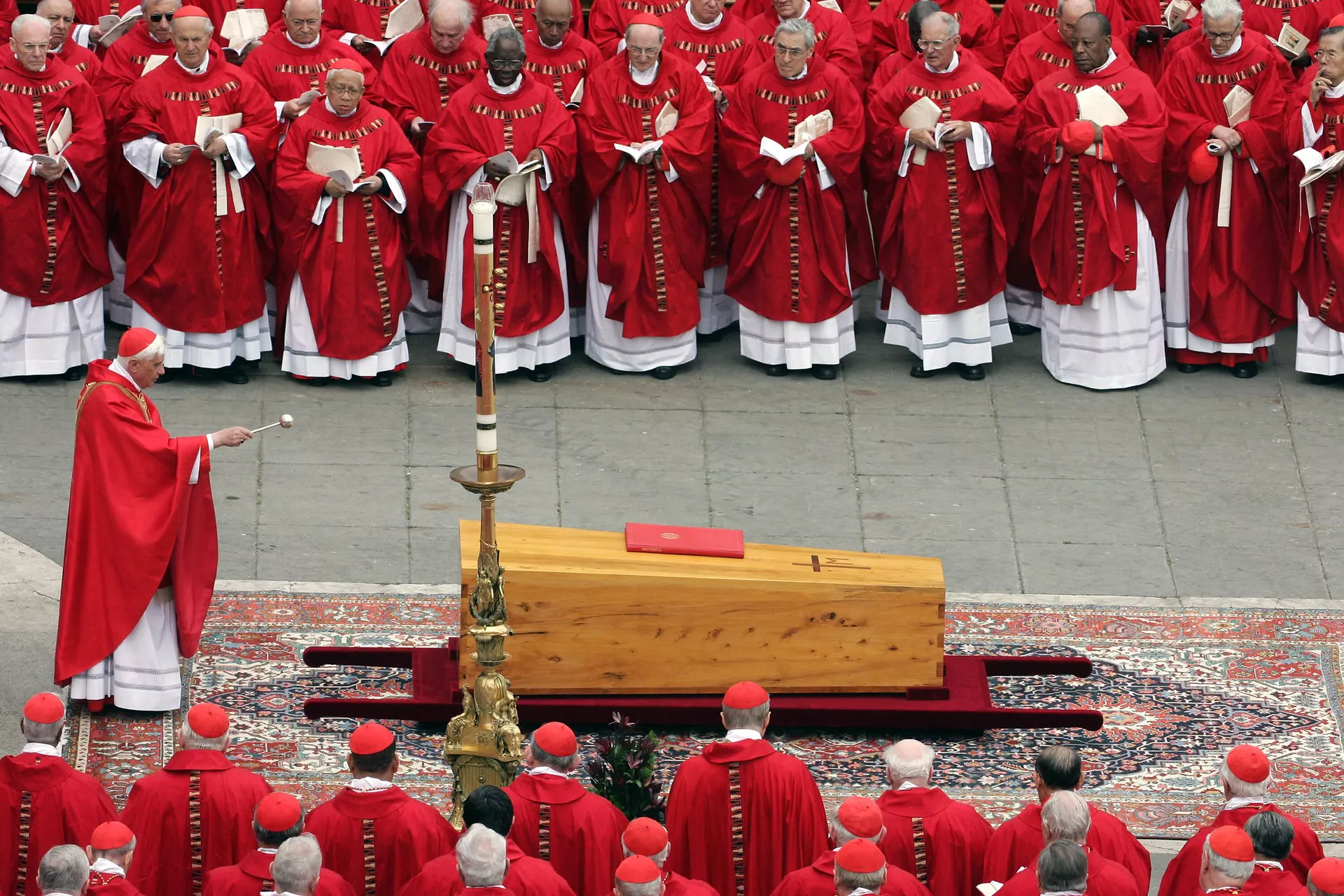
His Holiness Pope Emeritus Benedict XVI, the 265th leader of the Roman Catholic Church passed away at the age of 95.

Benedict retired from his role as Bishop of Rome in February 2013, saying he was unable to fulfill the duties of his office because of a “lack of strength of mind and body” due to his advanced age. He had served in the role for eight years and was succeeded by Pope Francis I, the current pontiff.

Benedict was born Joseph Aloisius Ratzinger on April 16, 1927, in the Bavarian town of Marktl, in southeastern Germany. He was the third and youngest of the three children of Joseph Ratzinger Sr., a police officer, and Maria Ratzinger. At the age of five, Benedict knew he wanted to become a cardinal after becoming fascinated by the vestments of the Cardinal Archbishop of Munich during a visit to their small town.

After the Nazi seizure of power, Benedict’s father suffered a demotion due to his opposition to fascist rule, but after Benedict turned 14 in 1941, he was compulsorily drafted into the Hitler Youth. He was recorded as an “unenthusiastic member.” Two years later, he was drafted into an anti-air artillery corps, then trained as infantry, but deserted his post in 1945 as American forces approached. He was briefly interned in a prisoner-of-war camp until being released at the end of the war.

Later that year, Benedict and his older brother, George, enrolled at Saint Michael Seminary in Traunstein, and later at the Ducal Georgianum seminary at Ludwig-Maximilian University in Munich. They were both ordained in 1951 by Cardinal Michael von Faulhaber – the same cardinal whose robes had drawn him to the clergy as a child.

In 1953, he completed his PhD., with his thesis on St. Augustine and the Church, and four years later, he qualified as a university professor. Benedict variously taught theology at Freising, Bonn, Münster, Tübingen, and Regensberg.

From 1962 until 1965, Benedict participated in the Second Vatican Council, a vast ecumenical meeting that overhauled much of Catholic doctrine, updating it for 20th-century needs. This included holding Mass in the vernacular tongue instead of Latin, and, in the wake of the Holocaust, dropped liturgical references to Jews being the killers of Christ. He served as a theological consultant to Cardinal Frings of Cologne. Benedict became an especially strong promoter of the principle of “ecumenical dialogue” between the Catholic Church and other religions, and the respect of other faiths.

In 1977, Benedict was ordained as a bishop when he was appointed Archbishop of Munich and Freising, as well as Cardinal-Priest of Santa Maria Consolatrice al Tiburtino by Pope Paul VI.

Three years later, he was elevated to become Prefect of the Sacred Congregation for the Doctrine of the Faith – formerly, the Roman Inquisition – and began to climb the ranks of the College of Cardinals.

In 1998, an asteroid was named 8661 Ratzinger in his honor for his role in supervising the opening of the Vatican Archives to researchers investigating judicial errors against the 17th-century astronomer Galileo Galilei and other scientists.

When Pope John Paul II died in April 2005, it triggered the meeting of a new conclave, and Benedict was elected to become the next Supreme Pontiff.

At age 78, he was the oldest person elected to the office since 1730, and he was the second consecutive non-Italian Pope since the 14th-century scandal known as the Avignon Papacy when the Papacy temporarily relocated to France. It was at this point that he adopted the name Benedict XVI, the previous Benedict having served in the early 20th century.

During the conclave, which was held in the Sistine Chapel, Benedict was almost universally seen as the most logical choice to succeed John Paul II, but he ironically did not want to serve as Pontiff.

“At a certain point, I prayed to God ‘please don’t do this to me,'” Benedict later recalled. “Evidently, this time He didn’t listen to me.”

Although Benedict was seen as a reformer, embracing Vatican II, ushering in changes intended to bring him closer to the masses, and de-emphasizing the importance of the Papal office, he was also an opponent of liberal movements and blamed what he called “moral relativism” and secularism for the major problems of the 21st century. He also permitted continued use of the Tridentine Mass, the pre-1962 Latin text that was edited and translated at Vatican II, in an attempt to avoid a schism in the Church.

While Benedict was head of the Congregation for the Doctrine of the Faith, he convinced John Paul II to put sexual abuse investigations under the CDF’s purview, and rigorously prosecuted investigations against accused clergy. He also pioneered several changes to canon law, expanding the scope of potential crimes and establishing a fast-track dismissal process for clergy. As Pope, Benedict continued this drive but was nonetheless still faulted for several high-profile abuse cases that failed to result in dismissal, as well as an embarrassing uncovering of his own overlooking of abuse allegations against clergy years earlier, when he was the Archbishop of Munich and Freising.

Benedict’s announcement in February 2013 that he would retire as Pontiff for health reasons was sudden but perhaps should not have been unexpected. He was already hesitant to assume the office, having suffered a hemorrhagic stroke in 1991 and having a pacemaker installed in early 2005. He was the first Pope to resign since Gregory XII in 1415 and the first to resign without duress since Celestine V in 1294.

Upon retirement, Benedict adopted the title “Pope Emeritus,” and continued to be referred to as His Holiness. He moved into the renovated Mater Ecclesiae Monastery in the Vatican Gardens. However, he did not live a cloistered life, but continued to write and speak, including appearing several times with his successor, Pope Francis I. He was known to be suffering from high blood pressure, but the Vatican declined to give details, although it was later revealed that he had an inflammation of the trigeminal nerve, a facial nerve responsible for sensations in the face and for use of the jawbone.

As a member of the Catholic clergy, Benedict never married and has no known offspring. Both his brother Georg and sister Maria have also died, in 2020 and 1991, respectively, and neither married or had children.

Sputnik

From Hitler Youth to Papacy: Life and Legacy of Pope Emeritus Benedict XVI
Share. Facebook Twitter Pinterest LinkedIn WhatsApp Reddit Tumblr Email
Editor
  • Website

Related Posts

Nigeria’s resilience boosted, but challenges remain—IMF

June 10, 2026

Kenyan police clash with protesters over U.S. Ebola quarantine center

June 9, 2026

Ghanaian traders say South African Xenophobia eased tensions

June 8, 2026

Leave A Reply Cancel Reply

Rising insecurity: Shari’ah Council demands urgent government action

June 10, 2026

Naira holds firm at N1,361/$ amid CBN’s sustained market interventions

June 10, 2026

No woman or child should be left behind on health services – Bago

June 10, 2026

Nigeria-U.S. partnership weakens terrorist groups

June 10, 2026
About Us
About Us

ASHENEWS (AsheNewsDaily.com), published by PenPlus Online Media Publishers, is an independent online newspaper. We report development news, especially on Agriculture, Science, Health and Environment as they affect the under-reported rural and urban poor.

We also conduct investigations, especially in the areas of ASHE, as well as other general interests, including corruption, human rights, illicit financial flows, and politics.

Contact Info:
  • 1st floor, Dogon Daji House, No. 5, Maiduguri Road, Sokoto
  • +234(0)7031140009
  • ashenewsdaily@gmail.com
Facebook Twitter Instagram Pinterest
© 2026 All Rights Reserved. ASHENEWS Daily Designed & Managed By DeedsTech

Type above and press Enter to search. Press Esc to cancel.