


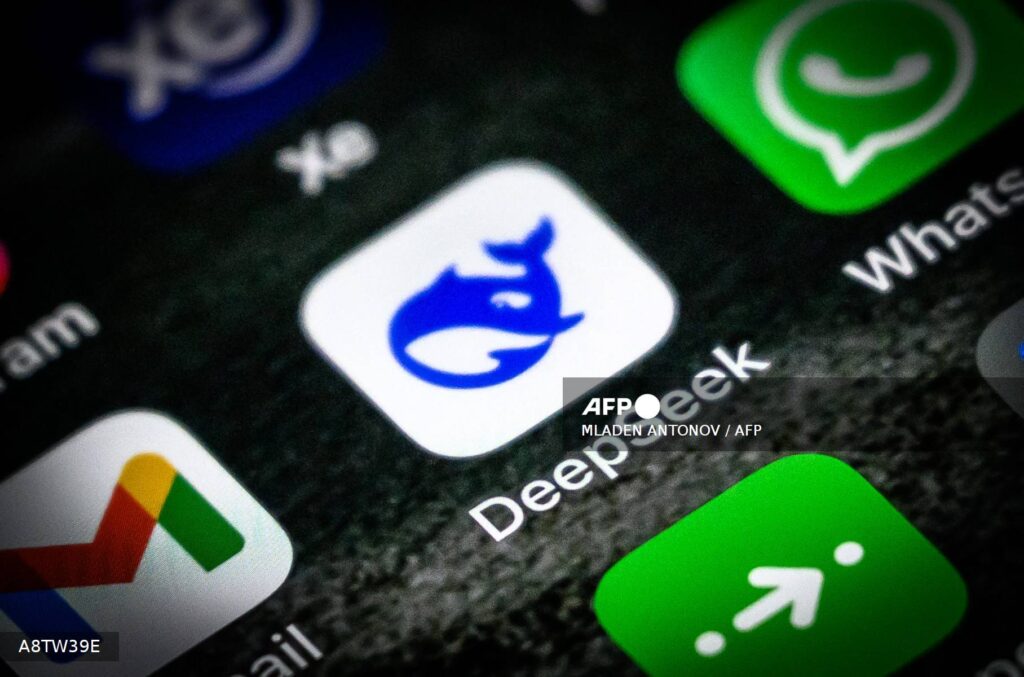
China’s artificial intelligence boom continues, highlighted by the release of a new large language model (LLM) by top startup DeepSeek on Friday, underscoring rapid progress despite U.S. export restrictions on advanced microchips.
Legacy Players
Chinese internet giants Baidu, Alibaba, and Tencent are racing to invest in AI, leveraging vast user bases and cloud infrastructure.
Baidu, sometimes called China’s Google, has championed AI for over a decade. Its “Ernie” tool was one of China’s first AI chatbots, but the company remains tied to its search and online marketing business.
Alibaba is known for its open-source “Qwen” AI models, popular worldwide for their customizability. The Qwen chatbot mobile app had over 200 million monthly active users in January.
Tencent, a top gaming and social media firm, launched an AI model in 2023 and a chatbot in 2024. Founder Pony Ma recently pledged more investment, calling AI “the only field worth investing in.”
Beyond TikTok
ByteDance, creator of TikTok, is increasingly focusing on AI. Its Doubao chatbot has over 100 million daily active users, and its SeeDance 2.0 AI video generator has raised concerns over copyright and job displacement.
China’s AI Hero
Startup DeepSeek, launched in 2023, gained global attention with its “R1” model in 2025. Its new V4 model, released Friday, promises performance rivaling top closed-source models at lower cost. DeepSeek-V4-Pro features a one-million-token context and 1.6 trillion parameters. According to the company, it significantly outperforms other open-source models and trails only slightly behind Google’s Gemini-Pro-3.1.
Startup ‘Tigers’
Startups Zhipu AI, MiniMax, and Moonshot AI — China’s “AI tigers” — challenge legacy giants in foundation model research. Zhipu AI, from Tsinghua University, impressed with its “GLM-5” model. MiniMax focuses on consumer tools like AI companions and video generators. Moonshot AI’s “Kimi K2.5” is popular on developer platform OpenRouter, with revenue for 2025 earned in just weeks.
