


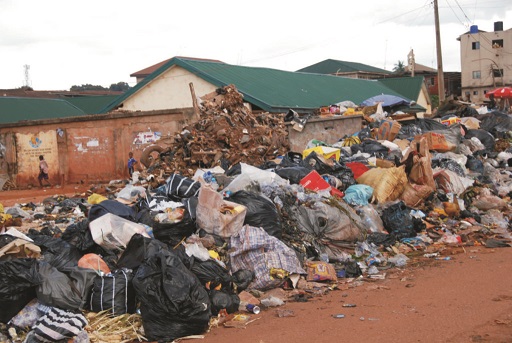
An environmental consultant, Dr Lawrence Umoh, has urged Nigerians to transform urban waste into economic opportunities through recycling, renewable energy and inclusive waste management.
He said this in an interview with reporters in Abuja on Tuesday.
Umoh said Nigeria should move beyond waste disposal and treat refuse as a resource capable of creating jobs, generating energy and supporting sustainable industries.
He advocated formalising informal waste pickers through cooperative-led Extended Producer Responsibility schemes, saying this would improve recycling, traceability, earnings and access to protective equipment.
According to him, poor first-mile collection remains a major reason refuse accumulates in cities, requiring community drop-off centres and incentives that connect residents directly with recycling markets.
Experts say first-mile refuse collection is the initial pickup of waste from its source, including offices, homes and shops, before it is moved to a central waste collection facility or recycling plant.
He cited a Lagos clean-up where 34 volunteers collected 2.1 tonnes of plastic, earning N47,000 after sorting the materials and linking them with recycling markets.
Umoh also recommended integrated waste-to-energy hubs where food waste could undergo anaerobic digestion to produce biogas for cooking and electricity, alongside nutrient-rich fertiliser.
“Agricultural residues and other dry waste can be processed into supplementary cementitious materials, reducing dependence on high-emission cement in construction,” he said.
The expert said Artificial Intelligence and Internet of Things sensors could improve such facilities by monitoring methane production, predicting maintenance needs and maintaining material quality.
He urged governments to adopt green public procurement policies, including the use of waste-derived construction materials and renewable natural gas, to create guaranteed markets for investors.
Umoh cautioned against traditional mass-burn incineration because of concerns over toxic emissions, saying integrated systems could generate renewable fuel and useful materials with fewer harmful by-products.
He identified inadequate standards for waste-derived products and the absence of a clear biogas policy framework as major barriers to large-scale investment.
The expert called for regulatory reforms to build investors’ confidence and accelerate Nigeria’s transition from waste disposal to a circular economy.
