

• Home
  • Agric
  • Sci & Tech
  • Health
  • Environment
  • Hausa News
  • More
    • Business/Banking & Finance
    • POLITICS
    • Entertainments & Sports
    • International
    • Investigation
    • Law & Human Rights
    • Africa
    • ACCOUNTABILITY/CORRUPTION
    • Hassan Gimba
    • Column
    • Prof. Jibrin Ibrahim
    • Prof. M.K. Othman
    • Defense/Security
    • Education
    • Energy/Electricity
    • Entertainment/Arts & Sports
    • Society and Lifestyle
    • Food & Agriculture
    • Health & Healthy Living
    • International News
    • Interviews
    • Investigation/Fact-Check
    • LAW & HUMAN RIGHTS
    • Oil & Gas/Mineral Resources
    • PRESS FREEDOM/JOURNALISM/PR
    • General News
    • Presidency
  • About Us
    • Contact Us
    • Board Of Advisory
    • Privacy Policy
    • Ethics Policy
    • Teamwork And Collaboration Policy
    • Fact-Checking Policy
    • Advertising
  • Media OutReach Newswire
    • Wire News
  • The Stories
Facebook Twitter Instagram
Trending
  • Aliyu dares opposition to showcase achievements in power
  • How Wakaso turns personal mental health struggles into lifeline for women in Niger
  • Abuja DStv, GOtv users decry outages, seek compensation
  • Canada commits C$80m to DRC Ebola response
  • BOSCHMA urges hospitals to expand electronic health records use
  • NDLEA urges early action, family support to curb drug abuse
  • Naira eyes sub-N1,300/$ rate as FX supply strengthens
  • CEC raises renewable energy generation by 97% to 158.78 GWh, cuts carbon emissions
Facebook Twitter Instagram YouTube
AsheNewsAsheNews
  • Home
  • Agric

    Zamfara L-PRES joins review mission to boost livestock delivery

    October 10, 2026

    NAFN urges Tinubu to attend 2026 agricultural show

    October 9, 2026

    Inyang’s election puts Nigeria at forefront of global oil palm smallholder movement

    October 9, 2026

    Expert urges climate-smart farming to boost output

    October 9, 2026

    Bauchi ministry condemns contact chemicals for grain preservation

    October 9, 2026
  • Sci & Tech

    Abuja DStv, GOtv users decry outages, seek compensation

    October 10, 2026

    Zambia’s biosafety agency, DSaT call for science-based approach to grow country’s agenda

    October 10, 2026

    UNDP, Cisco partner to boost digital skills for young Nigerians

    October 10, 2026

    AI surge poses new risks, BIS head says

    October 9, 2026

    Kogi leverages satellite intelligence to curb insecurity – Adviser

    October 8, 2026
  • Health

    How Wakaso turns personal mental health struggles into lifeline for women in Niger

    October 10, 2026

    Canada commits C$80m to DRC Ebola response

    October 10, 2026

    BOSCHMA urges hospitals to expand electronic health records use

    October 10, 2026

    NDLEA urges early action, family support to curb drug abuse

    October 10, 2026

    Kogi health ministry commends sightsavers for white cane donation

    October 9, 2026
  • Environment

    CEC raises renewable energy generation by 97% to 158.78 GWh, cuts carbon emissions

    October 10, 2026

    FG, NBA urge faster project delivery to boost livelihoods in Niger Basin

    October 10, 2026

    LASTMA rescues motorist after car-train crash in Oshodi

    October 9, 2026

    Ojokoro LCDA chair urges residents to collect PVCs

    October 9, 2026

    FAAN to temporarily close Owerri airport runway for repairs

    October 9, 2026
  • Hausa News

    UNA signs MoU to launch air Bissau in Guinea-Bissau

    June 15, 2026

    Otti plans 250-room 5-star hotel in Umuahia

    April 11, 2026

    Anti-quackery task force seals 4 fake hospitals in Rivers

    August 29, 2025

    [BIDIYO] Yadda na lashe gasa ta duniya a fannin Ingilishi – Rukayya ‘yar shekara 17

    August 6, 2025

    A Saka Baki, A Sasanta Saɓani Tsakanin ‘Yanjarida Da Liman, Daga Muhammad Sajo

    May 21, 2025
  • More
    1. Business/Banking & Finance
    2. POLITICS
    3. Entertainments & Sports
    4. International
    5. Investigation
    6. Law & Human Rights
    7. Africa
    8. ACCOUNTABILITY/CORRUPTION
    9. Hassan Gimba
    10. Column
    11. Prof. Jibrin Ibrahim
    12. Prof. M.K. Othman
    13. Defense/Security
    14. Education
    15. Energy/Electricity
    16. Entertainment/Arts & Sports
    17. Society and Lifestyle
    18. Food & Agriculture
    19. Health & Healthy Living
    20. International News
    21. Interviews
    22. Investigation/Fact-Check
    23. LAW & HUMAN RIGHTS
    24. Oil & Gas/Mineral Resources
    25. PRESS FREEDOM/JOURNALISM/PR
    26. General News
    27. Presidency
    Featured
    Recent

    Aliyu dares opposition to showcase achievements in power

    October 10, 2026

    How Wakaso turns personal mental health struggles into lifeline for women in Niger

    October 10, 2026

    Abuja DStv, GOtv users decry outages, seek compensation

    October 10, 2026
  • About Us
    1. Contact Us
    2. Board Of Advisory
    3. Privacy Policy
    4. Ethics Policy
    5. Teamwork And Collaboration Policy
    6. Fact-Checking Policy
    7. Advertising
    Featured
    Recent

    Aliyu dares opposition to showcase achievements in power

    October 10, 2026

    How Wakaso turns personal mental health struggles into lifeline for women in Niger

    October 10, 2026

    Abuja DStv, GOtv users decry outages, seek compensation

    October 10, 2026
  • Media OutReach Newswire
    • Wire News
  • The Stories
AsheNewsAsheNews
Home»Health & Healthy Living»Scientists may be closer to understanding a mysterious but common cause of female infertility
Health & Healthy Living

Scientists may be closer to understanding a mysterious but common cause of female infertility

Abdallah el-KurebeBy Abdallah el-KurebeMay 16, 2018No Comments5 Mins Read
Share
Facebook Twitter LinkedIn Pinterest Email

By Jennifer Couzin-Frankel

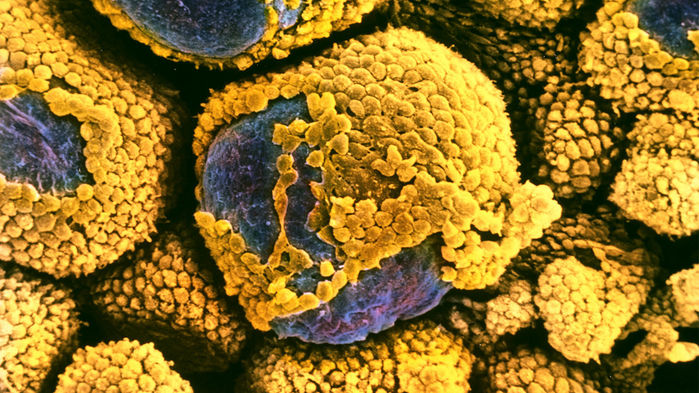
For a condition that affects up to 10% of reproductive-age women worldwide, polycystic ovary syndrome (PCOS) remains mysterious. It’s a leading cause of female infertility and often boosts the risk of metabolic problems such as type 2 diabetes. It’s also highly heritable: The sister of an affected woman has at least a 20% chance of developing it herself, and the risk for identical twins is even higher.

Yet although there are many symptoms of PCOS—including lack of ovulation, ovarian cysts, and excess hair growth on the face and body—no one seems to know how it starts. Is it driven by genes? A woman’s environment? Increasingly, researchers are considering a third category: life in the womb. There’s more and more evidence that when a mom has PCOS, her female baby-to-be experiences shifts in hormones while in utero that can cause the syndrome many years later. In particular, several studies in pregnant animals have shown that exposing them to hormones like testosterone, which women with PCOS produce at higher levels, leads to lack of ovulation and other PCOS-like symptoms in female offspring.

Now, a paper published today in Nature Medicine builds on that evidence. Based primarily on findings in mice, it suggests that interactions between a hormone produced by the ovaries and a set of neurons in mom’s brain can have a cascade effect, disrupting enzymes in the placenta and ultimately causing PCOS-like symptoms in her offspring.

Still, it’s not clear whether the hormonal effects recorded in the rodents happen in pregnant women. And for now, the work doesn’t offer an immediate avenue to preventing PCOS in utero.

Seeking insight into the condition, Paolo Giacobini, a neuroendocrinologist at the University of Lille in France, focused on antimüllerian hormone (AMH), which is produced by small follicles on the ovary. Women with PCOS have an excess of those follicles, and therefore they make more AMH. Giacobini’s group had previously found that AMH could act on a set of neurons in the brain, which then triggers the release of luteinizing hormone (LH) by part of the pituitary gland. In healthy women, a surge in LH triggers ovulation, but in women with PCOS, the hormone is constantly at a high level, which in turn suppresses ovulation and boosts the release of testosterone—two hallmarks of the syndrome.

Giacobini and colleagues initially gathered blood samples from four groups of pregnant women in their second trimester: obese and nonobese women without PCOS, and obese and nonobese women with PCOS. Normally, AMH levels fall in pregnancy because the ovaries aren’t active. In the lean PCOS group, AMH levels were about two to three times as high as in the other three groups. It’s not known why the obese women with PCOS didn’t have higher levels, too.

Giacobini’s group then turned to mice. They injected some pregnant rodents with AMH late in pregnancy to mimic the high levels of the hormone in the women they’d studied. The female offspring developed symptoms resembling PCOS, such as rare ovulation and high testosterone levels. Additional studies suggested excess testosterone from the mothers was crossing the placenta and affecting the fetuses. This happened, the group theorized, because AMH damped down levels of aromatase, an enzyme in the placenta that usually converts testosterone to a form of estrogen. With aromatase activity curtailed, extra testosterone snuck through and bathed the mouse fetuses in a PCOS-conducive environment.

Although PCOS researchers agree the mouse work is strong, they’re mixed on whether it could be true of PCOS in women. “Whether all these things happen in humans, we don’t know,” says Jeffrey Chang, a reproductive endocrinologist at the University of California (UC), San Diego. Human placentas contain a lot more aromatase than mouse placentas do, for example, suggesting it would be harder to overwhelm aromatase activity in people. “You would have to just have gobs and gobs of testosterone being produced” for that to happen, even if some of the placenta’s aromatase was blunted, says Jerome Strauss, a reproductive endocrinologist at Virginia Commonwealth University in Richmond. The model’s “transportability to human biology is very difficult,” he says.

Still, one theme that makes the work intriguing to some is that it focused on lean animals and women with PCOS, who are a sizable subgroup of those with the syndrome. Previous work on the fetal environment had focused on metabolic abnormalities that are much more obvious in overweight women with PCOS, who have an increased risk of developing diabetes in pregnancy. This shows that it’s possible that “even a lean person can program” the fetus, says Daniel Dumesic, a reproductive endocrinologist at UC Los Angeles. That finding is supported, he says, by the blood tests that showed high AMH levels in lean pregnant women with PCOS.

Ultimately, though, most agree that testosterone, which AMH also boosts via a cascade, is probably a key culprit behind the malady. This new work is “another brick in the wall” suggesting that hormones such as testosterone—perhaps fueled by extra AMH—could be paving the way for PCOS in fetuses, says Sue Moenter, a physiologist at the University of Michigan in Ann Arbor. Giacobini and others are studying whether interventions to head off the syndrome might work at different ages in the mouse—a strategy much more likely to lead somewhere than one given in pregnancy, where modulating hormones in a developing fetus, and pregnant woman, can be riskier. Science

Couzin-Frankel female infertility Nature Medicine Paolo Giacobini Research
Share. Facebook Twitter Pinterest LinkedIn WhatsApp Reddit Tumblr Email
Abdallah el-Kurebe
  • Website
  • Facebook
  • Twitter
  • LinkedIn

Related Posts

How Wakaso turns personal mental health struggles into lifeline for women in Niger

October 10, 2026

Abuja DStv, GOtv users decry outages, seek compensation

October 10, 2026

Canada commits C$80m to DRC Ebola response

October 10, 2026

Leave A Reply Cancel Reply

Aliyu dares opposition to showcase achievements in power

October 10, 2026

How Wakaso turns personal mental health struggles into lifeline for women in Niger

October 10, 2026

Abuja DStv, GOtv users decry outages, seek compensation

October 10, 2026

Canada commits C$80m to DRC Ebola response

October 10, 2026
About Us
About Us

ASHENEWS (AsheNewsDaily.com), published by PenPlus Online Media Publishers, is an independent online newspaper. We report development news, especially on Agriculture, Science, Health and Environment as they affect the under-reported rural and urban poor.

We also conduct investigations, especially in the areas of ASHE, as well as other general interests, including corruption, human rights, illicit financial flows, and politics.

Contact Info:
  • 1st floor, Dogon Daji House, No. 5, Maiduguri Road, Sokoto
  • +234(0)7031140009
  • ashenewsdaily@gmail.com
Facebook Twitter Instagram Pinterest
© 2026 All Rights Reserved. ASHENEWS Daily Designed & Managed By DeedsTech

Type above and press Enter to search. Press Esc to cancel.