

• Home
  • Agric
  • Sci & Tech
  • Health
  • Environment
  • Hausa News
  • More
    • Business/Banking & Finance
    • POLITICS
    • Entertainments & Sports
    • International
    • Investigation
    • Law & Human Rights
    • Africa
    • ACCOUNTABILITY/CORRUPTION
    • Hassan Gimba
    • Column
    • Prof. Jibrin Ibrahim
    • Prof. M.K. Othman
    • Defense/Security
    • Education
    • Energy/Electricity
    • Entertainment/Arts & Sports
    • Society and Lifestyle
    • Food & Agriculture
    • Health & Healthy Living
    • International News
    • Interviews
    • Investigation/Fact-Check
    • LAW & HUMAN RIGHTS
    • Oil & Gas/Mineral Resources
    • PRESS FREEDOM/JOURNALISM/PR
    • General News
    • Presidency
  • About Us
    • Contact Us
    • Board Of Advisory
    • Privacy Policy
    • Ethics Policy
    • Teamwork And Collaboration Policy
    • Fact-Checking Policy
    • Advertising
  • Media OutReach Newswire
    • Wire News
  • The Stories
Facebook Twitter Instagram
Trending
  • FUTA wins 2026 Young Ocean Scholars University Research Competition, gets N10m prize money
  • Anambra aims to eliminate mother to child HIV, hepatitis, syphilis
  • FUTA teaching hospital: Success depends on stakeholder support
  • Benue deputy gov assures transparent distribution of UNFPA kits
  • ESDAN: Egg powder not the solution to egg glut
  • Despite tight monetary policy, Nigeria’s broad money supply climbs to N129.21trn in May
  • Nigerians keep N5.19trn outside banks despite cashless drive
  • Santuscom’s fertilizer to improve soil, crops
Facebook Twitter Instagram YouTube
AsheNewsAsheNews
  • Home
  • Agric

    ESDAN: Egg powder not the solution to egg glut

    June 23, 2026

    Santuscom’s fertilizer to improve soil, crops

    June 23, 2026

    Nigeria’s neem advantage: Unlocking a strategic bioeconomy industry for climate, agriculture and industrial growth, Dr Fakunle Aremu

    June 22, 2026

    AFAN predicts drop in food prices after fertiliser distribution

    June 22, 2026

    Northern Nigeria’s poultry economy: Unlocking a multi-billion dollar investment opportunity across the value chain, By Dr. Fakunle Aremu

    June 19, 2026
  • Sci & Tech

    FUTA wins 2026 Young Ocean Scholars University Research Competition, gets N10m prize money

    June 23, 2026

    DSN CEO: Data classification key to Nigeria’s data sovereignty

    June 23, 2026

    Lagos to increase investment in tech, innovation

    June 23, 2026

    ALTON supports CBN’s local data hosting mandate

    June 20, 2026

    NDPC seeks INEC data records over breach allegations

    June 20, 2026
  • Health

    Anambra aims to eliminate mother to child HIV, hepatitis, syphilis

    June 23, 2026

    FUTA teaching hospital: Success depends on stakeholder support

    June 23, 2026

    Benue deputy gov assures transparent distribution of UNFPA kits

    June 23, 2026

    RCCG freedom court parish holds community cleanup for 18th anniversary

    June 23, 2026

    NAFDAC holds workshop on medicine safety in Karu

    June 22, 2026
  • Environment

    Nigeria’s national metering rate rises to 57%

    June 23, 2026

    Nigeria’s local petrol production hits 48m litres daily

    June 23, 2026

    Lagos joins global under2 climate coalition

    June 23, 2026

    FAAN considers extending airport taxi upgrade deadline to October

    June 23, 2026

    Floods, Windstorm devastate Ebonyi farmlands, shops

    June 22, 2026
  • Hausa News

    UNA signs MoU to launch air Bissau in Guinea-Bissau

    June 15, 2026

    Otti plans 250-room 5-star hotel in Umuahia

    April 11, 2026

    Anti-quackery task force seals 4 fake hospitals in Rivers

    August 29, 2025

    [BIDIYO] Yadda na lashe gasa ta duniya a fannin Ingilishi – Rukayya ‘yar shekara 17

    August 6, 2025

    A Saka Baki, A Sasanta Saɓani Tsakanin ‘Yanjarida Da Liman, Daga Muhammad Sajo

    May 21, 2025
  • More
    1. Business/Banking & Finance
    2. POLITICS
    3. Entertainments & Sports
    4. International
    5. Investigation
    6. Law & Human Rights
    7. Africa
    8. ACCOUNTABILITY/CORRUPTION
    9. Hassan Gimba
    10. Column
    11. Prof. Jibrin Ibrahim
    12. Prof. M.K. Othman
    13. Defense/Security
    14. Education
    15. Energy/Electricity
    16. Entertainment/Arts & Sports
    17. Society and Lifestyle
    18. Food & Agriculture
    19. Health & Healthy Living
    20. International News
    21. Interviews
    22. Investigation/Fact-Check
    23. LAW & HUMAN RIGHTS
    24. Oil & Gas/Mineral Resources
    25. PRESS FREEDOM/JOURNALISM/PR
    26. General News
    27. Presidency
    Featured
    Recent

    FUTA wins 2026 Young Ocean Scholars University Research Competition, gets N10m prize money

    June 23, 2026

    Anambra aims to eliminate mother to child HIV, hepatitis, syphilis

    June 23, 2026

    FUTA teaching hospital: Success depends on stakeholder support

    June 23, 2026
  • About Us
    1. Contact Us
    2. Board Of Advisory
    3. Privacy Policy
    4. Ethics Policy
    5. Teamwork And Collaboration Policy
    6. Fact-Checking Policy
    7. Advertising
    Featured
    Recent

    FUTA wins 2026 Young Ocean Scholars University Research Competition, gets N10m prize money

    June 23, 2026

    Anambra aims to eliminate mother to child HIV, hepatitis, syphilis

    June 23, 2026

    FUTA teaching hospital: Success depends on stakeholder support

    June 23, 2026
  • Media OutReach Newswire
    • Wire News
  • The Stories
AsheNewsAsheNews
Home»Science/Tech & Innovation/R&D»Africa is years away from adopting eco-friendly transportation
Science/Tech & Innovation/R&D

Africa is years away from adopting eco-friendly transportation

Abdallah el-KurebeBy Abdallah el-KurebeNovember 25, 2024Updated:November 25, 2024No Comments5 Mins Read
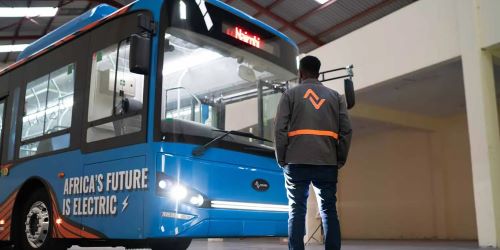
One of the electric buses of Kenyan mobility company ROAM
Share
Facebook Twitter LinkedIn Pinterest Email

Last week, the Africa Climate Summit was held in Nairobi, Kenya. The conference was attended by key delegates from African countries, international organisations, and the private sector. The summit was a significant event for Africa, as it was the first time African leaders had come together to discuss climate change on a continent-wide scale. It also served as a platform for multiple electric vehicle (EV) companies—including BasiGo, which serves Nairobi with 20 electric buses for public transport—to showcase their products.

The argument is that vehicles powered by fossil fuels are bad for the environment, and there is a need to shift focus to EVs as they do not use an internal combustion engine (ICE). This makes EVs a clean and eco-friendly alternative to vehicles powered by petrol or diesel. 

But is that the case? 
EVs are often seen as a solution to climate change but are not without problems. They still rely on a consumerist and car-based approach to transportation, which is not sustainable in the long run. Besides, producing electric cars can harm the environment, and EVs do not address the root causes of climate change.

Carbon emissions from transport in Africa

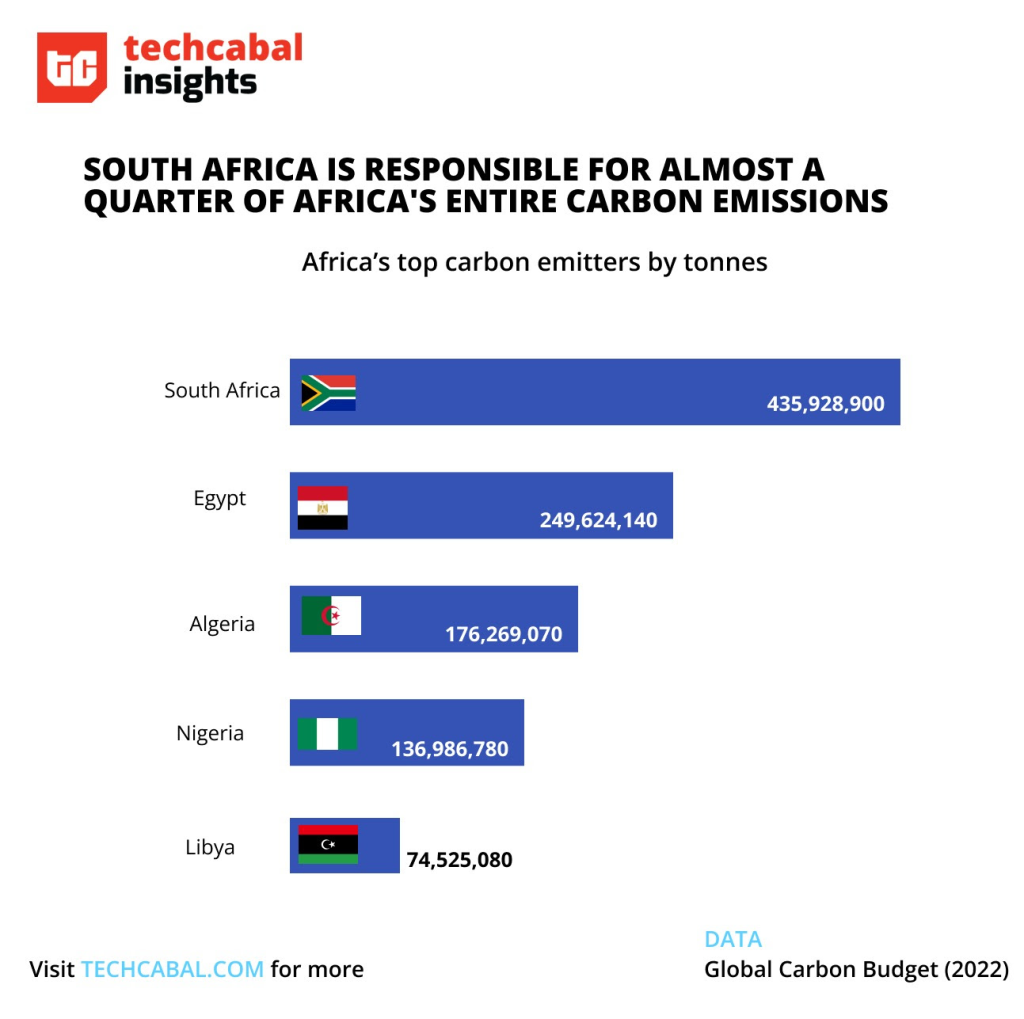
Africa has about 72 million vehicles, but only seven of its 54 countries are responsible for most of the greenhouse gas emissions from transportation. The emissions are growing at an alarming rate of 7% per year. This is due to poor fuel quality, old vehicles, and the lack of mandatory emission tests. More than half of African countries have quality worse than European fuel quality from 30 years ago.

Assuming we don’t effectively tackle climate change and the air pollution generated by ICE vehicles, we’re facing some major issues: a widespread decline in animal and plant species, a surge in natural disasters, severe air pollution, depletion of water resources, and many other challenges. Given the substantial emissions coming from road vehicles, it’s clear that we must cut the dependence on diesel-powered engine vehicles. The solution often debated is the choice between electric vehicles and ICEs, but EVs alone might not provide a solution, given that they lack range.

And this is the primary problem…

The major issue with electric cars is carbon lock-in. This occurs when notable investments are made in resources such as power plants or EVs, creating incentives to keep using them. Companies and governments are reluctant to switch to better solutions because of the hefty capital investments and associated opportunities. This puzzle extends to EV companies, who may not prioritise the most effective climate crisis solutions. Afterwards, moving away from temporary fixes like mass electric car retrofits is challenging.

It is better to think beyond these partial measures to address the climate crisis. Instead of investing in massive electric car investments, Africa could allocate resources more effectively, such as building mass transit and promoting sustainable construction practices that enhance walkability and micro-mobility options. Breaking free from a vehicle-centric system is the real transformative thinking needed.

More problems exist

Electric vehicles offer several advantages, such as being safe to operate indoors and having a greener footprint. However, they face three significant challenges. 

First, battery technology lags due to a historical setback in development. Lithium-ion batteries, common in electric cars, have limited energy density and pose safety risks in case of fires. Their production isn’t environmentally friendly, too, needing recycling to prevent pollution. 

Second, the African electrical power infrastructure lacks headroom, often relying on outdated and polluting energy sources. Electric vehicles draw substantial power, mostly during non-renewable energy peak periods, compromising their environmental benefits. 

Third, insufficient neighbourhood electrical capacity discourages the widespread use of electric vehicles, leading to business operational challenges.

Consider the situation in South Africa, Africa’s most industrialised economy. This year, the country has experienced frequent power outages lasting 10 hours daily. At the start of the year, even though only half of the population is connected to the electrical grid, many neighbourhoods could only support their power needs for a maximum of six hours per day. Is this the same infrastructure that is set to sustain EVs for transportation?

Commuters need to question the real reason for EVs push

Legislators often avoid discussing that electric vehicles cannot fully address the environmental issues associated with transportation. On the other hand, EV manufacturers are eager to promote electric cars as a solution, advocating for tax credits and incentives to encourage their adoption, which translates to more sales. But the reality is that electric vehicles can functionally not resolve carbon emission problems quickly and gainfully. Besides, focusing on electric buses and cars as a primary mode of transportation is highly inefficient in terms of urban space, which is another vital aspect of the climate change problem.

To make electric vehicles truly eco-friendly, Africa needs advancements in solid-state batteries, increased green energy sources like nuclear or geothermal, and the expansion of micro-grid technologies. These features and technologies are crucial for alleviating the issues associated with climate change, but full implementation may take time.

That’s not all: Africa needs a robust grid capable of handling increased demands. A smoother transition from fossil fuels is also necessary to avoid unnecessary complications. Transitioning to electric vehicles before addressing these key elements undercuts their positive impact on climate change and introduces environmental and societal challenges the continent is unprepared for.

Sometimes, an iterative approach is better than rushing into new technology. Opting for hybrid vehicles over electric ones may be a more sustainable choice until other issues associated with transitioning to EVs have been addressed. Achieving green EVs requires a holistic approach, covering green energy storage, generation, and reliable distribution, though not all elements will be in place in this decade.

By TechCabal

Africa Climate Summit Electric vehicles
Share. Facebook Twitter Pinterest LinkedIn WhatsApp Reddit Tumblr Email
Abdallah el-Kurebe
  • Website
  • Facebook
  • Twitter
  • LinkedIn

Related Posts

FUTA wins 2026 Young Ocean Scholars University Research Competition, gets N10m prize money

June 23, 2026

DSN CEO: Data classification key to Nigeria’s data sovereignty

June 23, 2026

Lagos to increase investment in tech, innovation

June 23, 2026

Leave A Reply Cancel Reply

FUTA wins 2026 Young Ocean Scholars University Research Competition, gets N10m prize money

June 23, 2026

Anambra aims to eliminate mother to child HIV, hepatitis, syphilis

June 23, 2026

FUTA teaching hospital: Success depends on stakeholder support

June 23, 2026

Benue deputy gov assures transparent distribution of UNFPA kits

June 23, 2026
About Us
About Us

ASHENEWS (AsheNewsDaily.com), published by PenPlus Online Media Publishers, is an independent online newspaper. We report development news, especially on Agriculture, Science, Health and Environment as they affect the under-reported rural and urban poor.

We also conduct investigations, especially in the areas of ASHE, as well as other general interests, including corruption, human rights, illicit financial flows, and politics.

Contact Info:
  • 1st floor, Dogon Daji House, No. 5, Maiduguri Road, Sokoto
  • +234(0)7031140009
  • ashenewsdaily@gmail.com
Facebook Twitter Instagram Pinterest
© 2026 All Rights Reserved. ASHENEWS Daily Designed & Managed By DeedsTech

Type above and press Enter to search. Press Esc to cancel.