


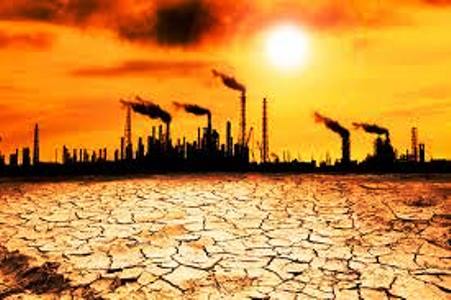
The governments plan to produce around 110% more fossil fuels in 2030 than would be consistent with limiting warming to 1.5°C, and 69% more than would be consistent with 2°C.
This comes despite 151 national governments having pledged to achieve net-zero emissions and the latest forecasts which suggest global coal, oil, and gas demand will peak this decade, even without new policies. When combined, government plans would lead to an increase in global coal production until 2030, and in global oil and gas production until at least 2050, creating an ever-widening fossil fuel production gap over time
Given risks and uncertainties of carbon capture and storage and carbon dioxide removal, countries should aim for a near total phase-out of coal production and use by 2040, and a combined reduction in oil and gas production and use by three-quarters by 2050 from 2020 levels, at a minimum.
While 17 of the 20 countries featured have pledged to achieve net-zero emissions — and many have launched initiatives to cut emissions from fossil fuel production activities — none have committed to reduce coal, oil, and gas production in line with limiting warming to 1.5°C.
Governments with greater capacity to transition away from fossil fuels should aim for more ambitious reductions and help support the transition processes in countries with limited resources.
“Phasing down or phasing up? Top fossil fuel producers plan even more extraction despite climate promises” is produced by Stockholm Environment Institute (SEI), Climate Analytics, E3G, International Institute for Sustainable Development (IISD) and the UN Environment Programme (UNEP). It assesses governments’ planned and projected production of coal, oil, and gas against global levels consistent with the Paris Agreement’s temperature goal.
“Governments are literally doubling down on fossil fuel production; that spells double trouble for people and planet,” said UN Secretary-General António Guterres. “We cannot address climate catastrophe without tackling its root cause: fossil fuel dependence. COP28 must send a clear signal that the fossil fuel age is out of gas — that its end is inevitable. We need credible commitments to ramp up renewables, phase out fossil fuels, and boost energy efficiency, while ensuring a just, equitable transition.”
July 2023 was the hottest month ever recorded, and most likely the hottest for the past 120,000 years, according to scientists. Across the globe, deadly heat waves, droughts, wildfires, storms, and floods are costing lives and livelihoods, making clear that human-induced climate change is here. Global carbon dioxide emissions — almost 90% of which come from fossil fuels — rose to record highs in 2021–2022.
“Governments’ plans to expand fossil fuel production are undermining the energy transition needed to achieve net-zero emissions, throwing humanity’s future into question,” said Inger Andersen, Executive Director of UNEP. “Powering economies with clean and efficient energy is the only way to end energy poverty and bring down emissions at the same time.”
“Starting at COP28, nations must unite behind a managed and equitable phase-out of coal, oil and gas — to ease the turbulence ahead and benefit every person on this planet,” she added.
The 2023 Production Gap Report provides newly expanded country profiles for 20 major fossil-fuel-producing countries: Australia, Brazil, Canada, China, Colombia, Germany, India, Indonesia, Kazakhstan, Kuwait, Mexico, Nigeria, Norway, Qatar, the Russian Federation, Saudi Arabia, South Africa, the United Arab Emirates, the United Kingdom of Great Britain and Northern Ireland, and the United States of America. These profiles show that most of these governments continue to provide significant policy and financial support for fossil fuel production.
“We find that many governments are promoting fossil gas as an essential ‘transition’ fuel but with no apparent plans to transition away from it later,” says Ploy Achakulwisut, a lead author on the report and SEI scientist. “But science says we must start reducing global coal, oil, and gas production and use now — along with scaling up clean energy, reducing methane emissions from all sources, and other climate actions — to keep the 1.5°C goal alive.”
Despite being the root cause of the climate crisis, fossil fuels have remained largely absent from international climate negotiations until recent years. At COP26 in late 2021, governments committed to accelerate efforts towards “the phasedown of unabated coal power and phase-out of inefficient fossil fuel subsidies”, though they did not agree to address the production of all fossil fuels.
“COP28 could be the pivotal moment where governments finally commit to the phase-out of all fossil fuels and acknowledge the role producers have to play in facilitating a managed and equitable transition,” says Michael Lazarus, a lead author on the report and SEI US Centre Director. “Governments with the greatest capacities to transition away from fossil fuel production bear the greatest responsibility to do so while providing finance and support to help other countries do the same.”
More than 80 researchers, from over 30 countries, contributed to the analysis and review, spanning numerous universities, think tanks and other research organizations.
Reactions to the 2023 Production Gap Report
“The writing’s on the wall for fossil fuels. By mid-century we need to have consigned coal to the history books, and slashed oil and gas production by at least three quarters — well on the way to a full fossil phase-out. Yet despite their climate promises, governments plan on ploughing yet more money into a dirty, dying industry, while opportunities abound in a flourishing clean energy sector. On top of economic insanity, it is a climate disaster of our own making.”
“Despite governments around the world signing up to ambitious net zero targets, global coal, oil and gas production are all still increasing while planned reductions are nowhere near enough to avoid the worst effects of climate change. This widening gulf between governments’ rhetoric and their actions is not only undermining their authority but increasing the risk to us all. We are already on track this decade to produce 460% more coal, 82% more gas, and 29% more oil than would be in line with the 1.5°C warming target. Ahead of COP28, governments must look to dramatically increase transparency about how they will hit emissions targets and bring in legally binding measures to support these aims.”
“With demand for coal, oil and gas set to peak this decade even without additional policies, it’s clear that the new economic reality is becoming one of clean energy growth and fossil fuel decline — yet governments are failing to plan for the reality of the inevitable energy transition. Continuing investments into new fossil fuel production as global demand for coal, oil and gas narrows is a near term economic gamble for all but the cheapest producers. And climate damages will be aggravated further unless we stop fossil fuel expansion now. The time is now for governments to take control of the clean energy transition and align their policies with the reality of what’s needed for a climate-safe world.“
