


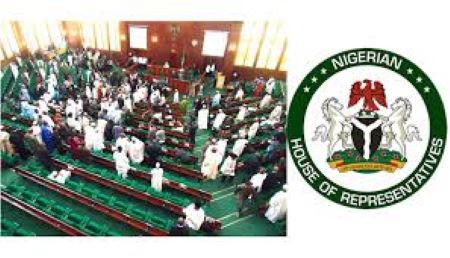
Members of the minority caucus in the House of Representatives on Thursday staged a walkout during plenary in protest against the procedure adopted by the lawmakers to pass the constitutional amendment bill seeking to establish state police in Nigeria.
The walkout, led by the Minority Leader, Fred Agbedi, came after the House approved the bill despite objections from opposition lawmakers, who alleged breaches of the 1999 Constitution and the Standing Orders of the House.
The minority caucus said it was not opposed to the establishment of state police but rejected what it described as a disregard for due process in the consideration and passage of the bill.
Following the protest, the opposition lawmakers addressed a news conference where they reiterated their support for state police but faulted the process through which the constitutional alteration bill was passed.
The House, however, proceeded with the consideration of the bill and recorded 311 votes in support, meeting the two-thirds majority required for a constitutional alteration.
The Deputy Speaker and Chairman of the House Committee on Constitution Review, Benjamin Kalu, had led the consideration of the committee’s report and urged lawmakers to support the proposal before electronic and virtual voting was conducted.
The minority caucus argued that the bill, being a constitutional alteration, required strict compliance with constitutional provisions and the Standing Orders, insisting that lawmakers should have been allowed to consider and vote on the individual clauses.
The caucus also raised concerns over the determination of the number of lawmakers present for the vote, arguing that attendance should be established from the official registers of the House.
Defending the process, the Chairman of the House Committee on Defence, Babajimi Benson, dismissed the concerns raised by the minority lawmakers.
The passage of the bill marks another major step towards the establishment of a dual policing structure comprising the Federal Police Service and State Police Services.
Under the proposed framework, state governors would have the power to appoint commissioners of police for their respective states, subject to confirmation by the state Houses of Assembly.
The proposal also provides for a defined operational relationship between state governors and state police commands, including the power of a governor to issue lawful written directives of a general policy nature to the Commissioner of Police on matters relating to public safety and public order.
The Senate had earlier passed the State Police Bill, bringing the proposal closer to becoming part of Nigeria’s constitutional framework.
The House also passed a bill seeking to establish the Federal College of Fisheries Technology and Marine Engineering in Rivers State.
The lawmakers subsequently adjourned plenary until September 15, 2026.
