


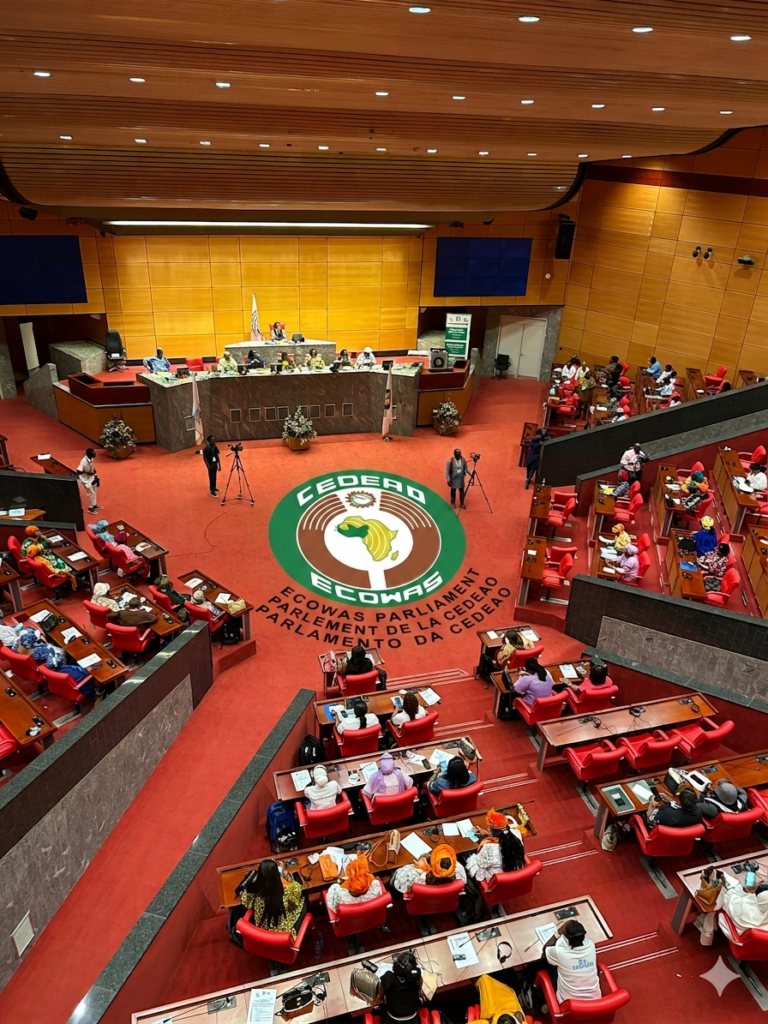
The ECOWAS Parliament is scheduled to begin a week-long meeting of its delocalized joint committee aimed at addressing West Africa’s renewable energy and electricity challenges in Dakar, Senegal, on Monday.
A parliamentary statement on Sunday said the meeting is themed: “Harnessing Renewable Energy for Rural Electrification and Empowerment of Rural Economies in the ECOWAS Region: The Role of the ECOWAS Parliament.”
The meeting is expected to develop strategies for scaling up renewable energy deployment and accelerating rural electrification across West Africa.
It will be conducted by the parliament’s Joint Committee on Energy and Mines; Agriculture, Environment and Natural Resources; as well as Infrastructure.
Participants include regional parliamentarians, ECOWAS institution representatives, government officials, development partners, private sector actors, civil society organizations, and energy experts.
“The meeting comes at a pivotal moment when millions of people in rural West Africa continue to lack reliable electricity, with direct consequences for agriculture, education, healthcare, digital inclusion, and economic productivity, despite recent progress in rural electrification across the sub-region.
“ECOWAS has committed to achieving universal access to sustainable and affordable energy by 2030, and parliamentary action is increasingly central to that ambition.
“Discussions will examine how decentralized renewable energy systems, including solar mini-grids, hybrid energy systems, and stand-alone solar installations, can more effectively bridge the electricity access gap in underserved communities,” the statement said.
The parliament noted that West Africa holds vast untapped solar and hydropower potential, and the meeting would assess progress to date, identify existing constraints, and explore concrete pathways for scaling up regional investment.
“The Joint Committee will also review key regional frameworks, including the ECOWAS Renewable Energy Policy (EREP), the Energy Efficiency Policy (EEEP), the updated ECOWAS Energy Policy, and the Regional Electricity Market (REM).
“Others include the contributions of the ECOWAS Centre for Renewable Energy and Energy Efficiency (ECREEE), the West African Power Pool (WAPP), and the ECOWAS Regional Electricity Regulatory Authority (ERERA),” it further said.
A highlight of the program is a field visit to a renewable energy installation in Senegal, where lawmakers will engage directly with beneficiary communities, local entrepreneurs, women, and youth.
This aims to give parliamentarians firsthand insight into how rural electrification transforms livelihoods and drives local enterprise.
“At the end of the week-long meeting, members are expected to adopt recommendations to reinforce regional rural electrification efforts, mobilize investment in renewable energy infrastructure, and strengthen parliamentary oversight of ECOWAS energy policies and programs,” it added.
