


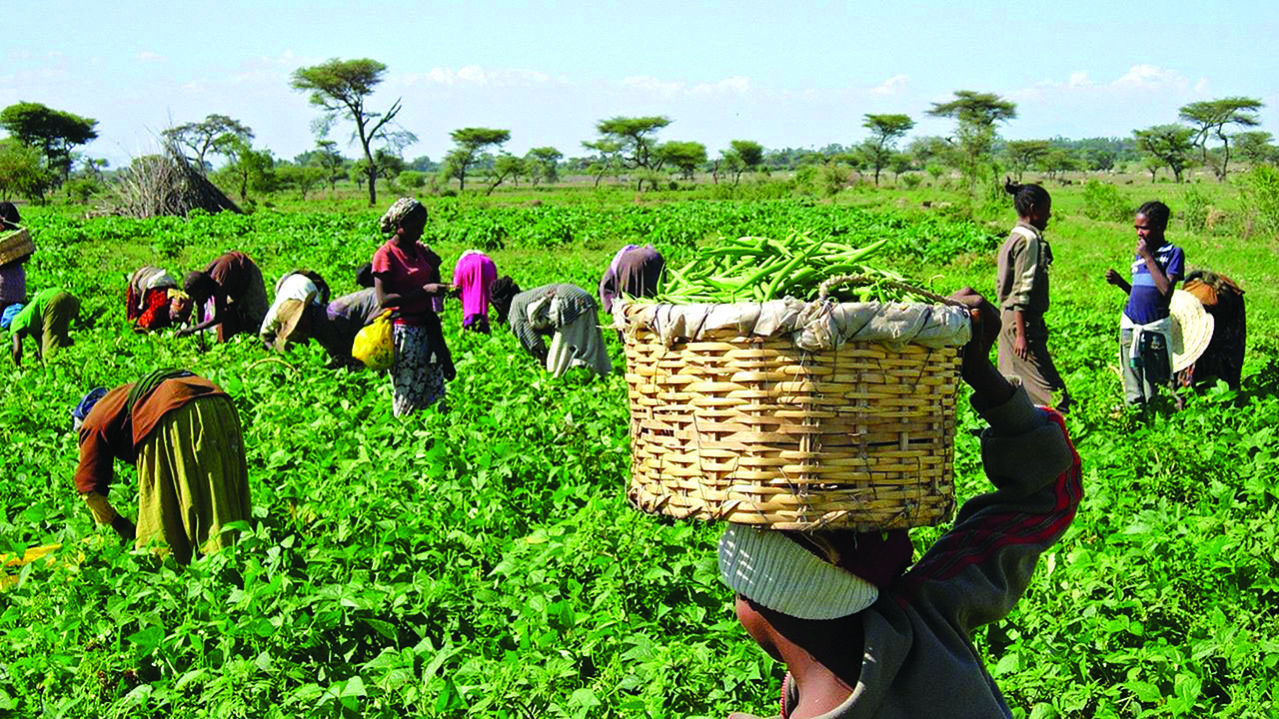
Rashak Group of Companies, an agribusiness firm, has launched a book documenting its 10-year journey of providing zero-interest financing to smallholder farmers across Nigeria.
The book, titled Between Sujood and Strategy: Where Faith Meets Ambition, was unveiled in Abuja on Friday as part of activities marking the company’s 10th anniversary.
The company’s founder, Mrs Rahmah Aderinoye, said the book chronicled Rashak’s growth, challenges and key partnerships since its establishment.
She said the company was set up to address smallholder farmers’ limited access—particularly in Northern Nigeria—to affordable financing that does not require interest payments.
According to her, Rashak has supported more than 20,000 farmers across 224 communities through a trust-based financing model that combines financial support with close monitoring of agricultural production.
“Whatever success we are celebrating today, we have done this with zero grants and zero government intervention,” she said.
Aderinoye said the beneficiaries included 8,500 women and more than 3,000 people with disabilities.
She added that the company had achieved a 100 per cent recovery rate without requiring collateral by monitoring farmers’ activities from the provision of inputs through to harvest.
“We do trust our farmers, that’s a given, but we also count every kilogram,” she said.
Looking ahead, Aderinoye said the company planned to expand its support beyond production to include processing and exports, increasing farmers’ participation across the agricultural value chain.
She said Rashak currently operated a rice mill in Zaria and cold-storage facilities to reduce post-harvest losses.
The company had also expanded its operations to Singapore and Qatar, she said, and planned to begin operations in Zambia.
To support its expansion, Aderinoye called on investors and financial institutions to provide funding, saying the company had more than $12 million in pending funding requests.
She also urged the government to establish consistent agricultural policies that would enable farmers to plan across farming seasons.
Earlier, Dr Muritala Abdulrahman, Unit Head of Sharia Compliance at Alternative Bank, representing Prof. Majid Alaro, urged financial institutions to adopt financing models that share risks with farmers rather than rely heavily on conventional collateral-based lending.
He said smallholder farmers accounted for about 80 per cent of Nigeria’s domestic food production but remained largely excluded from formal financing because many lacked titled assets to secure loans.
Abdulrahman said agricultural financing required flexible repayment arrangements and investment models that recognised farming risks.
He identified Islamic financing instruments, including Salam, Murabaha and Istisna, as options for addressing funding gaps in agricultural production, equipment acquisition and processing infrastructure.
He explained that Salam involved advance payment for agricultural produce, while Murabaha provided asset financing and Istisna supported infrastructure projects such as rice mills and cold-storage facilities.
He also cited Nigeria’s estimated 40 to 50 per cent post-harvest losses as a challenge requiring investment in storage, processing and improved agricultural infrastructure.
Abdulrahman urged bank executives to introduce dedicated Sharia-compliant agricultural financing products within the next two quarters.
He also called on agribusinesses to expand monitored outgrower schemes and urged policymakers to harmonise cross-border export standards to improve regional agricultural trade under the African Continental Free Trade Area.
